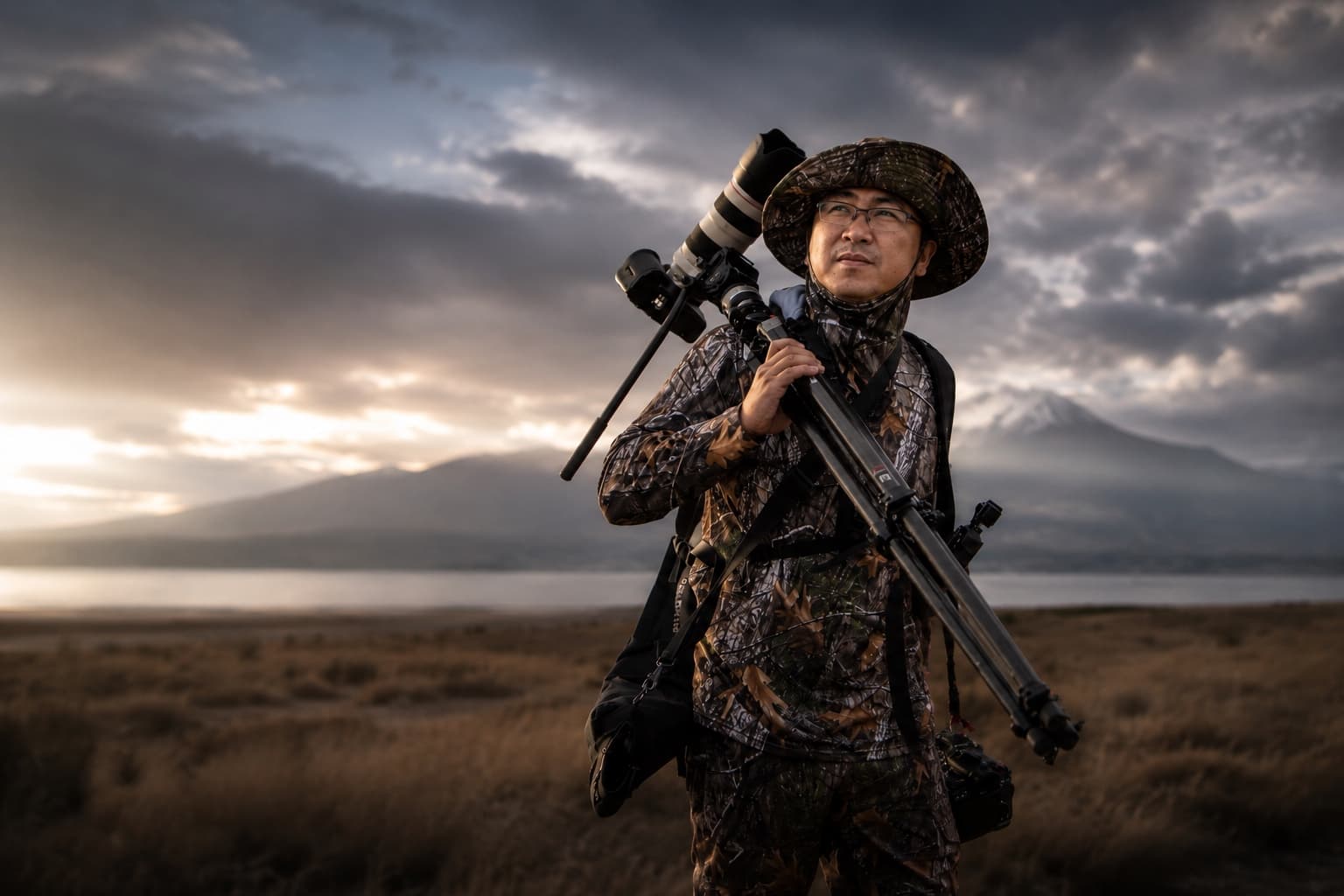
About Nature Zi
I Read the Wild.
I think of myself as a wilderness interpreter.
I photograph wildlife, but photography begins before I press the shutter.
It begins with reading the field.
Why has a lion suddenly lifted its head?
Why has a cheetah changed direction?
Why is a herd becoming restless?
Why is one animal moving while the others remain still?
To photograph wildlife well, you first have to understand what is happening in front of you.
That is what I have spent the past fifteen years learning to do in Africa: not simply finding animals, but reading behaviour, recognising patterns, waiting for stories to unfold, and trying to understand what the wild is telling us.
For me, wildlife photography begins with learning to read the wild.
In 2010, I Photographed an Animal.
I came to Africa in 2010 as a photographer.
At that time, when I saw a lion, I photographed a lion.
I wanted a portrait.
Good light.
A clean background.
A strong frame.
Fifteen years later, I still photograph the lion.
But the lion is no longer simply a lion.
It may have a name.
It has a history. It may belong to a particular pride. It has survived certain events, lost companions, raised cubs, crossed territories and encountered people.
And around that animal there is another story.
There are people trying to protect it.
There are communities living beside it.
There are conflicts created by sharing the same landscape.
So my photography has changed.
In 2010, I photographed animals.
Today, I photograph behaviour, relationships, conflict, protection and individual lives.
The animal is still at the centre of the frame.
But now I know there is a story around it.
I Spent Years Asking What Photography Was For.
After I had taken thousands and thousands of photographs, I began asking myself a difficult question:
What is photography actually for?
Why should I keep photographing Africa?
What could these photographs change?
I did not have an answer.
When I left Xinhua News Agency in 2015, I began searching for one.
The search was not straightforward.
I moved through other industries. I tried different directions. For years, I went around in circles.
But eventually I came back to photography.
Perhaps I had never really left it.
What changed was my understanding of why I wanted to do it.
I no longer wanted simply to make photographs of the wild.
I wanted the wild to be seen.
That search eventually became part of the reason I created Nature in Wild.
Why Being There Still Matters
We are entering a time when technology can create extraordinary wildlife images.
Light can be invented.
Moments can be invented.
Perhaps one day almost any photograph we can imagine can be generated.
But something continues to fascinate me about real wildlife photography.
I can sit in the same safari vehicle with several photographers.
We have the same animal in front of us.
The same position.
The same light.
Sometimes I can even tell everyone what behaviour I think may happen next.
And when the moment comes, very few people make the same photograph.
Sometimes only one person sees it.
That is the magic of photography.
Because being physically present is not enough.
You have to see.
And seeing is connected to understanding.
Someone who knows little about wildlife may return from Africa with beautiful photographs of animals.
Someone who can read animal behaviour may return with something entirely different.
They begin to recognise the moment before the moment.
That is why I believe the photographer still has to be there.
The camera records what happened.
But understanding determines what you are able to see.
I Don’t Want to Teach People Only How to Take Pictures.
When I lead photographers into the field, finding the animal is only the beginning.
What I really want to teach is:
how to judge,
how to observe,
how to wait,
how to understand,
and how to prepare.
Because wildlife photography happens before the shutter is pressed.
If you understand behaviour, you begin preparing before the animal moves.
If you understand the landscape, you begin thinking about where the story may happen.
If you learn to wait, you stop treating the quiet moments as wasted time.
And eventually something changes.
People return home from Africa, and months later they message me.
They don’t only ask:
“Where should I go next?”
They ask:
“How is Namo?”
“What happened to the Rongai pride?”
That matters to me.
Because somewhere during those days in the field, the subject of the photograph stopped being simply “a lion.”
It became an individual life they remembered.
At that point, photography has done something more important than producing a photograph.
It has created a relationship.
From Photographing Wildlife to Remembering Lives
This is where my work is heading now.
I want to keep following individual animals.
I want to know their histories.
I want to photograph their behaviour, their families, their struggles and the landscapes they depend upon.
I also want to photograph the people who protect them and the people who have to find ways to live beside them.
Because the wild is not made of anonymous animals.
It is made of individual lives.
A lion that survives another season.
A leopard raising cubs.
A wildebeest standing at the edge of a river.
A ranger following tracks before sunrise.
A community learning to live beside predators.
Each one is a story.
And stories disappear when nobody remembers them.
What I Hope to Leave Behind
I have spent much of my life making photographs.
But I don’t think the photographs themselves are what I ultimately want to leave behind.
Twenty years from now, cameras will be different.
Photography will be different.
Nature in Wild may be different.
Even the landscapes I photograph today may have changed.
What I hope remains are the stories.
One story after another, from the wild.
Stories of animals that were not anonymous.
Animals that had families, histories, struggles and lives of their own.
They were here.
They lived.
They mattered.
And someone remembered them.
These animals really existed.
Someone remembers them.
— Nature Zi