Field Note
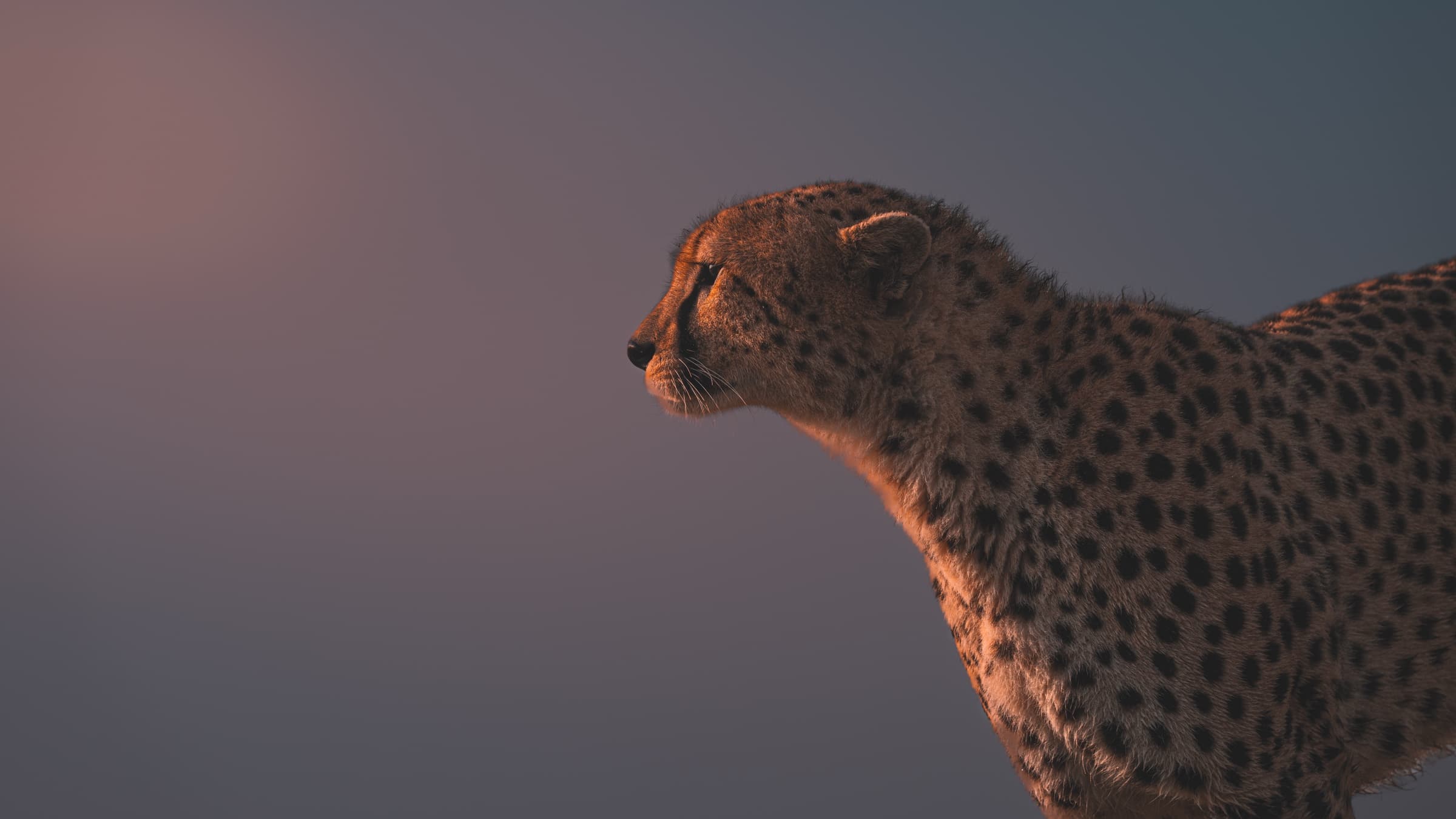
How I Know a Cheetah May Be About to Hunt
The chase may last only seconds. Reading the hunt begins much earlier.
By Nature Zi — wildlife photographer and safari guide based in Nairobi, Kenya, with 15 years of field experience across East Africa, including the Maasai Mara and Serengeti.
Most people think photographing a cheetah hunt is about how quickly you react when the cheetah suddenly starts running.
The truth is, if you wait until it takes off before raising your camera, you've probably already lost.
A cheetah's chase may last only seconds. From a safari vehicle, by the time you notice the movement, lift several kilograms of camera and telephoto lens, find the animal in the viewfinder and lock focus, some of the most explosive moments may already be over.
After all these years photographing wildlife in East Africa, I don't gamble on that moment.
I start much earlier.
Sometimes ten minutes earlier. Sometimes longer.
I try to read the hunt before the chase begins.
Someone sees a cheetah lying in the grass and asks:
"Should we move on?"
Sometimes my answer is:
"Not yet. This one is worth waiting for."
Why?
Because I am already collecting clues.
First, I Look at the Belly
The first thing I look at isn't where the cheetah is looking.
I look at its belly.
Wildlife researchers use measures of belly fullness as a non-invasive way of assessing recent food intake in large carnivores, including cheetahs.
But from a safari vehicle, I am not assigning a scientific score.
I am looking at shape.
If the abdomen is round and heavy, the cheetah may have fed recently. I am usually less interested in expecting an immediate hunt.
A leaner animal looks different. The flank can draw inward behind the ribs and the abdomen may appear more tightly tucked.
That does not mean:
This cheetah is about to hunt.
There are no guarantees like that in the wild.
It is simply one of the first clues I use when deciding whether to stay.
What I am really asking is not:
Has it seen prey?
But:
Does it have a reason to hunt?
Then I Watch It Get Up
A resting cheetah raises its head from time to time simply to check its surroundings.
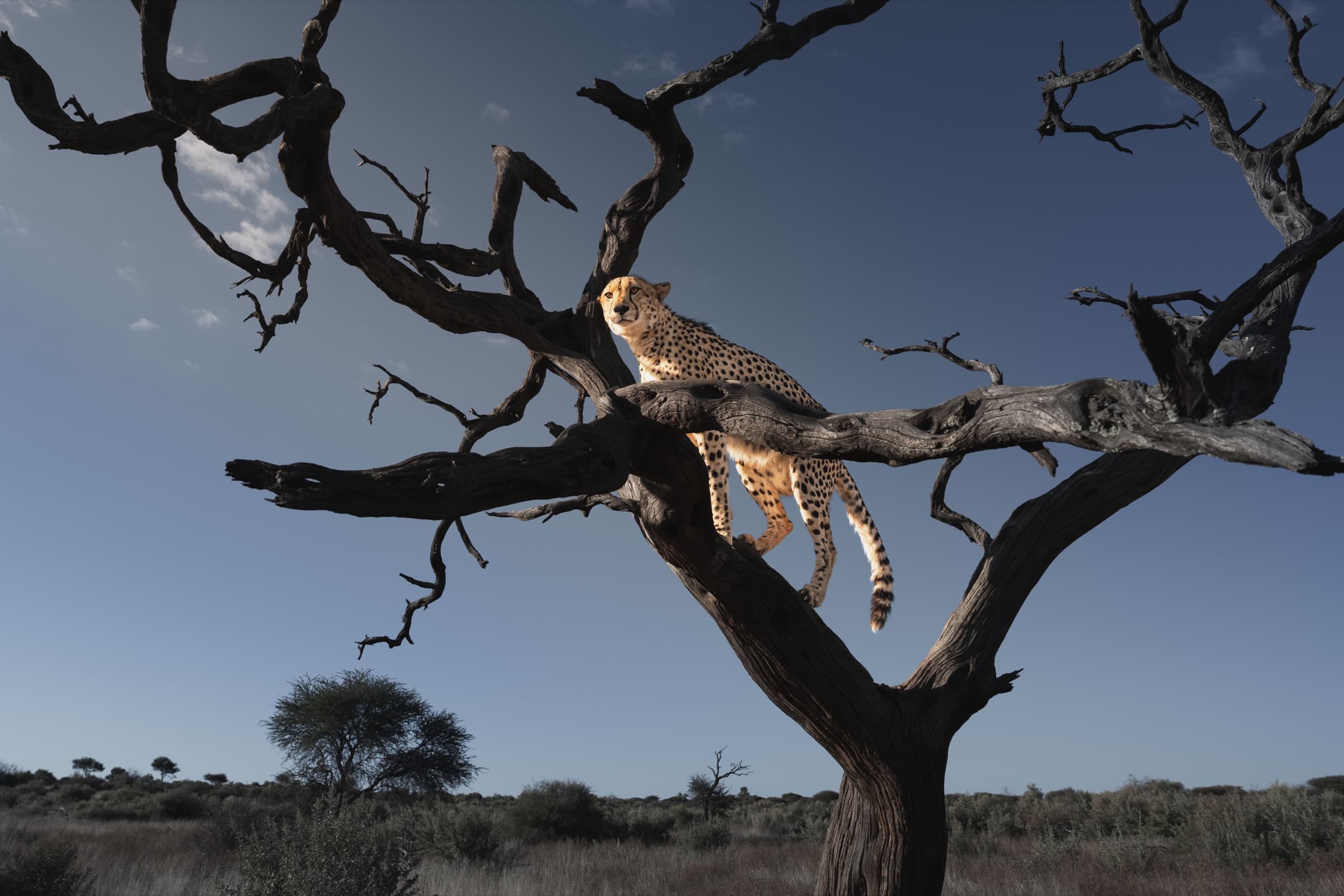
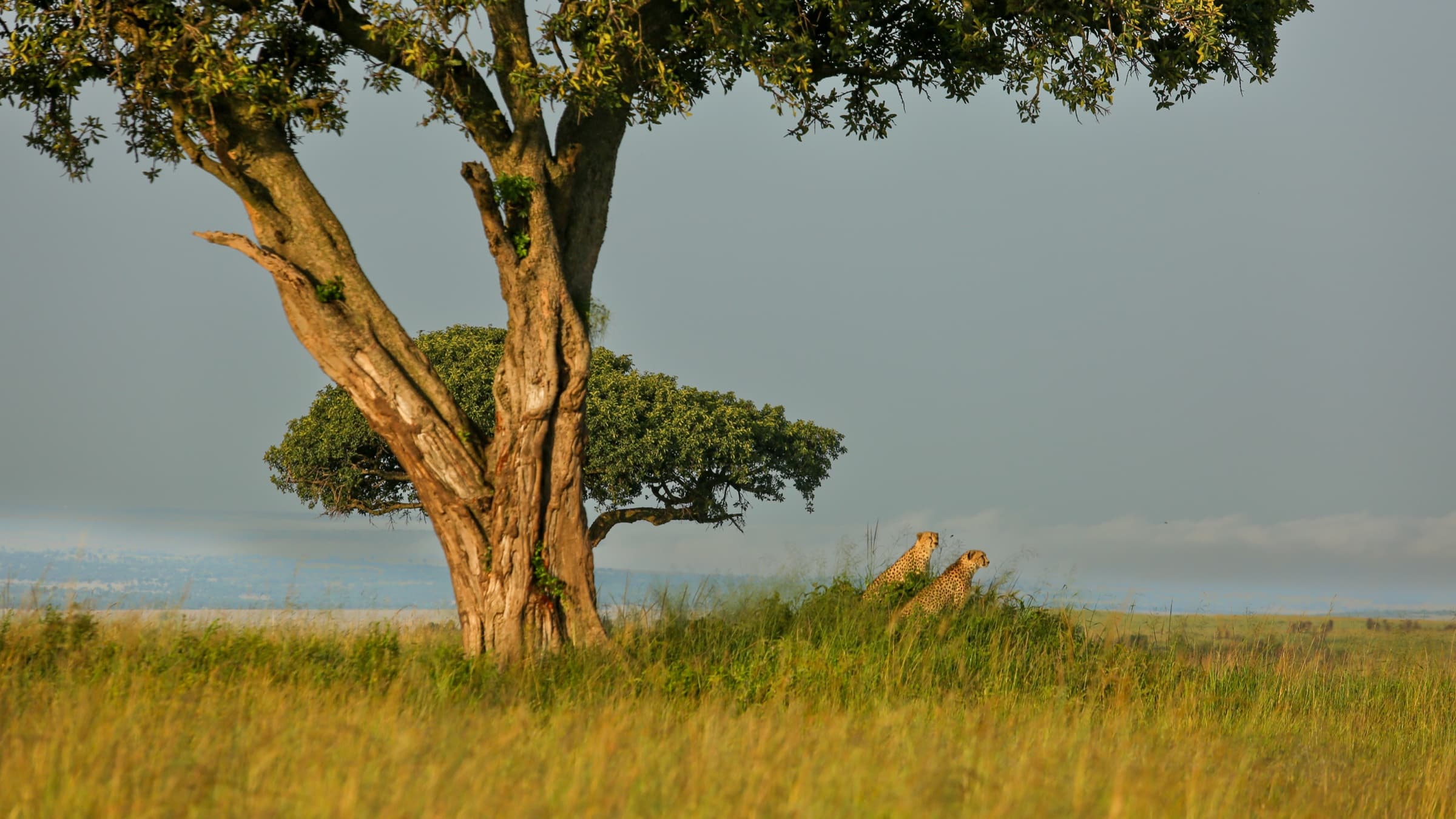
But when it stands and deliberately moves toward a small rise, termite mound, fallen tree or another elevated position, my attention changes.
From higher ground, the landscape opens.
Now I watch where its attention goes.
Is it casually scanning from one side to another?
Or does it keep returning to the same direction?
Follow that line of sight.
Are there Thomson's gazelles in the distance?
Is one animal separated from the group?
Are there young animals?
At this point, nothing dramatic may be happening.
The cheetah may simply be standing there.
But this is often where I decide:
Don't leave yet.
A Cheetah Is Reading More Than Its Prey
A cheetah lives in a landscape shared with predators much more powerful than itself.
Lions can kill cheetahs. Hyenas may steal their kills.
Research has shown that cheetah hunting is strongly biased toward daylight, reducing some temporal overlap with the nocturnal hunting activity of larger competitors.
But timing is only one part of the picture.
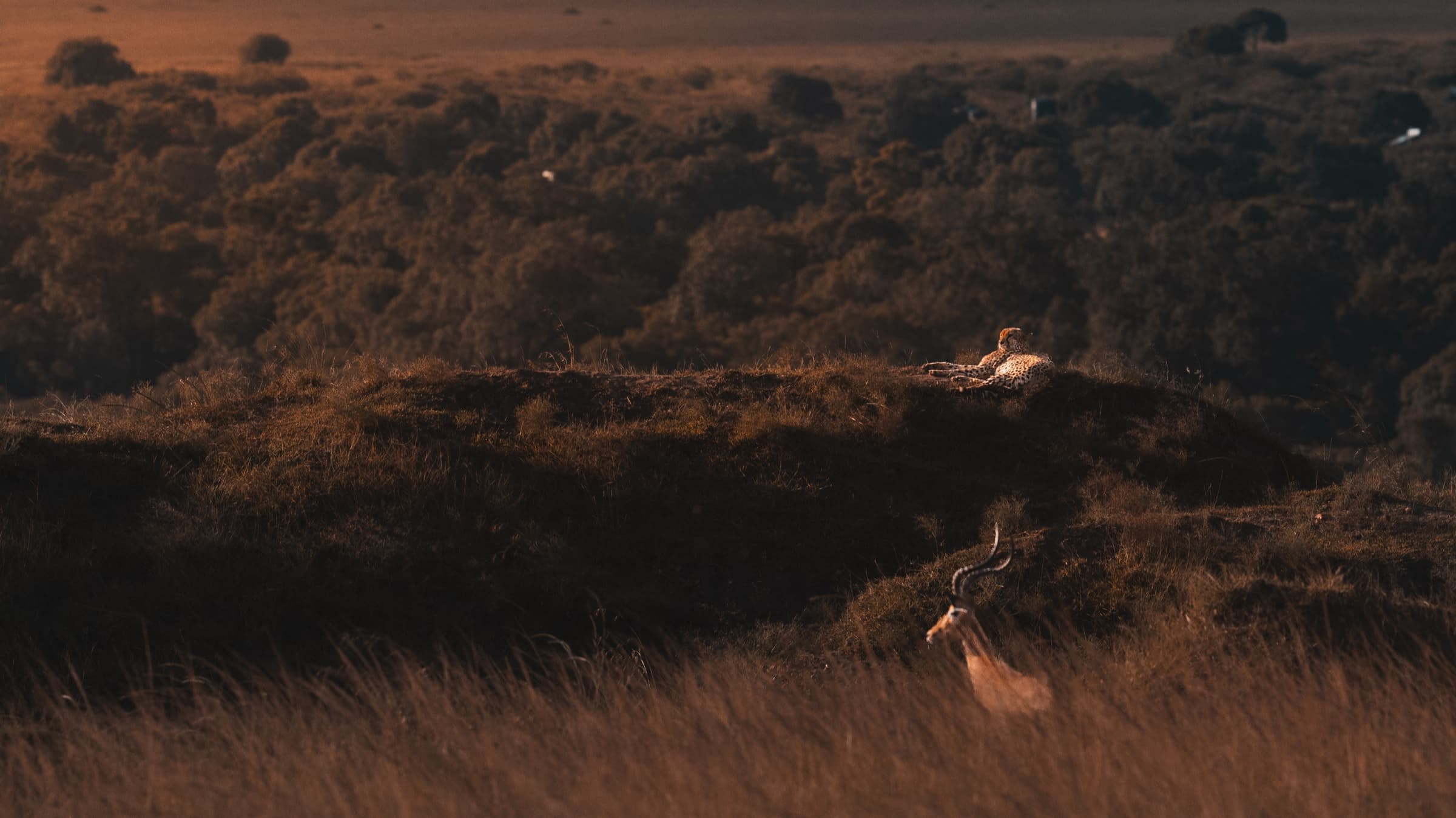
I also look at the space between the cheetah and its prey.
A shallow depression.
A strip of taller grass.
A small rise.
A drainage line.
Features that look insignificant from a vehicle can temporarily hide a cheetah from the prey ahead.
I think of these features as a kind of "blind corridor."
Not a scientific term.
Just a field photographer's way of reading the landscape.
The cheetah is not simply trying to get from Point A to Point B.
It needs to shorten the distance without being detected.
I Also Watch the Wind — But I Don't Treat It as a Rule
Wind is another piece of the scene I pay attention to.
If a cheetah is downwind of its prey, its scent is less likely to be carried directly toward the animals ahead.
That makes intuitive sense in the field.
But I do not use wind direction as a guarantee that a hunt will happen, or succeed.
For me, it is one clue among many:
- body condition
- attention
- distance
- terrain
- cover
- prey awareness
- wind
The important thing is not any single signal.
It is what happens when several of them begin pointing in the same direction.
Sometimes the Most Important Move Is Not Moving
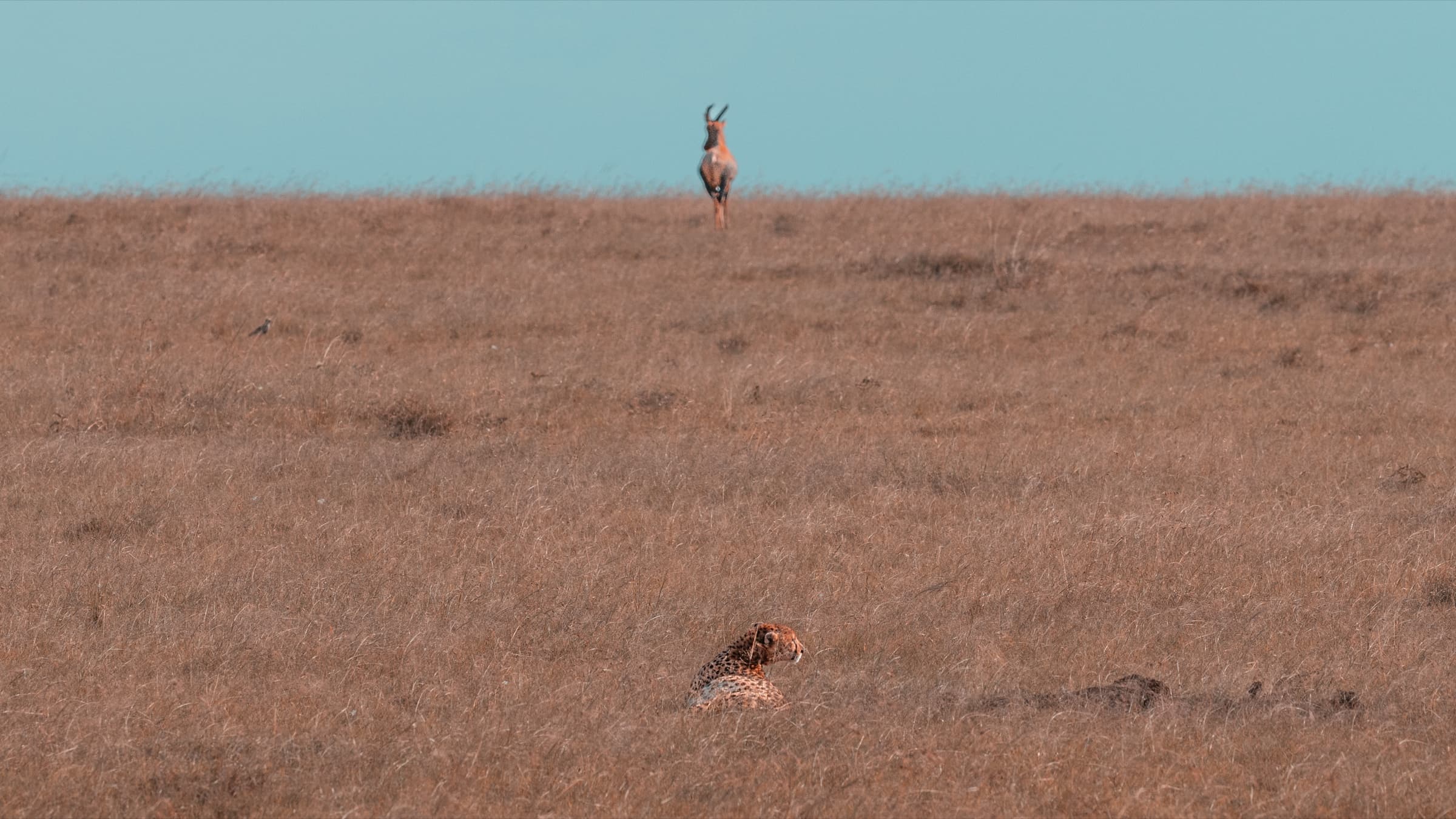
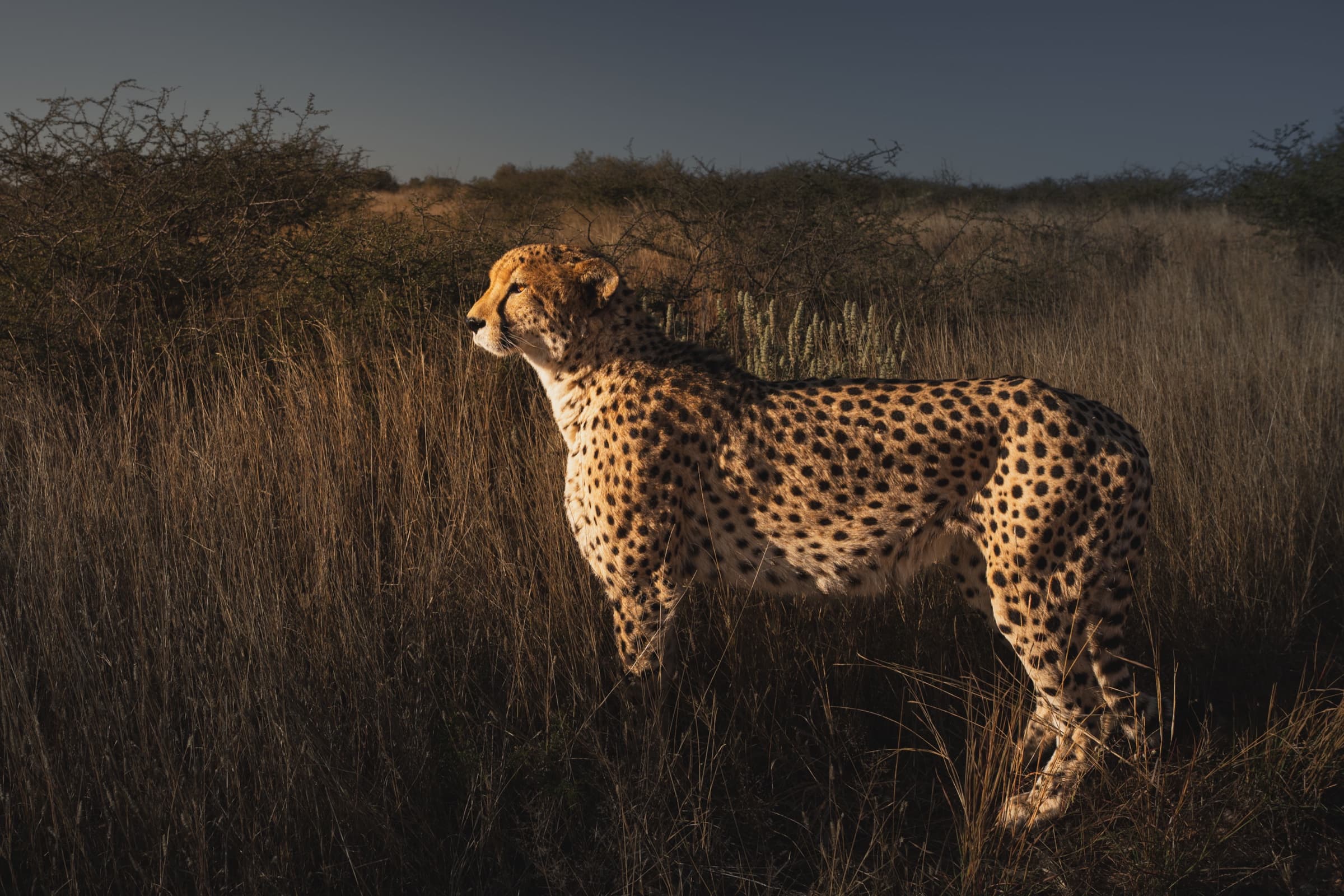
Then the cheetah may lie down again.
A first-time guest often asks:
"Has it given up?"
Not necessarily.
A high-speed pursuit is extremely demanding. Getting closer before committing to the chase can matter enormously.
And I have watched something interesting happen many times in the field.
The cheetah has already seen the prey.
But it waits.
The gazelles continue feeding.
One drifts a little closer.
Then another.
The distance changes without the cheetah spending energy closing it.
I do not treat this as a universal rule of cheetah hunting.
It is simply something I have watched happen repeatedly.
That is why I have learned not to confuse stillness with inactivity.
Sometimes the hunt is most interesting when almost nothing appears to be happening.
Then the Body Changes
Eventually there is a change I take very seriously.
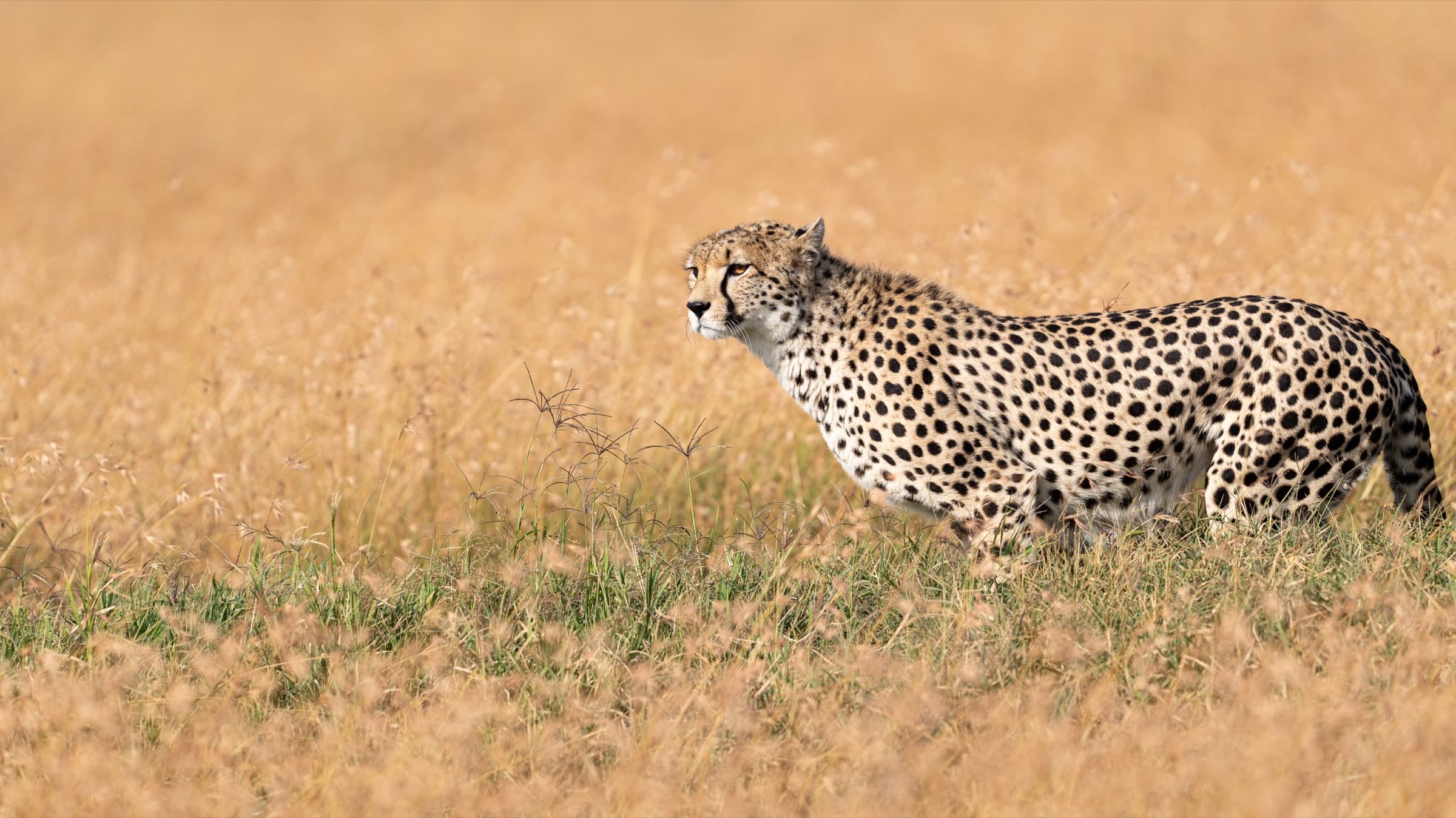
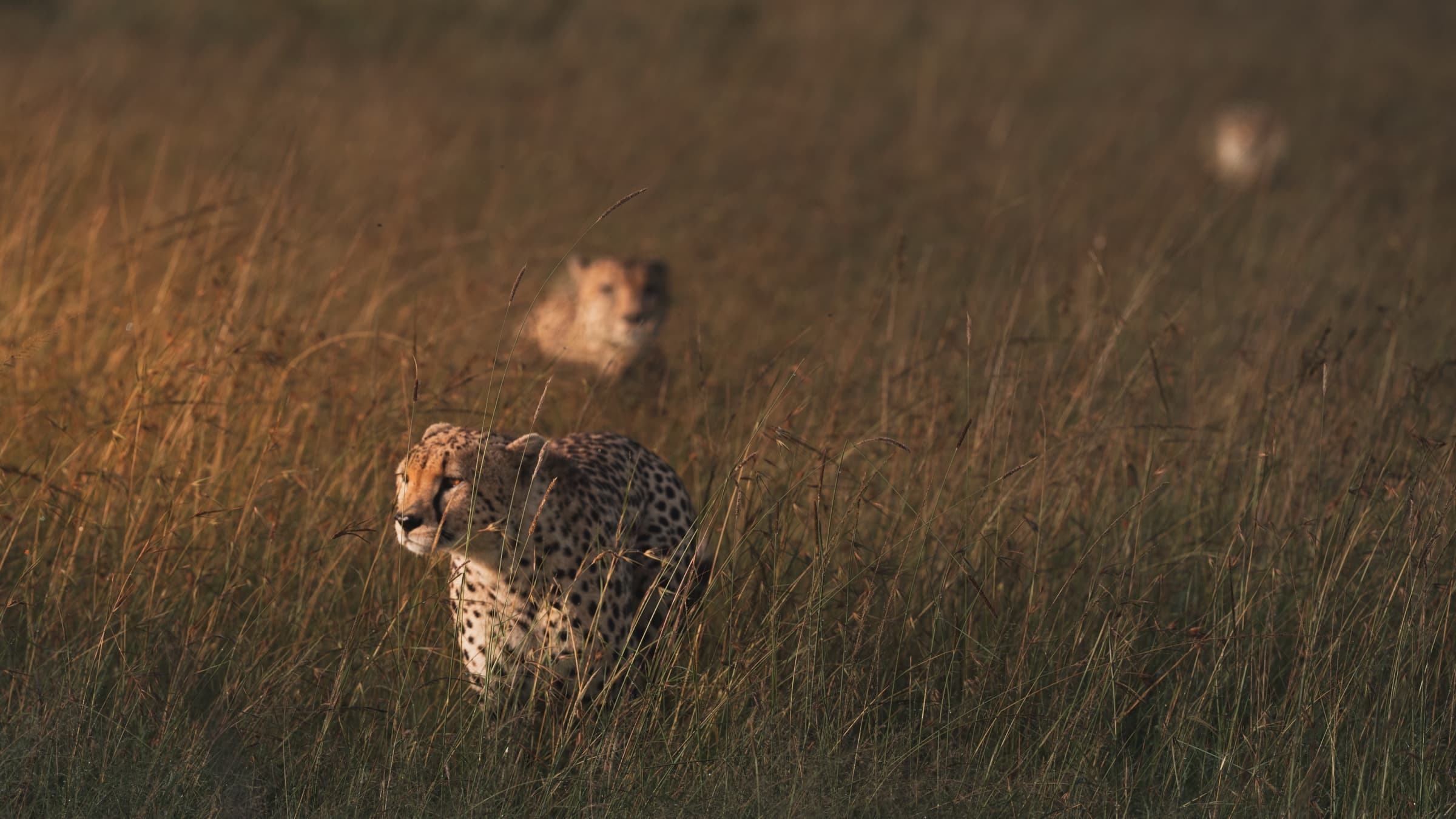
The cheetah gets lower.
Its head drops.
Its body compresses toward the ground.
The shoulders become more pronounced above the lowered neck.
Then it begins using grass, folds in the land and whatever cover exists to move forward.
This is when I prepare.
Camera ready.
Support stable.
Exposure checked.
For a fast chase I will often want a shutter speed around 1/2500 second or faster, depending on the light and the effect I want.
I want to make these decisions now.
Not when the cheetah is already running.
Because the animal has moved from looking for an opportunity to using one.
Don't Just Watch the Cheetah. Watch the Prey.
This is one of the most important things I tell photographers during a hunt.
Don't just watch the cheetah.
Watch the prey.
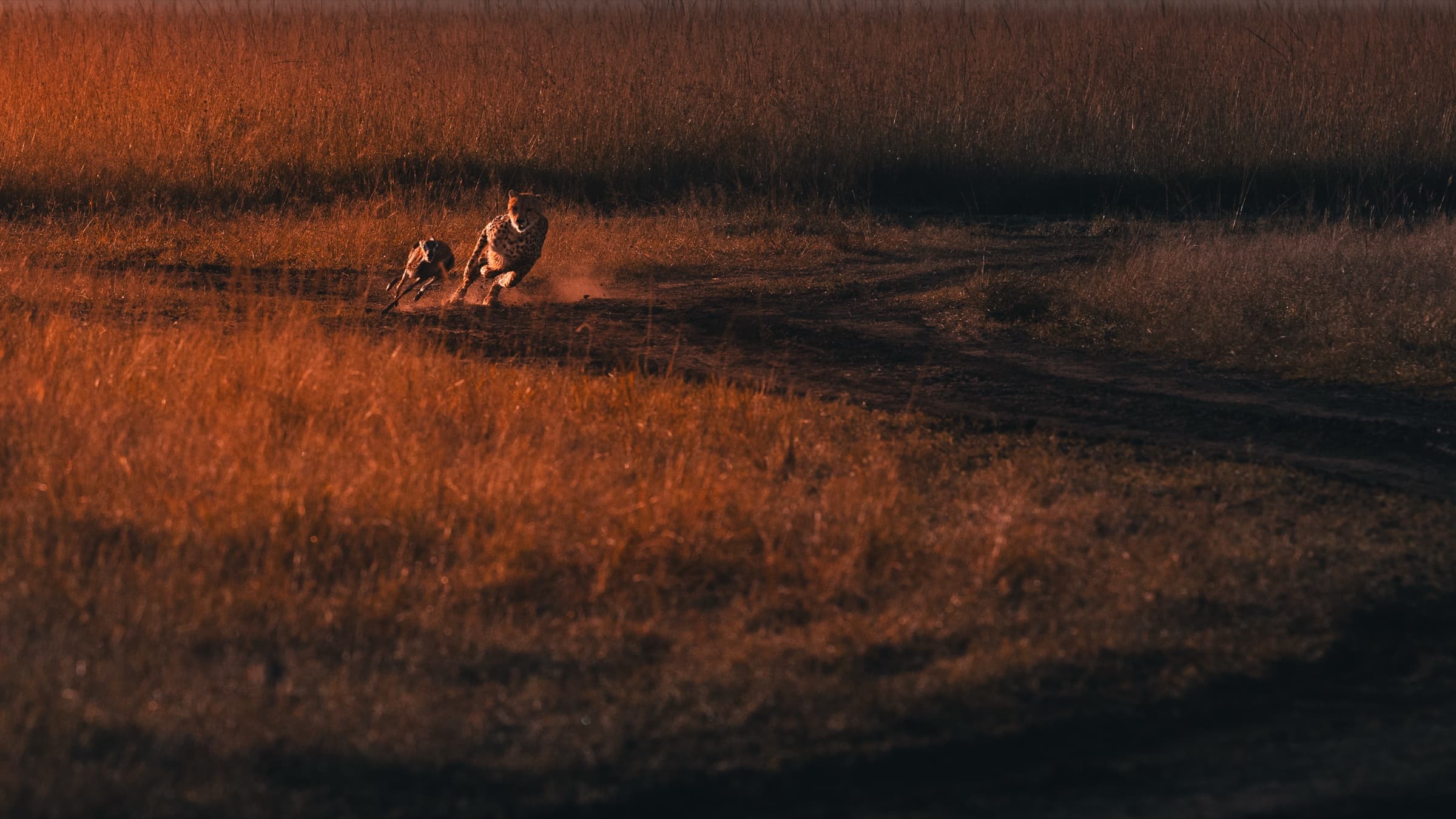
Once the chase begins, everything happens very quickly.
And a fleeing gazelle does not simply run in a straight line.
Research using high-resolution movement data has shown that cheetah hunting is not just a matter of reaching maximum speed. Chases involve powerful acceleration, braking and rapid manoeuvring as predator and prey respond to each other's movement.
That matters to the photographer.
If your long lens is completely filled with the cheetah and you simply chase it through the viewfinder, a sudden change of direction can make you lose the animal or lose focus.
So I try to think one step ahead.
Which animal is the cheetah going for?
Where is that animal likely to move?
Can I leave enough space in the frame for the action to enter?
I once told a group of photographers in Nairobi National Park:
"Don't watch the cheetah. Watch the prey."
There is a difference between chasing a photograph from behind and positioning yourself so the photograph comes toward you.
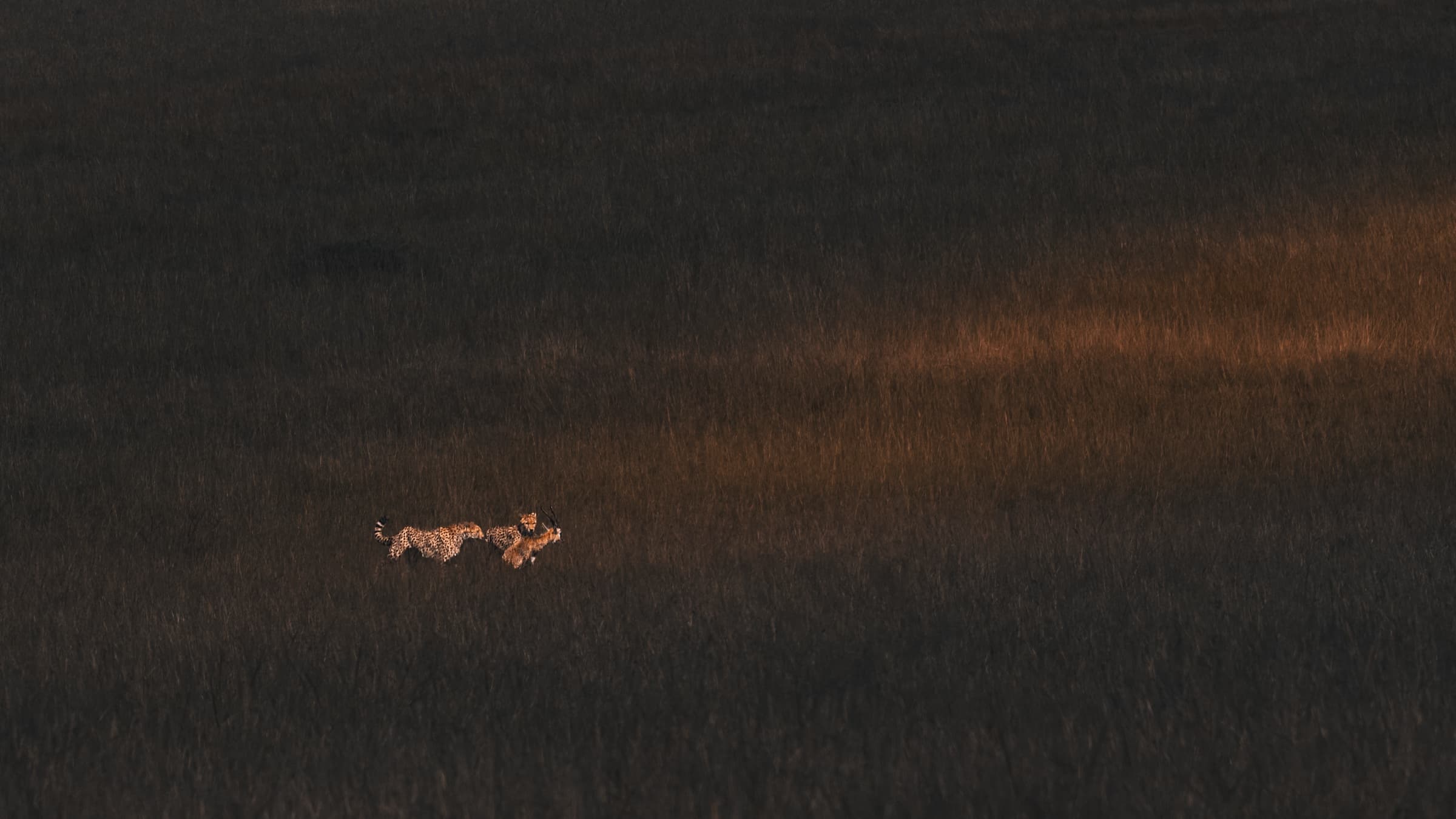
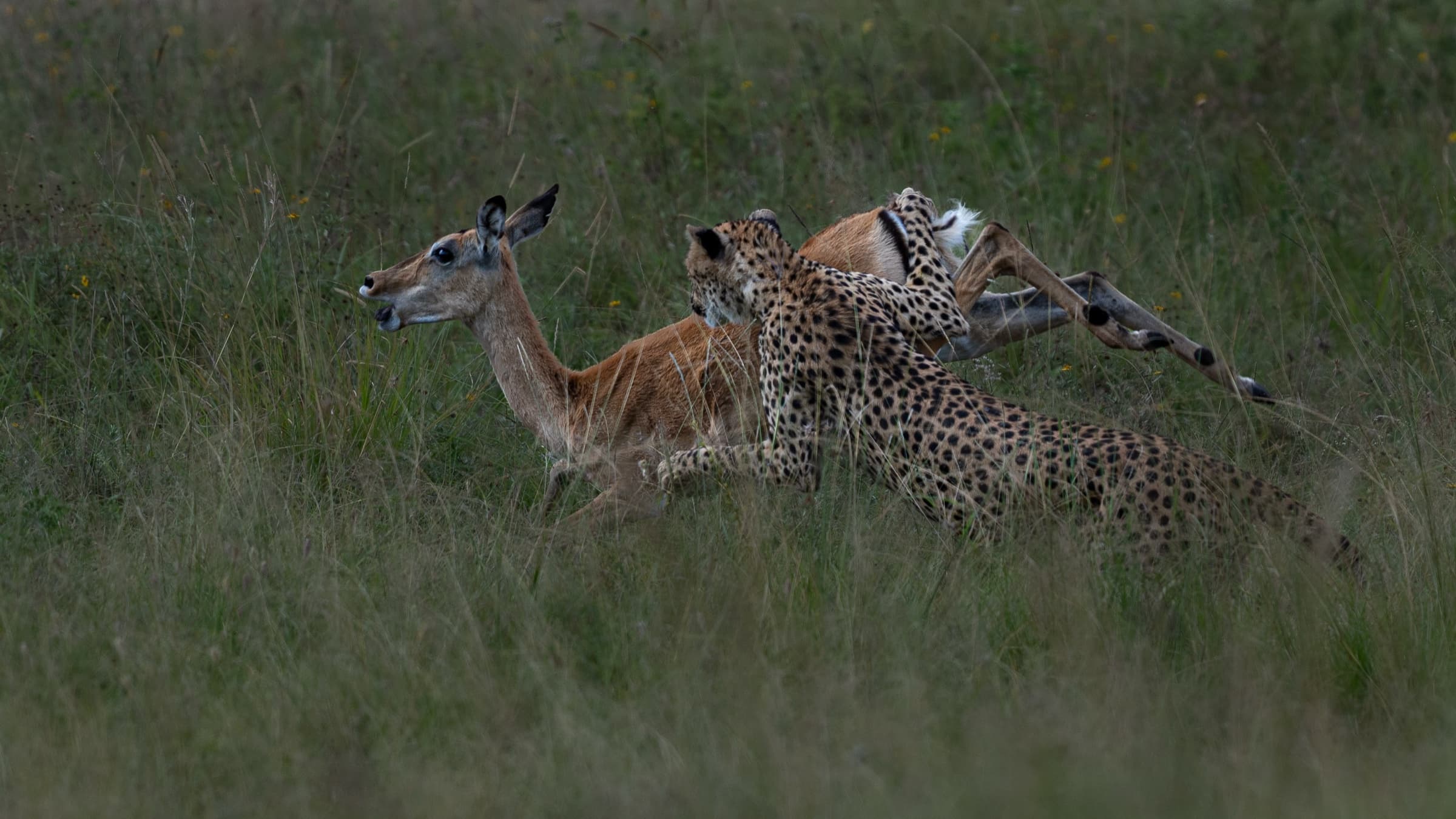
The Best Hunting Conditions Are Not Always the Best Photography Conditions
Cover can help a cheetah approach prey.
But as a photographer, I have a confession:
I love short-grass plains.
Not necessarily because they make hunting easier for the cheetah.
Because they let me see the whole story.
I can watch the search.
The pause.
The use of terrain.
The moment the prey becomes alert.
The first acceleration.
The turns.
The chase.
On short grass, much less is hidden.
You can watch a hunt begin as something almost invisible — perhaps only a change in the direction of a cheetah's gaze — and then see it build until the entire plain suddenly explodes into motion.
The best hunting conditions for the cheetah are not always the best photography conditions for me.
The Hunt Begins Before the Chase
Wildlife photography is not about predicting nature with certainty.
A lean abdomen.
A cheetah moving toward higher ground.
A gaze that keeps returning to the same part of the plain.
A shallow fold in the landscape.
A body suddenly pressed lower into the grass.
None of these signs, by itself, tells me:
A hunt is about to happen.
Nature does not work like that.
What I do is collect the pieces.
I sit in the vehicle.
I wait.
I watch one small clue connect with another.
And when enough of those clues begin pointing in the same direction, I may tell the people in the vehicle:
"Don't leave yet."
Nothing may happen.
Or a few minutes later, everything may happen at once.
The longer I spend in the field, the more I realise that the photograph doesn't begin when I press the shutter.
It begins much earlier.
It begins when I start reading what is happening in front of me.
The photograph begins in the field.
— Nature Zi
East Africa
Research & Further Reading
Wilson, A. M., Lowe, J. C., Roskilly, K., Hudson, P. E., Golabek, K. A., & McNutt, J. W. (2013). Locomotion dynamics of hunting in wild cheetahs. Nature, 498, 185–189. doi.org/10.1038/nature12295
This study used GPS and accelerometer collars on wild cheetahs in Botswana to show that successful hunting depends on manoeuvrability and acceleration rather than simply achieving maximum speed. Cheetahs modulate speed through braking, turning and rapid direction changes as both predator and prey respond to each other's movement — which is why watching the prey, not only the cheetah, matters during a chase.
Caro, T. M. (1994). Cheetahs of the Serengeti Plains: Group Living in an Asocial Species. University of Chicago Press.
The foundational long-term study of cheetah behaviour and ecology in the Serengeti. Covers temporal activity patterns — cheetahs' strong bias toward diurnal hunting — body condition assessment, and the role of competitor avoidance in shaping when and how cheetahs hunt. The observation that cheetah activity concentrates during daylight, reducing temporal overlap with the predominantly nocturnal peak activity of lions and spotted hyenas, is documented throughout.