Field Note
What Focal Length Do You Actually Need for an African Safari?
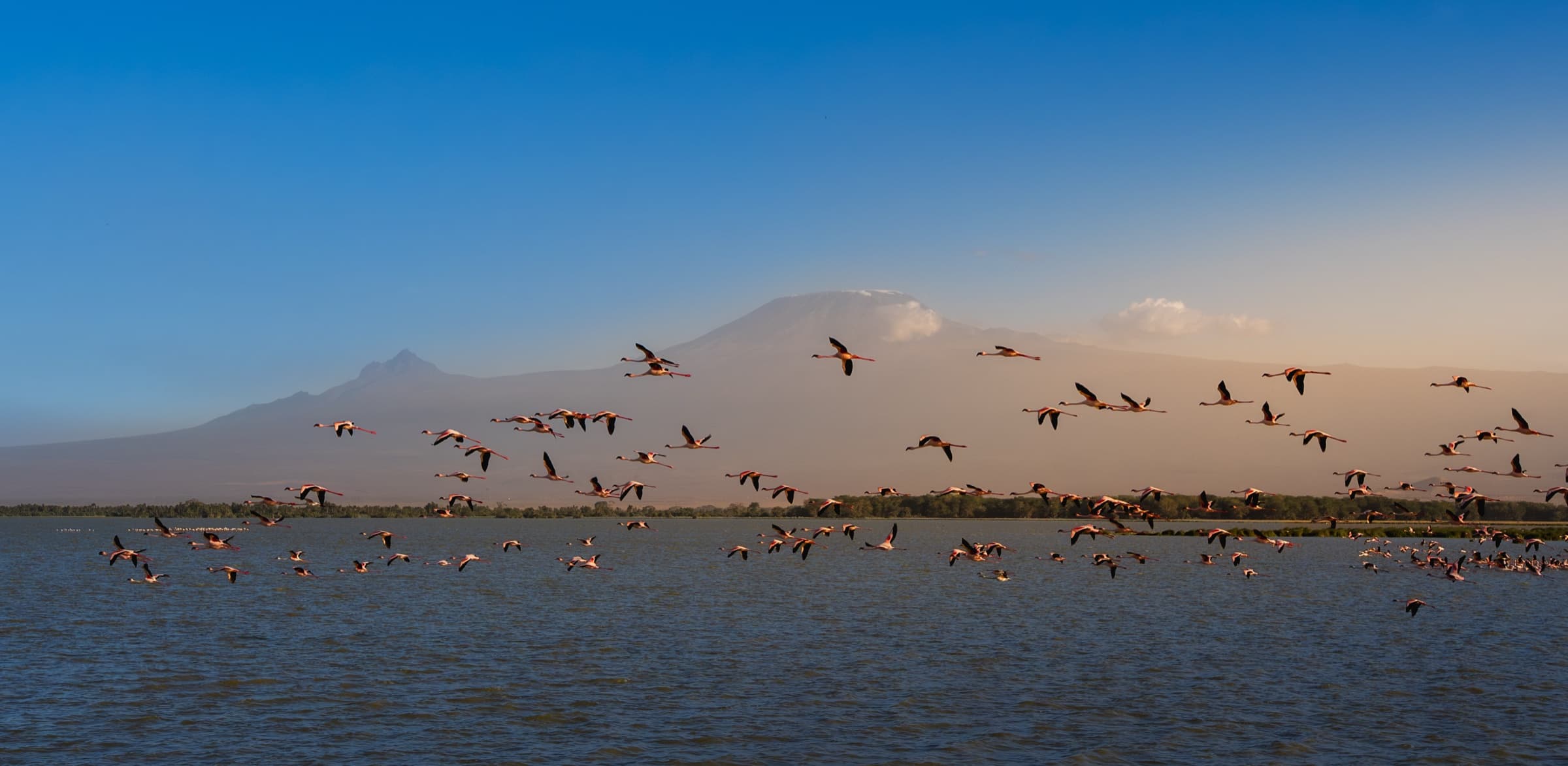
Everyone asks about 400mm or 600mm. The first photograph in this article was made at 35mm.
By Nature Zi — wildlife photographer and safari guide based in Nairobi, Kenya, with 15 years of field experience across East Africa.
The photograph at the top of this article was made at 35mm.
Most people planning their first safari ask me about 400mm. Some ask about 600mm. The question is understandable — safari photography conjures images of lions close-filled in the frame, birds at distance, a leopard in a tree rendered in sharp detail against a blurred background.
Those photographs exist. And yes, some of them require a long lens.
But the focal length question, as usually asked, is the wrong question. The right question is: what photograph are you trying to make?
The answer to that question determines everything else.
The Landscape Is the Photograph
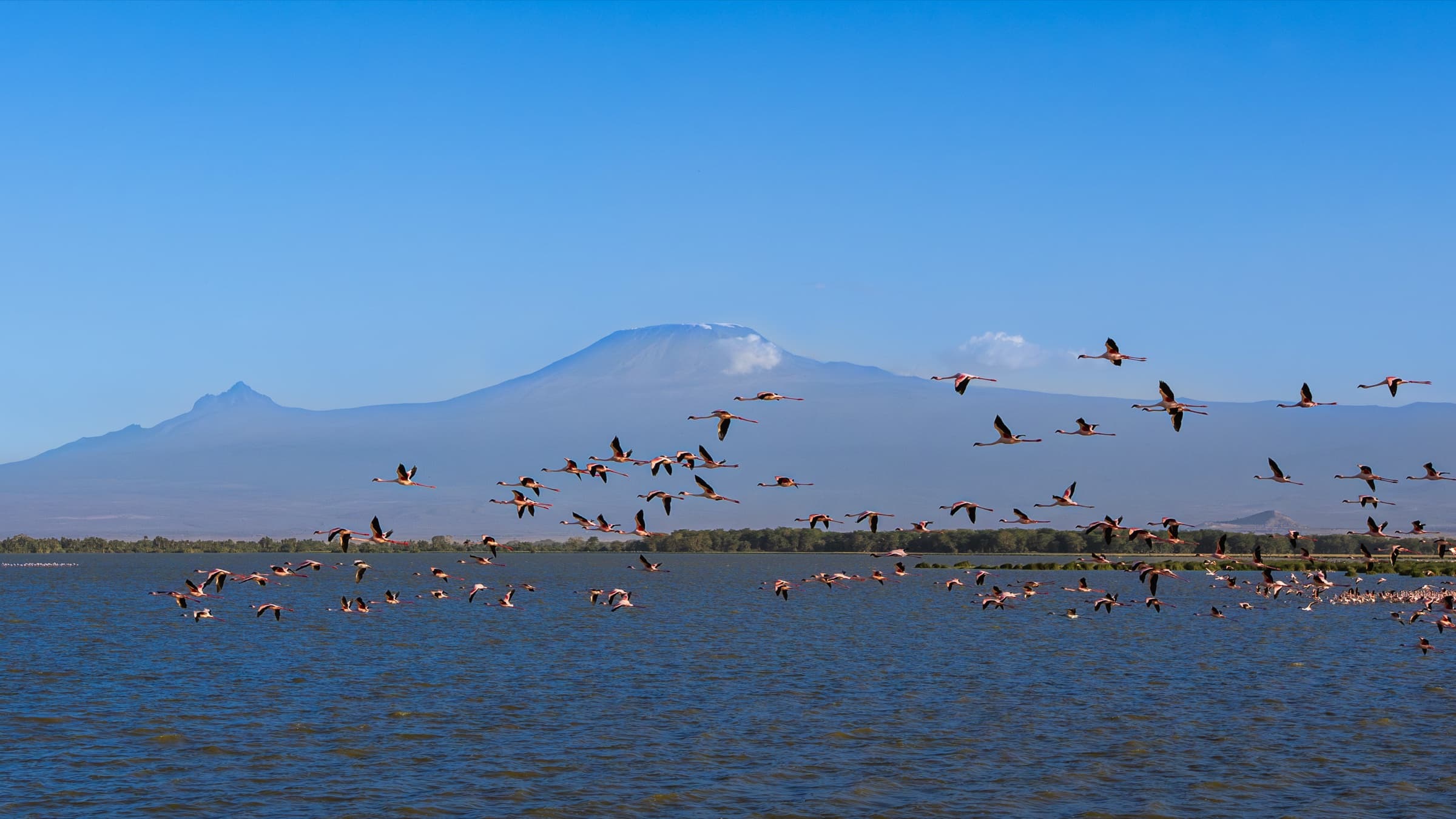
The flamingo image above was made at 35mm because the photograph required the mountain, the lake, and the flock together. A 200mm lens would have brought the flamingos closer and removed the mountain. A 400mm lens would have given you a few birds in good detail and almost nothing else.
That is not the photograph. The landscape is the photograph.
The planning decision that made this image possible was arriving at the lake before the late-afternoon flight behaviour began — not the choice of focal length. The 35mm lens was on the camera because I knew what I was trying to make.
300mm: A Large Subject at Useful Distance
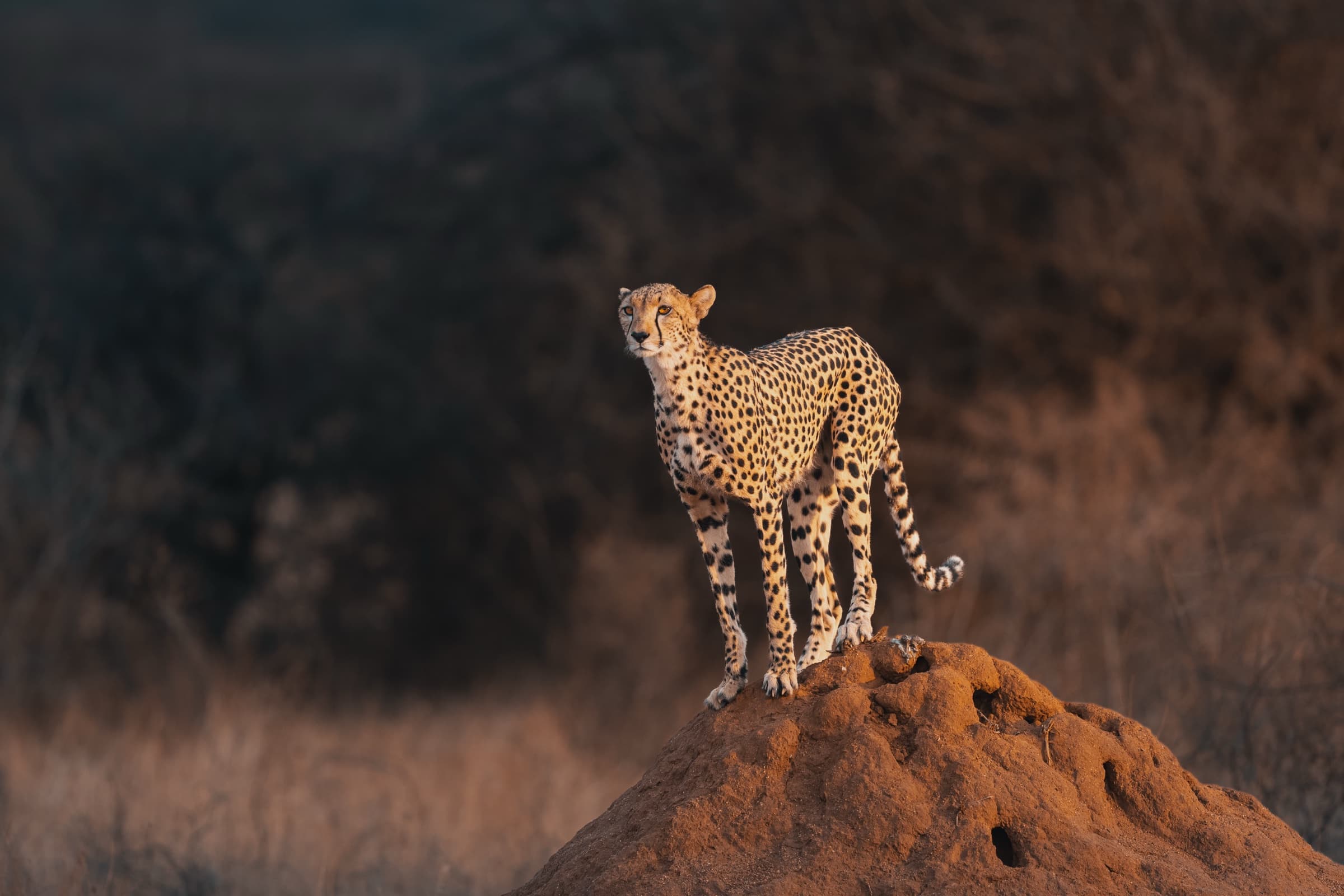
For large mammals in open savanna — a cheetah on a termite mound, a lion at rest, a leopard scanning from a branch — 300mm is often exactly the right focal length.
Not so short that the animal is a small figure in a large landscape. Not so long that you lose the context of where the animal is. At useful working distances in open habitat, 300mm fills the frame with your subject and still carries enough of the environment to read as a field photograph rather than a studio portrait.
This cheetah was photographed at 300mm, f/2.8, in the early morning. The lens separated the animal cleanly from the background.
200mm: The Herd in Its World
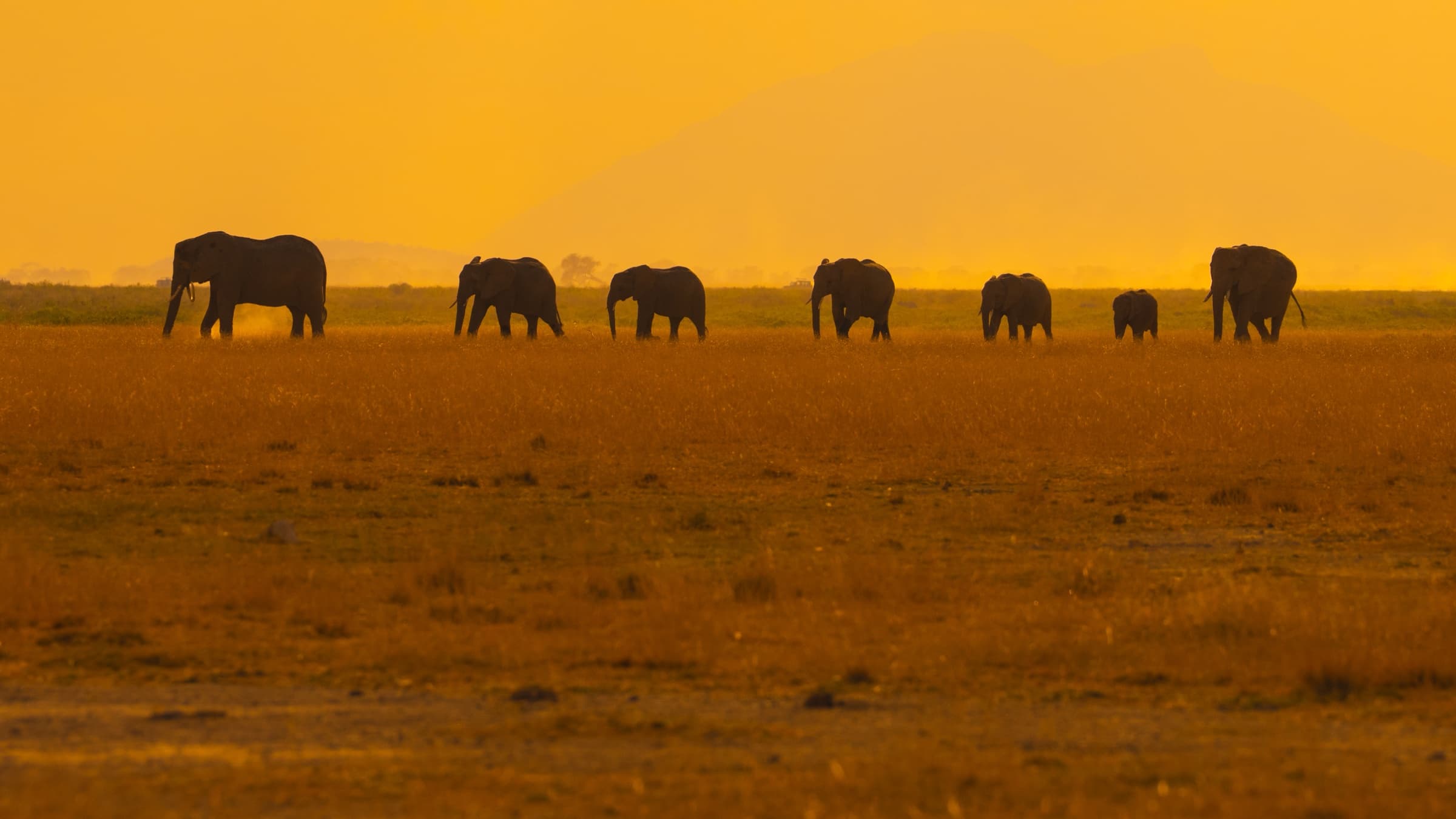
An elephant herd moving across the plain at sunset is not a telephoto subject. It is an environmental subject.
At 600mm you get one elephant, well-lit, technically excellent, editorially incomplete. At 200mm you get the herd, the scale of the open ground, and the sky above them. Those are three separate things working together in a single frame.
The photograph below was made at 200mm in Amboseli. The goal was the herd in its context. A longer lens would have lost that context.
600mm: When the Subject Is Small
The case for a long lens is not primarily about distance. It is about subject size.
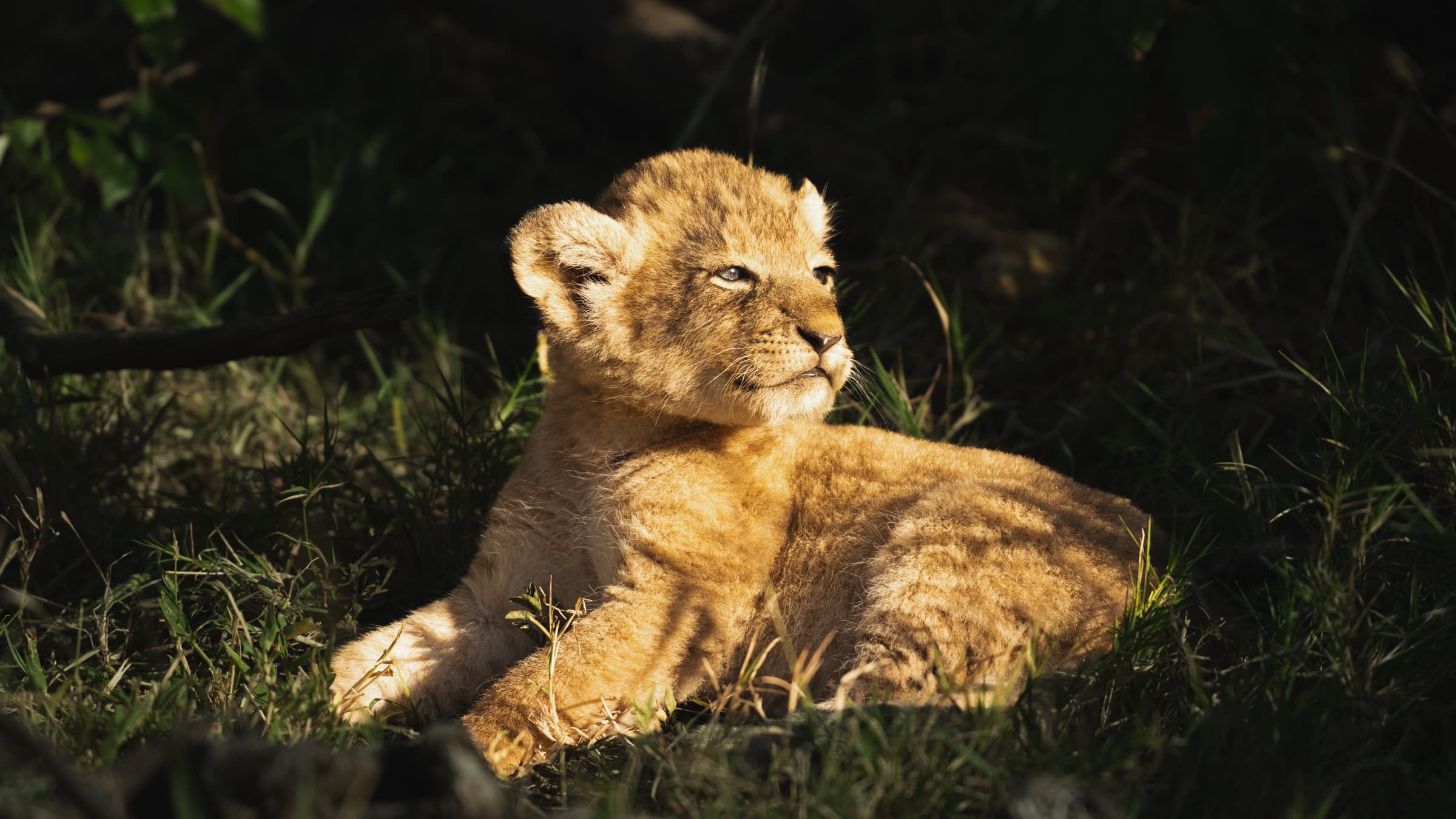
A lion cub a few weeks old is a small animal. At any working distance that keeps a respectful margin from the family, the cub occupies a tiny portion of the frame at 300mm. At 600mm it fills the frame in a way that lets you read its expression, the quality of the morning light on its fur, the grass beneath it.
This is not telephoto for its own sake. The focal length is in service of a specific subject size in a specific frame.
When More Focal Length Makes It Worse
Not every difficult photograph is a focal length problem.
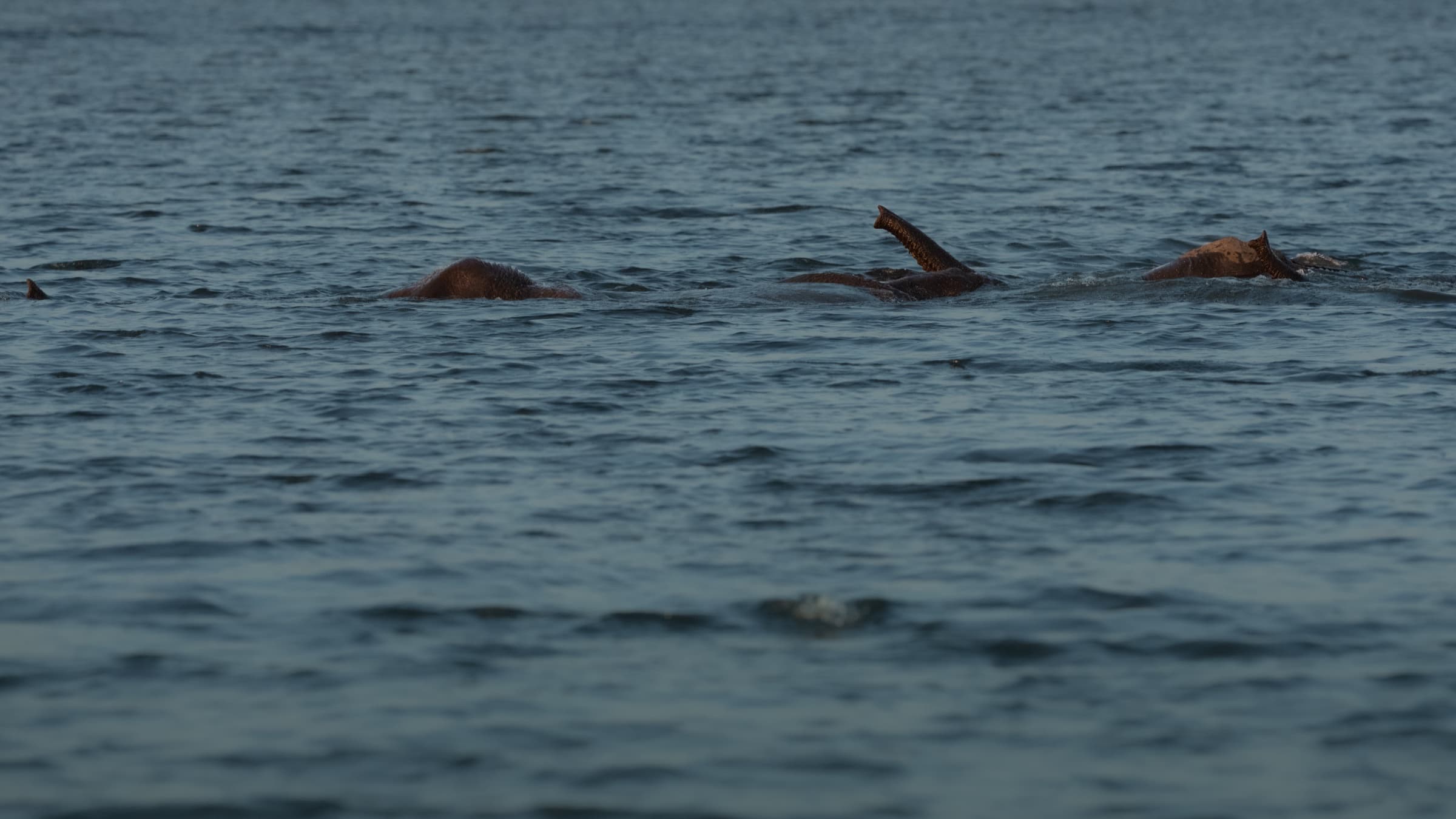
The image below was made at 300mm. The subjects — elephants crossing a body of water — are barely visible above the surface. They are in the middle of the frame, identifiable but not prominent.
More focal length would not have improved this photograph. The constraint was the distance across the water and the atmospheric conditions at that hour. A 600mm lens would have given a slightly larger version of the same unclear frame.
When a photograph is not working, the instinct is to reach for more reach. The question to ask first is whether more focal length addresses the actual constraint — or whether it simply zooms in on the problem.
The Photograph You Are Trying to Make
Most photographers doing their first safari do well with a 70–200mm zoom and a fixed 300mm or 400mm. Those two lenses cover the majority of what the field offers.
But the gear decision is secondary. The primary decision is always: what photograph are you trying to make?
The flamingo image required arriving at the right position before the flight behaviour began, understanding where the flock would move in relation to the mountain, and having a wide lens ready. That decision happened before the shutter opened.
The lion cub required patience, the right light, and a long lens for a small subject at distance. That decision also happened before the shutter opened.
The focal length follows from the photograph. Not the other way around.
On a guided safari, positioning decisions — where to be, when to arrive, which direction to face — are part of what an experienced guide provides. The focal length question becomes easier to answer when you already know where you are going to be standing.
In the end, the lens is only a tool.
The photograph is still about what you see.
— Nature Zi
East Africa