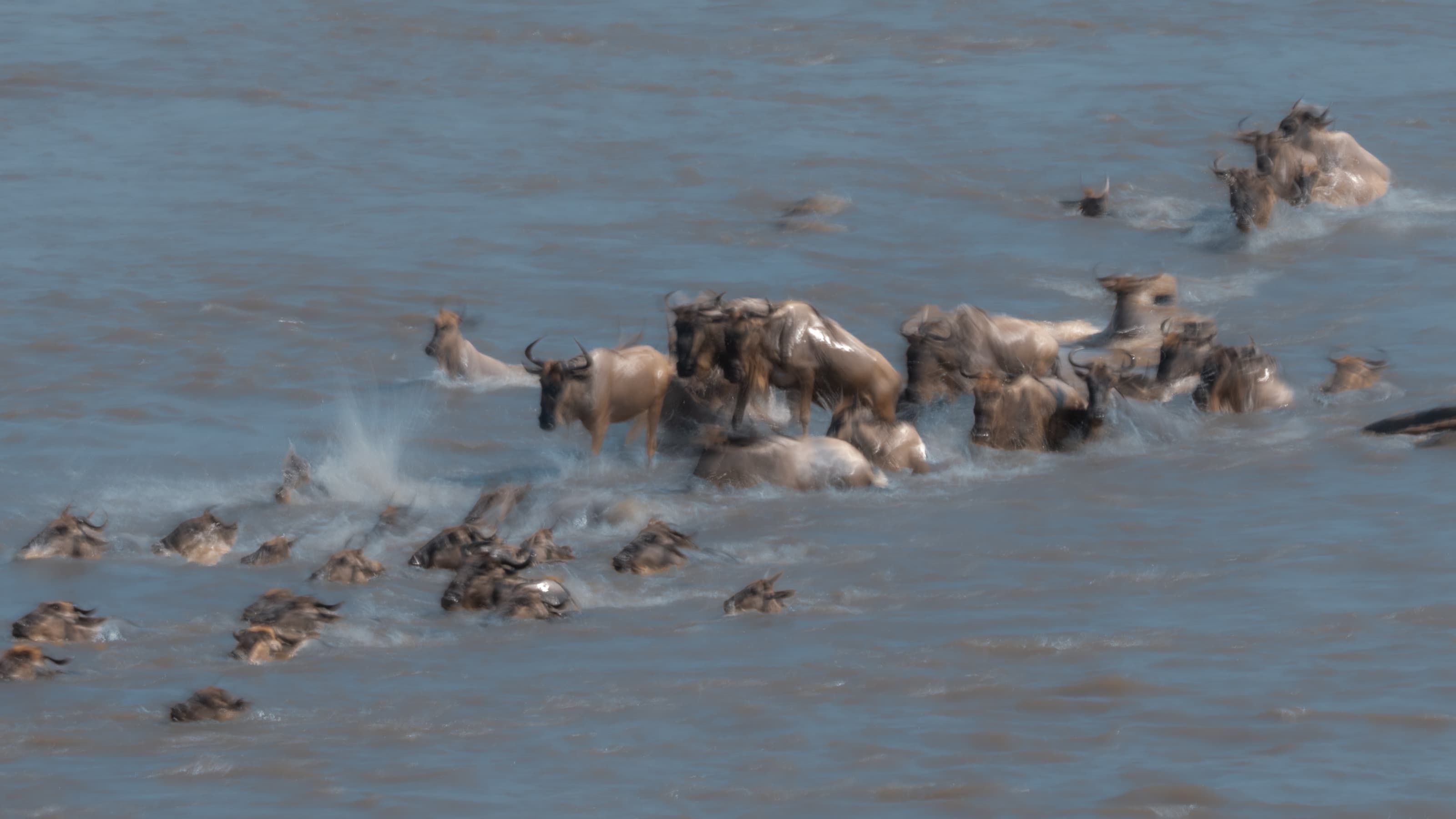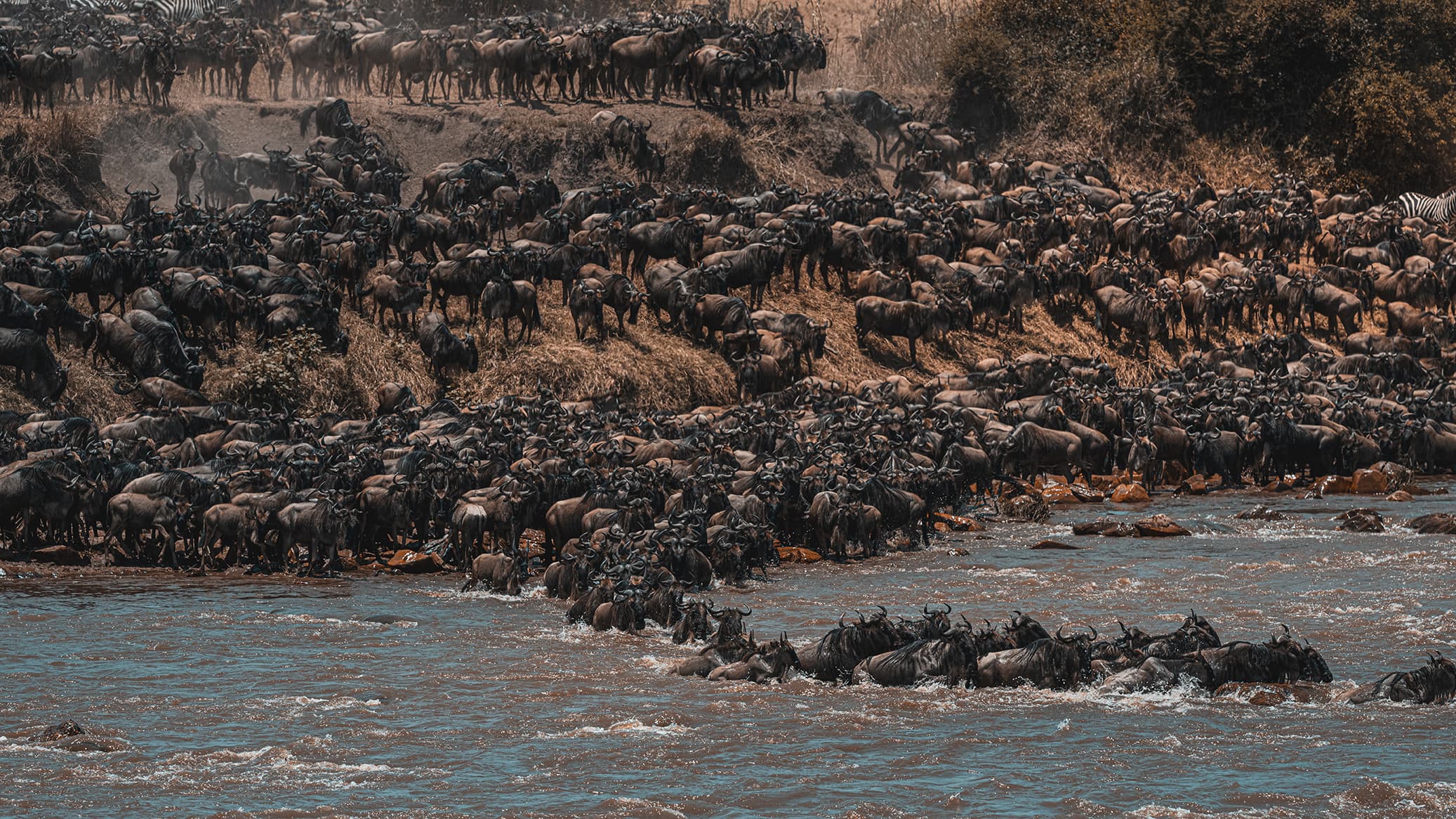
Field Note
July to September for the Wildebeest Crossing — But Only Half Right
The window is shortening. Here is what three years of data shows.
By Nature Zi — wildlife photographer based in Nairobi, Kenya, with 16 years of field experience across East Africa, including the Maasai Mara and Serengeti.
Ask when to go for the wildebeest river crossing and most sources will tell you July to September. That is not wrong.
But it is only half the answer.
If you are planning a Kenya-only trip and arriving in September, you may find the crossings are already over.
Three Years of Crossing Data
I have been recording crossing activity in the Mara ecosystem every year for 16 years. Here is what the Kenya side has looked like recently:
2024: first major crossings from 30 June — last crossings by 30 September.
2025: first major crossings from 28 June — last crossings by 15 September.
2026: first major crossings from 30 June — last crossings by 5 September.
The start date is remarkably stable: late June, year after year.
The end date is not. It has moved forward by nearly four weeks over three years.
Why the Window Is Closing Earlier
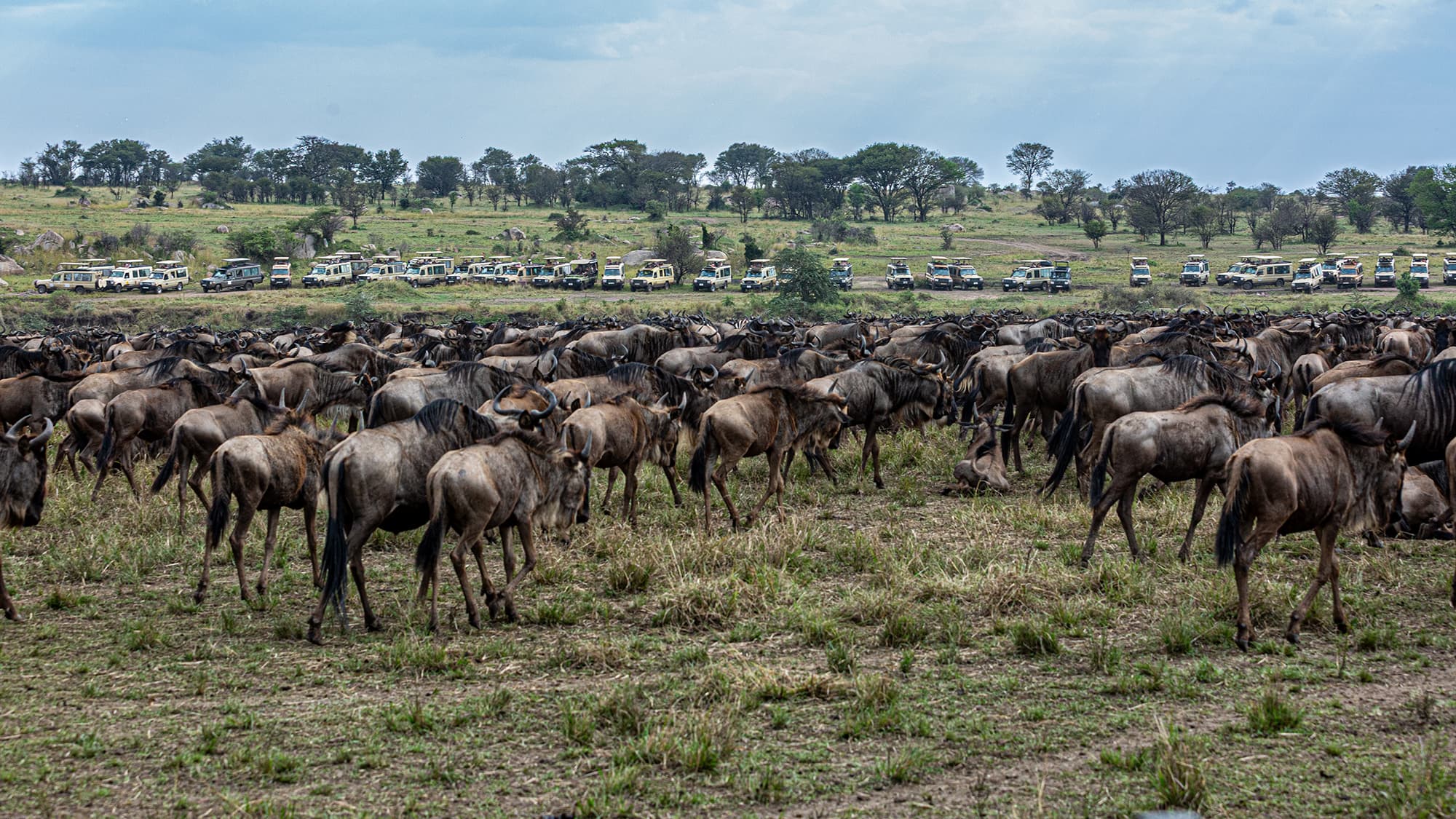
From what we have observed over the past few years, one significant factor is controlled burning of grassland around the Kogatende area in northern Tanzania.
Burning has been more frequent in this zone. Combined with the early rains in those months, new green grass appears quickly — and wildebeest follow new grass. When Kogatende puts up fresh growth, the herds move south before Kenya's grass is finished.
They do not follow a calendar. They follow rain.
The Two-Country Solution
One thing is consistent: the Tanzania side — Serengeti north, Kogatende area — holds crossings through all of September. In good years, into early October.
This is why every itinerary I lead covers both countries. Kenya first, then Tanzania, or the reverse. At least two full days on each side. Overland is the main connection; light aircraft transfers are also possible.
In every group I have led over the past two seasons, every group has witnessed at least one crossing. The difference was only scale — large or small.
The Lamai Crossing, August 2025
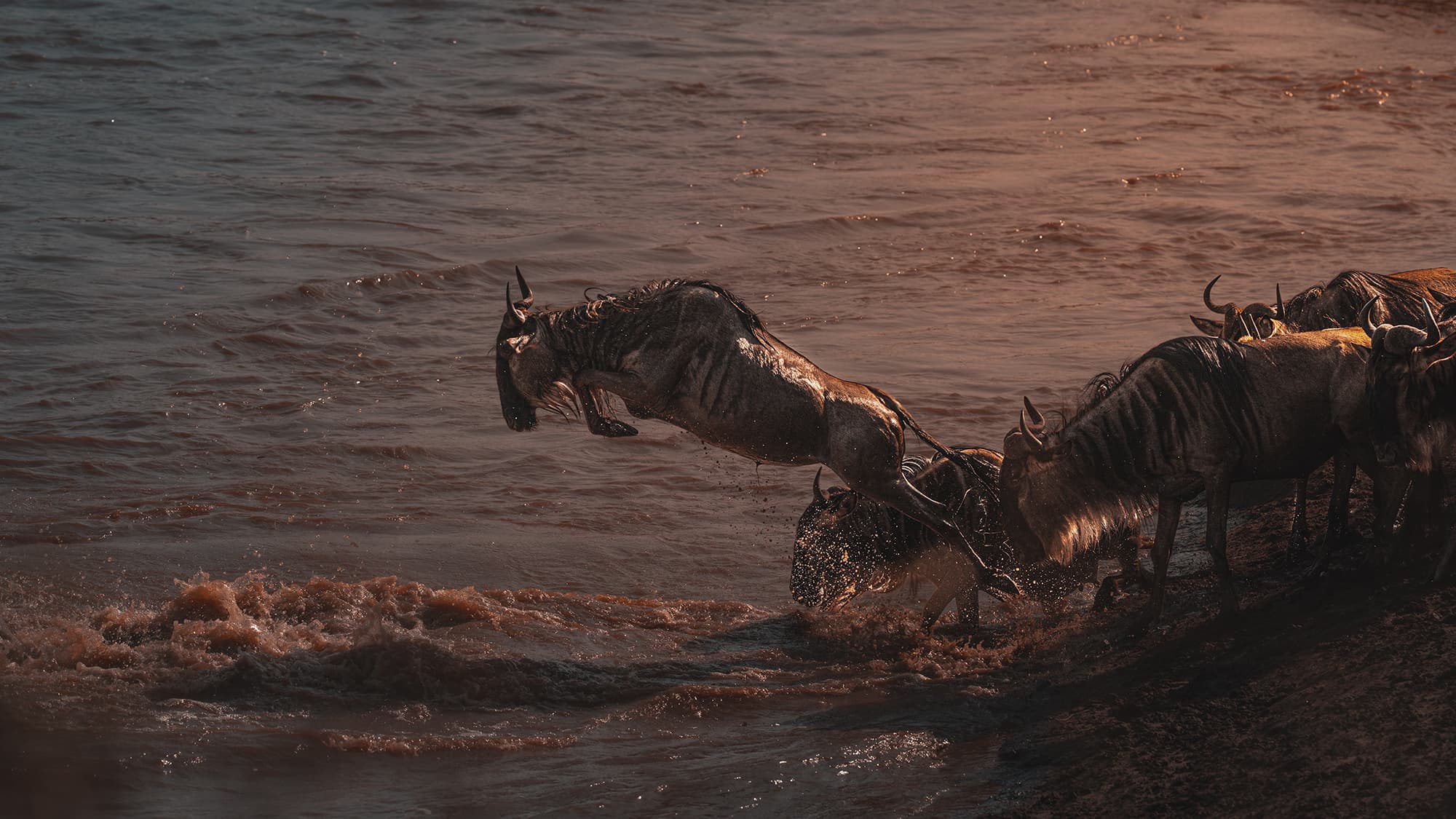
Scale matters. In August 2025, we were driving through the northern Serengeti near Lamai when the vehicle entered the middle of a moving herd.
We stopped. Wildebeest on every side — the sound of them, the smell of dust and herd, the animals at the front pressing into the river while those behind pushed forward, some turned back, some went in anyway.
We estimated close to 100,000 animals. The crossing ran for a full hour without stopping.
That scale is not something you plan for. You plan to be in the right area at the right time and let the field deliver what it delivers.
When There Are Only Thirteen
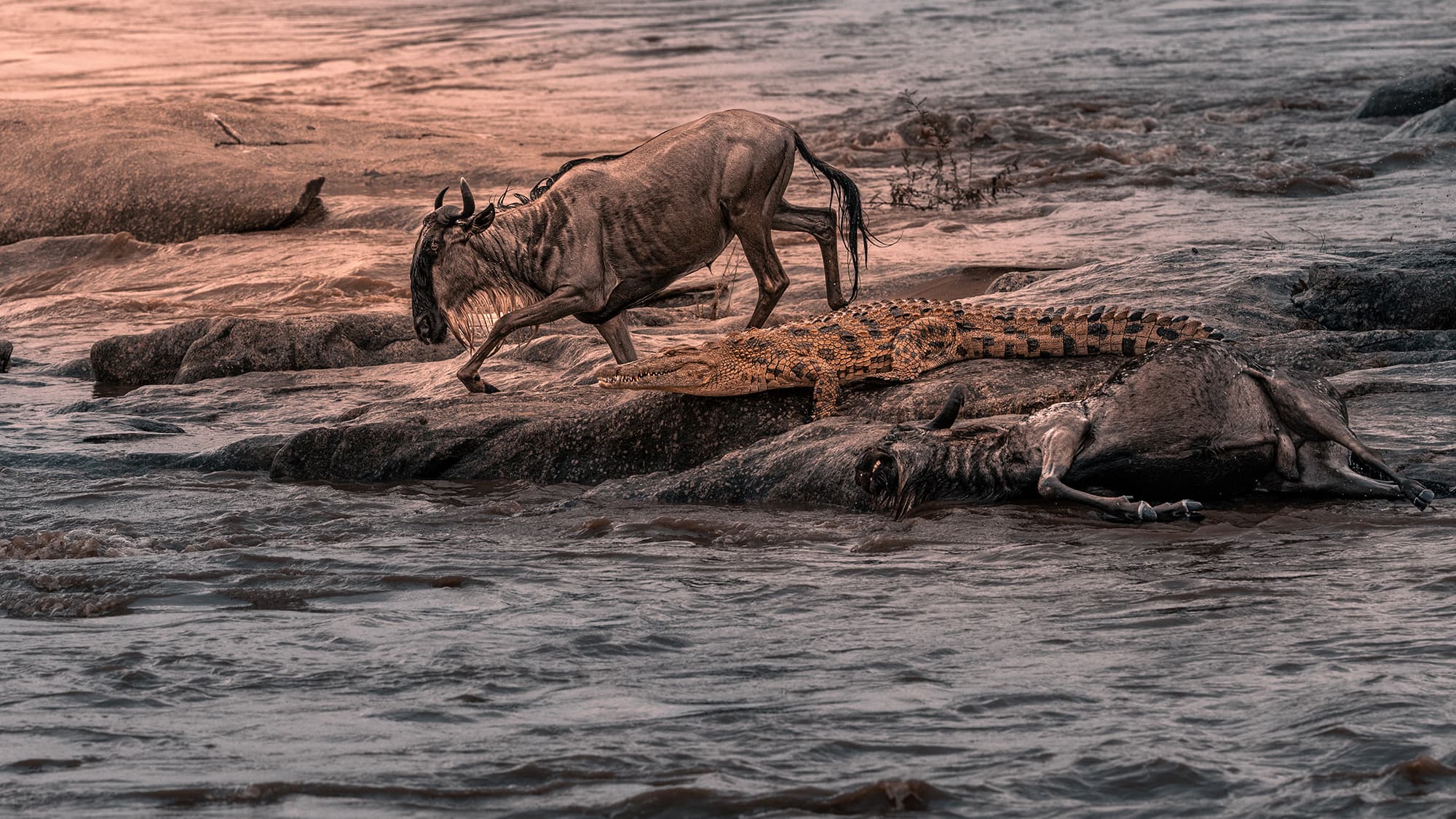
The smallest crossing I have photographed had thirteen wildebeest.
Thirteen is enough. The hesitation at the bank, the testing of the water, the one animal that commits and pulls the rest with it — that whole sequence is intact. A small crossing is a complete story. It is often easier to photograph than a mass crossing, and the behaviour is exactly the same.
I tell photographers: if you arrive expecting 100,000 and find thirteen, do not put the camera down.
When to Go
July through September remains the window. Within that window:
July and August give you the best chance on the Kenya side. September, plan for Tanzania as your primary crossing location.
If your itinerary is Kenya only and you arrive after mid-September, the risk is real. If your itinerary covers both countries, you have options through the whole window.
The migration is not a fixed event. It moves with rain, grass, and conditions that shift year to year.
The strategy is not to find the perfect week. It is to be in the right place long enough.
— Nature Zi
Mara River ecosystem, East Africa