Wild Life 03
Noma
A male cheetah, moving between worlds.
Cheetah · Male · Greater Mara ecosystem, Kenya
Some lives are known by a single unforgettable image.
Noma's life is known a different way — in fragments, spread across years and across a border.
He is a male cheetah of the Greater Mara. Researchers know him as M120. He was born here and grew up here; then, for a stretch, the record of him thinned almost to nothing.
He was documented again in 2024, back in the Mara after time in Tanzania.
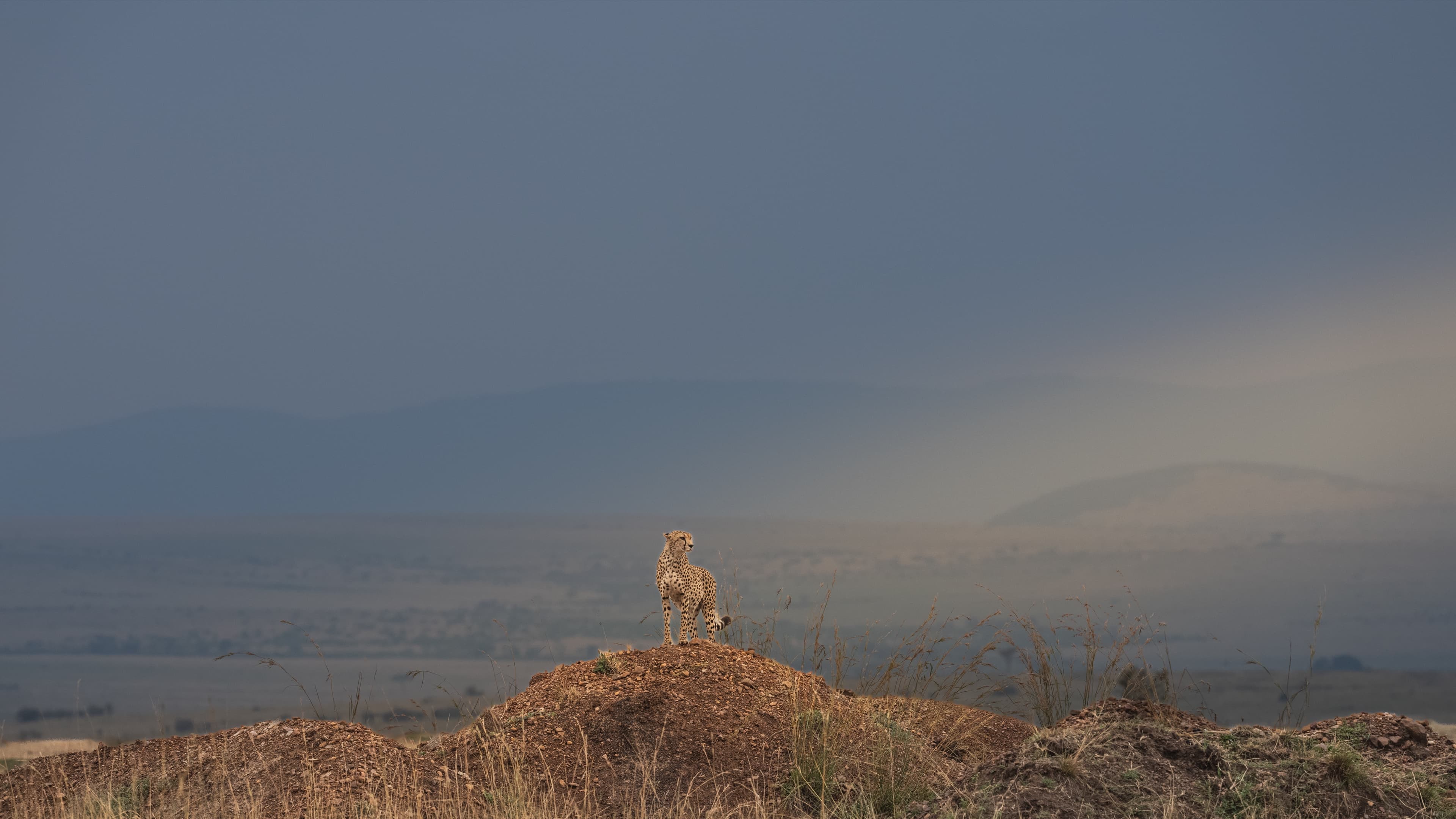
On 20 August 2026 I watched him myself — alone on a mound, reading the plain.
This page is not a portrait. It is a record kept over time: what is known about one cheetah, where the knowing stops, and where it starts again.
Verified context
Born in the Mara
Noma was born in the Greater Mara around late 2020, one of a litter of three.
Monitoring records name the mother of that litter as Neema.
Records from the Mara Predator Conservation Programme note that the three cubs came through their first, most dangerous months and reached independence.
Verified context
Three cubs reached independence
By about March 2022, Neema's three young cheetahs had left her and were feeding themselves.
That is the point conservationists call independence — the end of a cheetah mother's work, and the start of the most exposed period of a young cheetah's life.
For a short while after independence, cheetah siblings often stay loosely together before going their own ways.
Verified context
The siblings separate
Research records note that one of Noma's sisters — recorded by the Mara-Meru Cheetah Project as Nariku — separated from him around late September 2022.
There is some inconsistency in the records over that sister's name; it is kept here as it stands rather than tidied into one version.
After that separation, the project records do not describe Noma travelling with a sibling.
Verified context
Beyond the Mara
For a period after 2022, Noma stopped appearing regularly in the Mara material that has been reviewed for this page.
No confirmed Mara record of him was found in the reviewed 2023 project material.
A gap in the record is not the same as a gap in the life. It means only that, for a time, the people who keep these records were not seeing him.
Later records placed him across the border, in Tanzania — the same Mara–Serengeti ecosystem, without the line the maps draw.
Verified context
Return
In early July 2024, Mara-Meru Cheetah Project records note Noma — M120 — arriving back into the Mara ecosystem from Tanzania.
The records from that time also note signs consistent with mange: hair loss around the right front elbow, and reduced facial fur quality.
That is a historical note. It describes how he looked in July 2024, not how he is now.
Field observation · Nature Zi
Seen again
On 20 August 2026, in the Greater Mara, I watched Noma myself, over about forty minutes in the late afternoon.
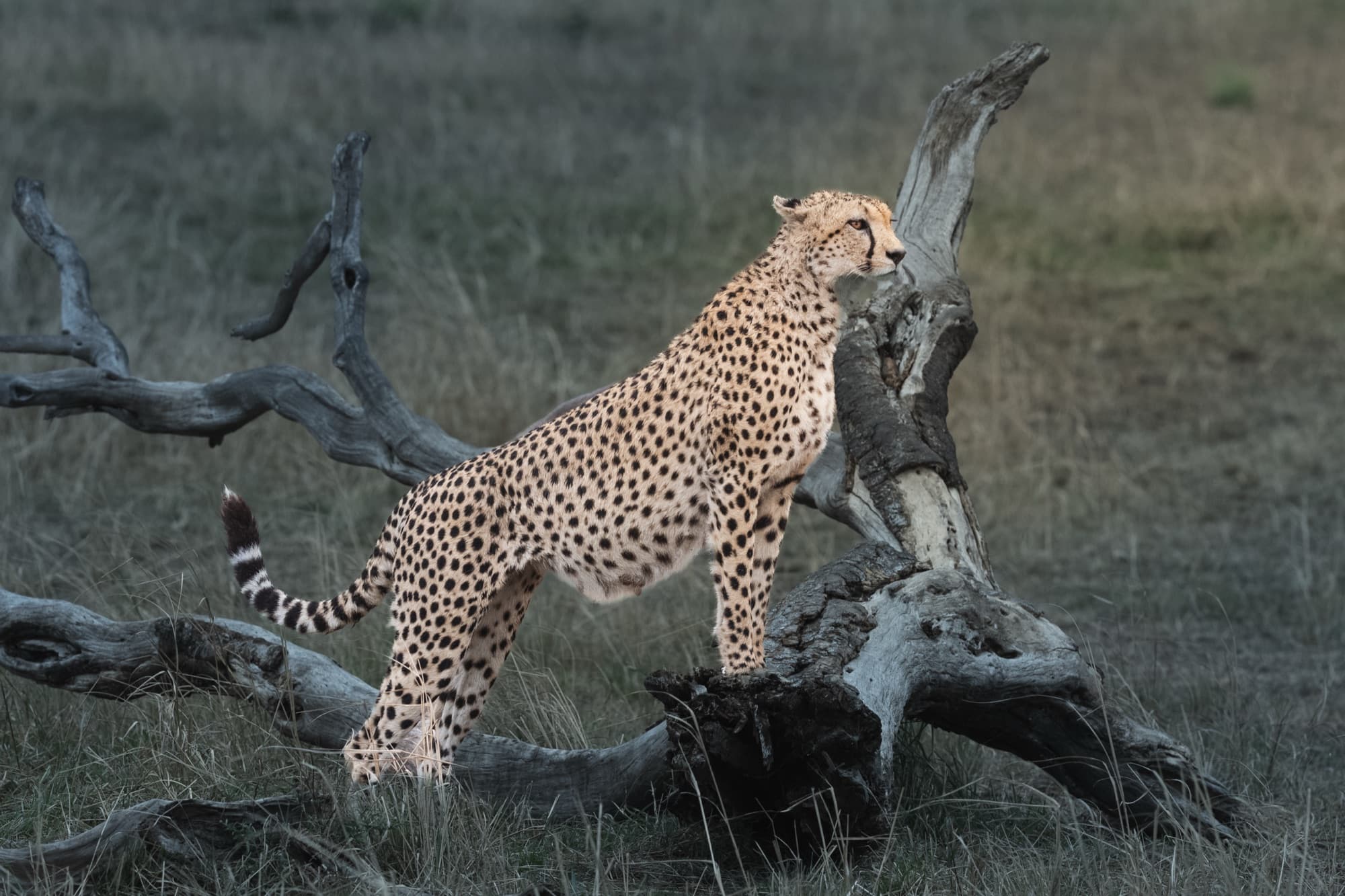
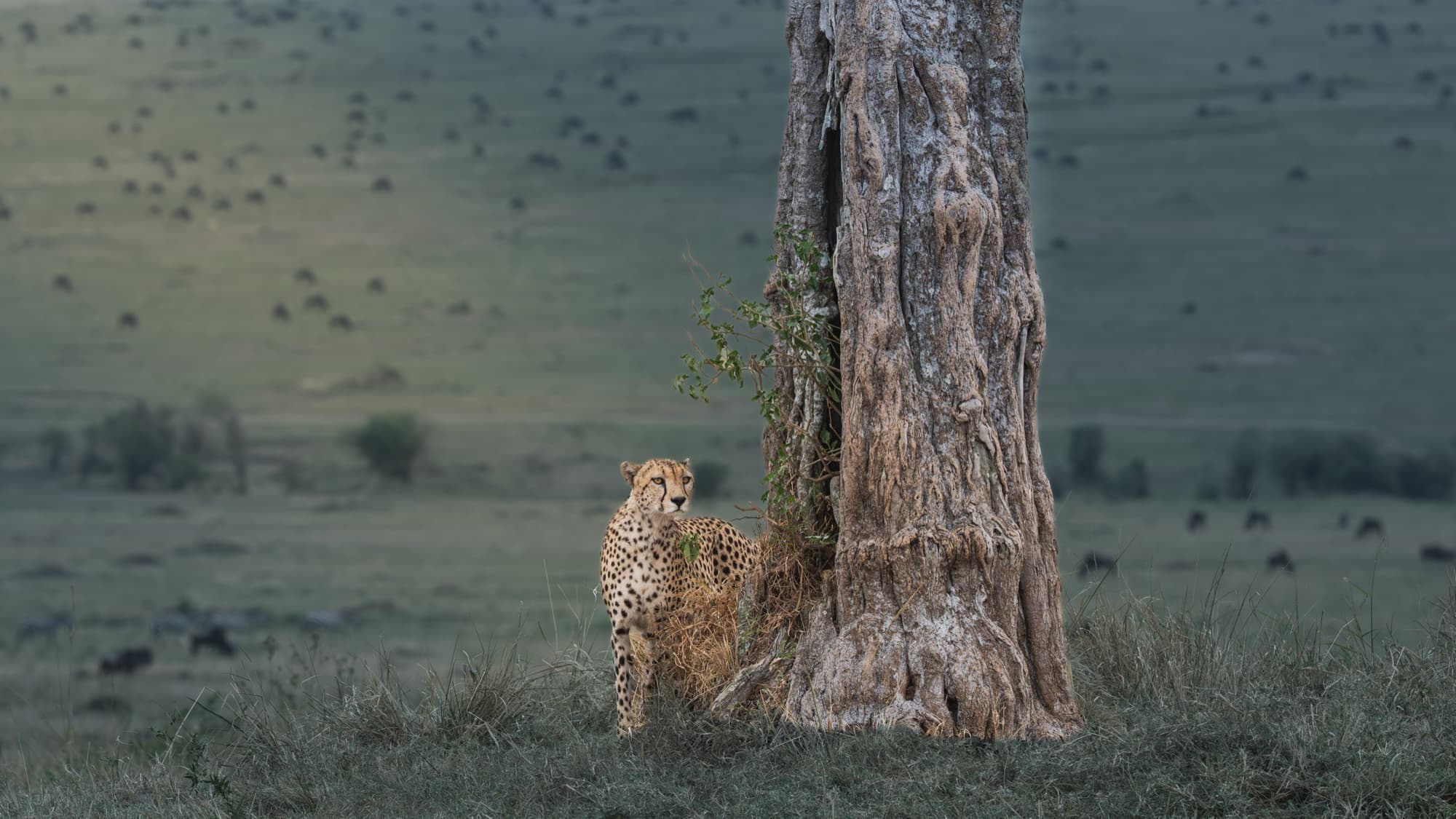
He was alone. He moved between a fallen tree, a raised earth mound and the foot of a big tree, stopping at each to stand and read the plain around him.
I did not need a collar or a record sheet to recognise him. In this landscape, cheetah people know Noma.
That afternoon is where Nature in Wild's own record of him begins.
Life record
- Name
- Noma
- Research ID
- M120Mara-Meru Cheetah Project
- Species
- Cheetah — Acinonyx jubatus
- Sex
- Male
- Landscape
- Greater Mara ecosystem
- Life stage
- Adult male
- Born
- Approximately late 2020research record
- Mother
- Neema (F68)research record
- Littermates
- Two sisters — Nagol (F99), and one recorded as Nariku (F98) or Nasiekuone sister's name is unresolved in the records
- Status
- Living · free-ranging
- First recorded by Nature Zi
- 20 August 2026
A life is made of moments.
Late December 2020
Born into Neema's litter
Noma was born in the Greater Mara, one of a litter of three. Monitoring records name the mother as Neema.
Verified context
March 2022
The litter reached independence
By about March 2022, Neema's three young cheetahs had left her and were feeding themselves.
Verified context
Late September 2022
The siblings separated
Research records note Noma's sister — recorded by the Mara-Meru Cheetah Project as Nariku (F98) — separating from him around this time. The project records do not describe him travelling with a sibling afterwards.
Verified context
2023
A gap in the record
No confirmed Mara record of Noma was found in the reviewed 2023 project material. A gap in the record is not the same as a gap in the life.
Verified context
Early July 2024
Return from Tanzania
Project records note Noma (M120) arriving back into the Mara ecosystem from Tanzania at the start of July 2024. Signs consistent with mange were documented at the time — hair loss around the right front elbow and reduced facial fur quality. That describes July 2024, not the present.
Verified context
20 August 2026
Seen again — Nature Zi's field observation
In the Greater Mara, over roughly forty minutes in the late afternoon (about 16:48–17:32), Nature Zi watched Noma alone — first up on fallen deadwood, later on a raised earth mound, later near a large tree — standing and scanning the plains. This is where Nature in Wild's own record of him begins.
Field observation · Nature Zi
Still moving.
This record is still being written.
What the photographs cannot explain alone.
Field notes on watching Noma — recognising a known individual, reading a life across gaps in the record, following a cheetah that moves between the Mara and the Serengeti — will be published here as they are written.
A record kept by many hands
Almost nothing on this page was recorded by one person.
Noma's early life is known through the Mara Predator Conservation Programme. His research identity — M120 — and the account of his years since come from the Mara-Meru Cheetah Project. Guides and trackers who work this landscape carry his name and his history with them.
A cheetah that moves between Kenya and Tanzania is only knowable because people on both sides of the ecosystem keep looking, and keep comparing what they see.
Nature in Wild adds one more set of eyes to that effort — no more, no less.
Photographs
Recent updates
No verified public updates have been added yet.
Records & sources
- Mara-Meru Cheetah Project — Cheetah M120 (Noma) — identification and monitoring records. verifiedNoma's research identity (M120), the ~late-September-2022 sibling separation, and the early-July-2024 record of his return from Tanzania (with signs consistent with mange) come from this project's monitoring records. His littermate Nariku is recorded here as F98.
- Mara Predator Conservation Programme — Neema's 2020 litter — birth and independence records. verifiedThe record that Neema gave birth to three cubs around late December 2020, and that the litter reached independence around March 2022.
- Mara Predator Conservation Programme — Cheetah Chat newsletter, November 2025 (2025). verified marapredatorconservation.org/wp-content/uploads/2025/11/Cheetah-Chat-Nov-2025-WEB-21-11-2025.pdfCorroborates Noma's 2020 birth, littermates Nagol and Nariku, and mother Neema; records that he was raised in the Mara North and Olare Motorogi conservancies, dispersed along the Kenya–Tanzania border into the northern Serengeti, and was recorded again on the southern side of the Reserve in 2025. This newsletter treats 'Nariku' (Noma's sister) and 'Nasieku' (a daughter of Nashipae) as different individuals.
- Greater Mara guides and trackers. credibleLocal naming for Noma and his siblings — including the unresolved Nariku / Nasieku variant — relayed to Nature Zi in the field. Some field-relayed details differ from the longitudinal project records and are treated as uncertain.
- Nature Zi (first-hand field observation) — Noma observed in the Greater Mara, 20 August 2026. verifiedFirst-hand identification and observation by Nature Zi. Photograph DSC05362 — "Noma on the Mound".
Why This Life Matters
It would be easy to tell Noma's story as a straight line: born, grew up, dispersed, returned.
The real record is full of gaps. There are years when it is thin, and a stretch when it disappears entirely.
Those gaps are honest. A wild animal does not owe us a continuous account of itself.
What matters is that the looking continued — that when he reappeared, there were people and records ready to recognise him and pick the story back up.
That is what a longitudinal record is: not a complete life, but a commitment to keep paying attention to one.
He left the record for a while. Then he appeared again.
His life continued in between.