Field Note
Everyone Wants the Back Row. I Take the Front Seat.
Seat positions, vehicle count, and three rules that keep it working.
By Nature — wildlife photographer based in Nairobi, Kenya, with 16 years of field experience across East Africa.
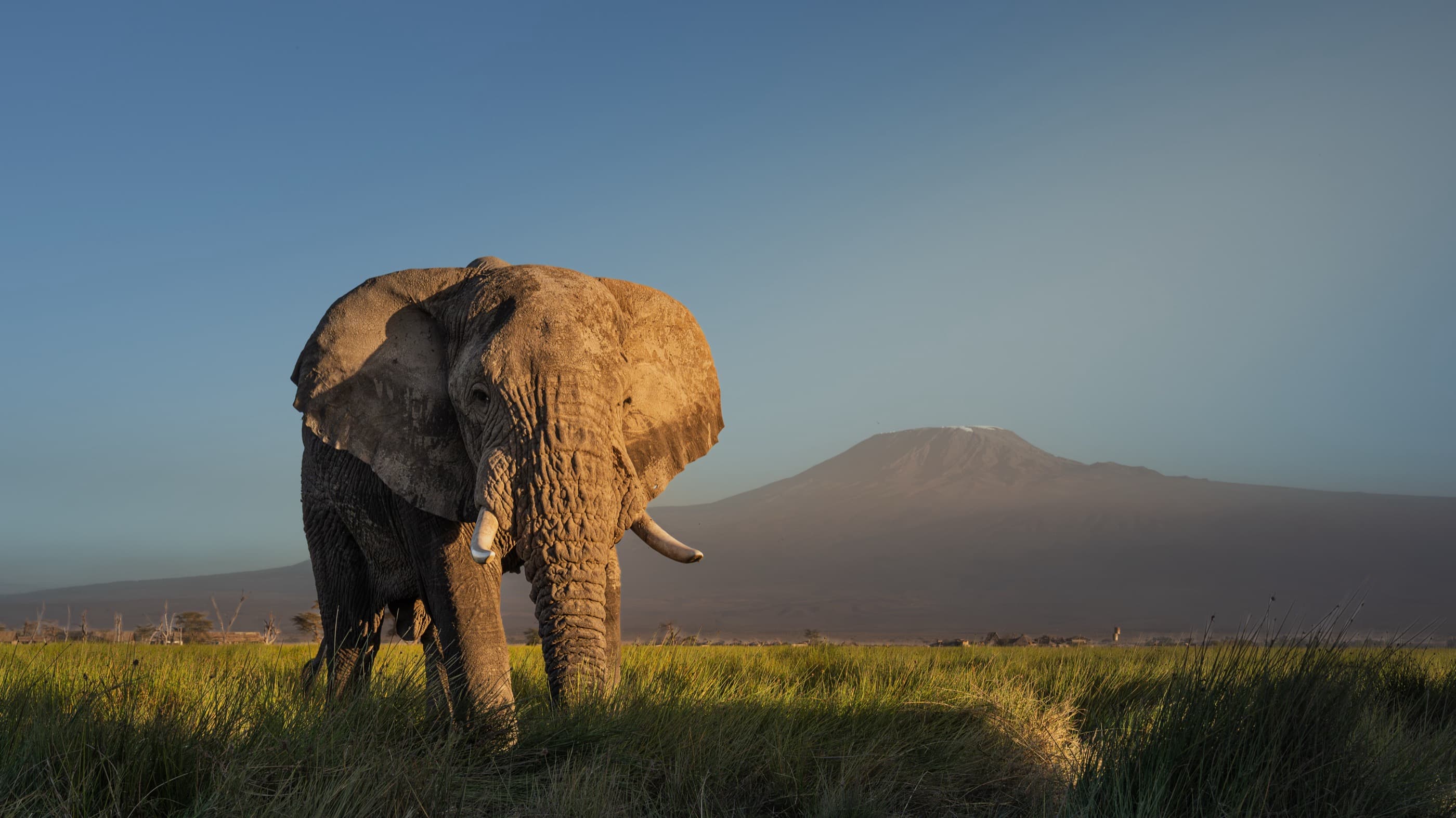
The photograph people ask about most often from Amboseli — the one with an elephant walking past the vehicle and Kilimanjaro behind it — was taken from the front passenger seat.
That is not where most photographers want to sit. Most photographers head straight for the row behind the driver.
The Seat Nobody Takes
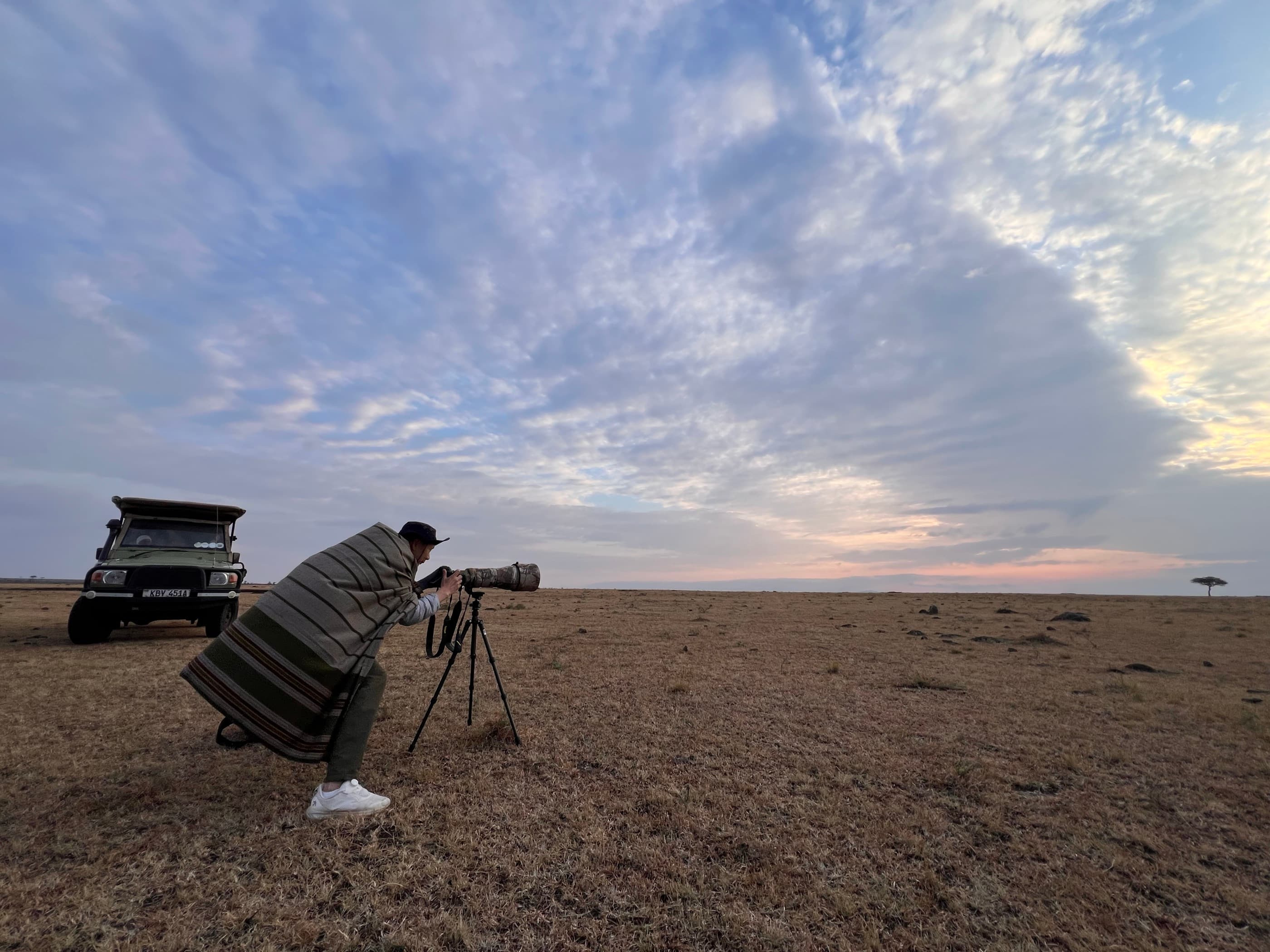
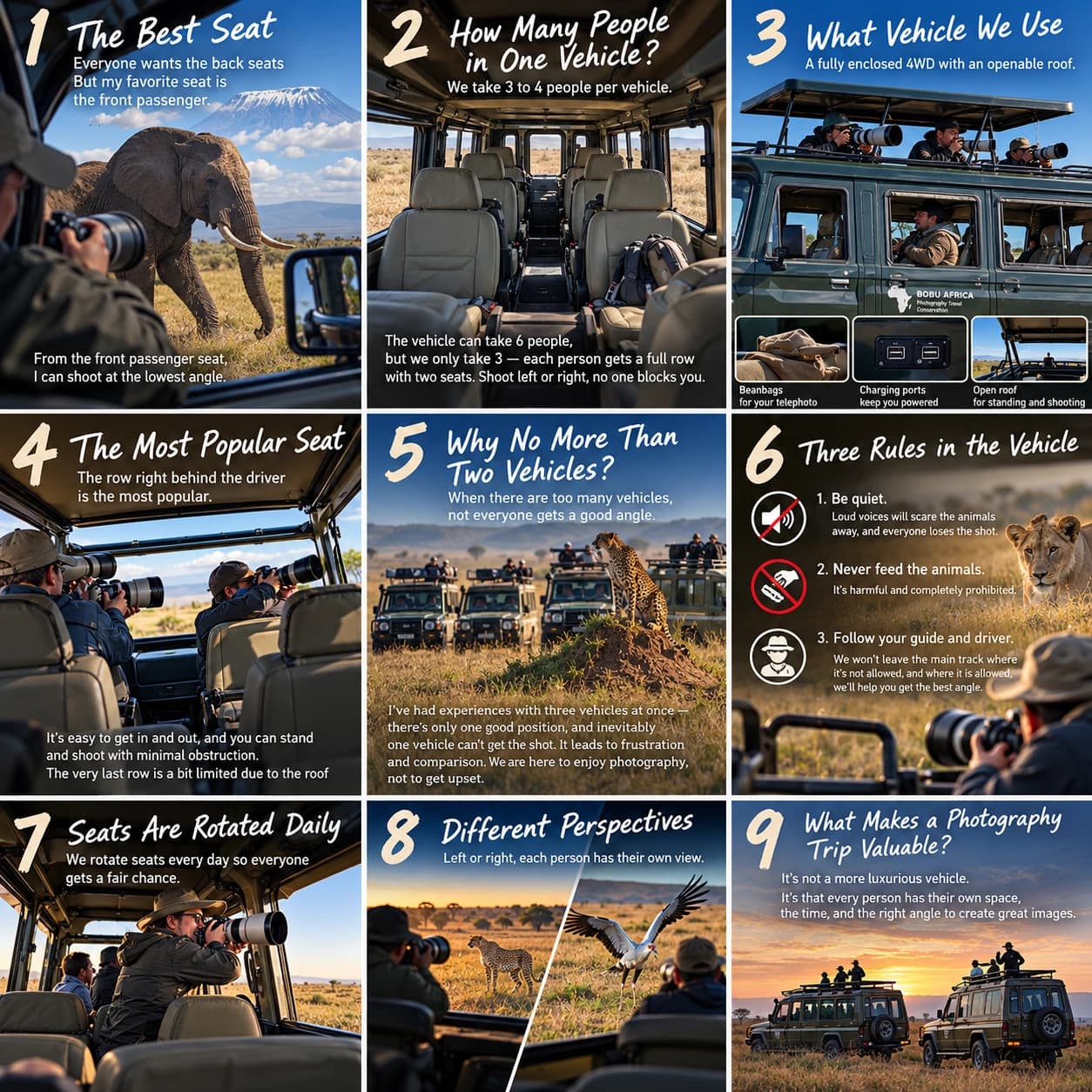
The front passenger seat sits lower than any other position in the vehicle. For a wide scene — an elephant crossing open ground, a mountain behind it, space on every side — that low angle changes what the photograph looks like.
It is not always the best seat. For certain animals, at certain distances, the rows behind are better. That is why we rotate seats every morning. Everyone cycles through every position across the trip.
But the front seat deserves more credit than it gets. If it is your turn and you do not know what to do with it, stay low and use a wide lens.
Three to Four People. Not Six.
Standard safari vehicles are built for six. We run three to four photographers per vehicle.
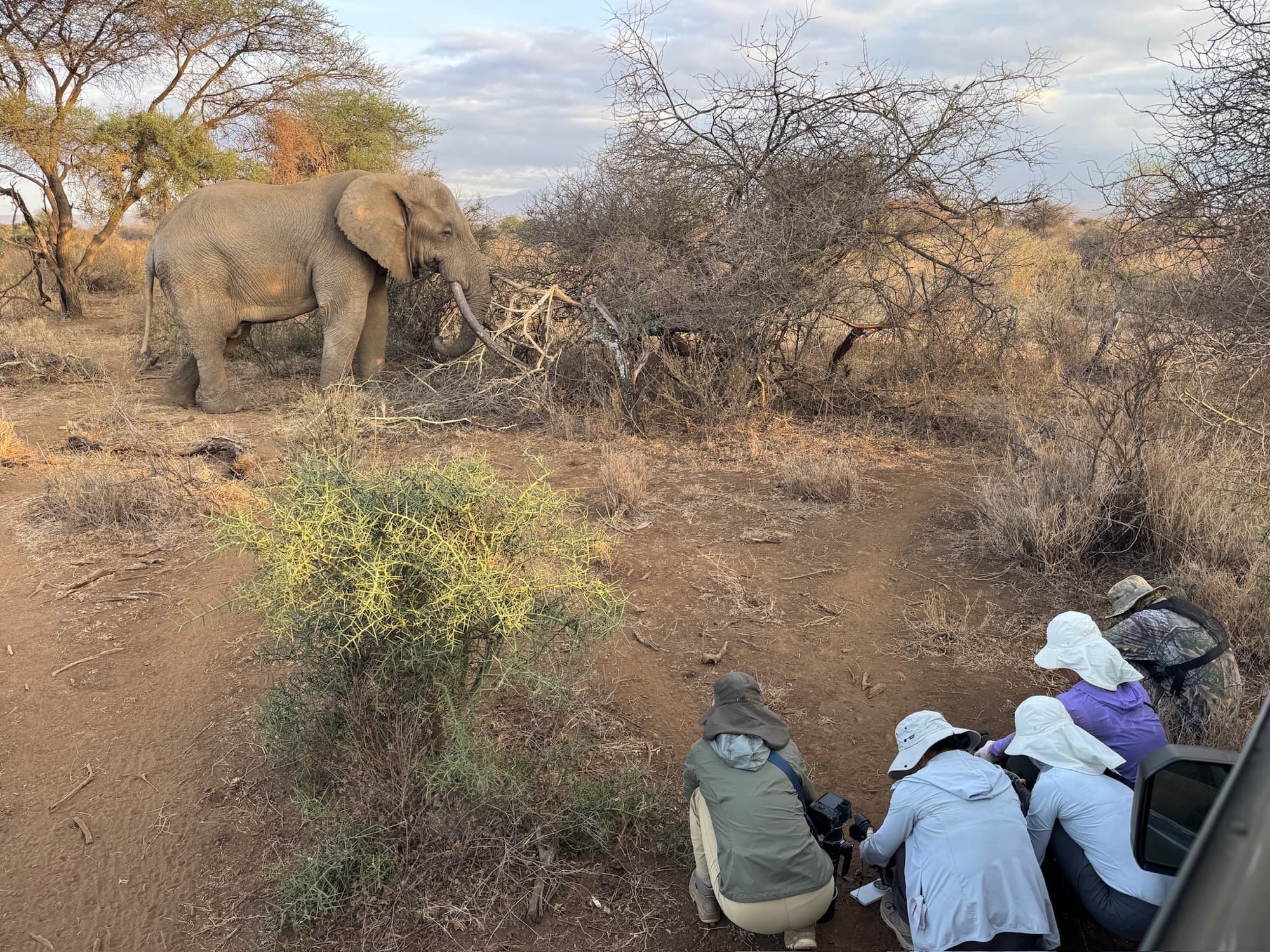
The reason is simple: each person gets their own row. Their own window on both sides. Their own section of the roof hatch. No waiting for the person next to you. No asking permission to turn. No missed moment because someone else was still framing.
Six in a vehicle means compromises on every sighting. Three or four means each photographer is in position before the animal moves.
The Vehicle
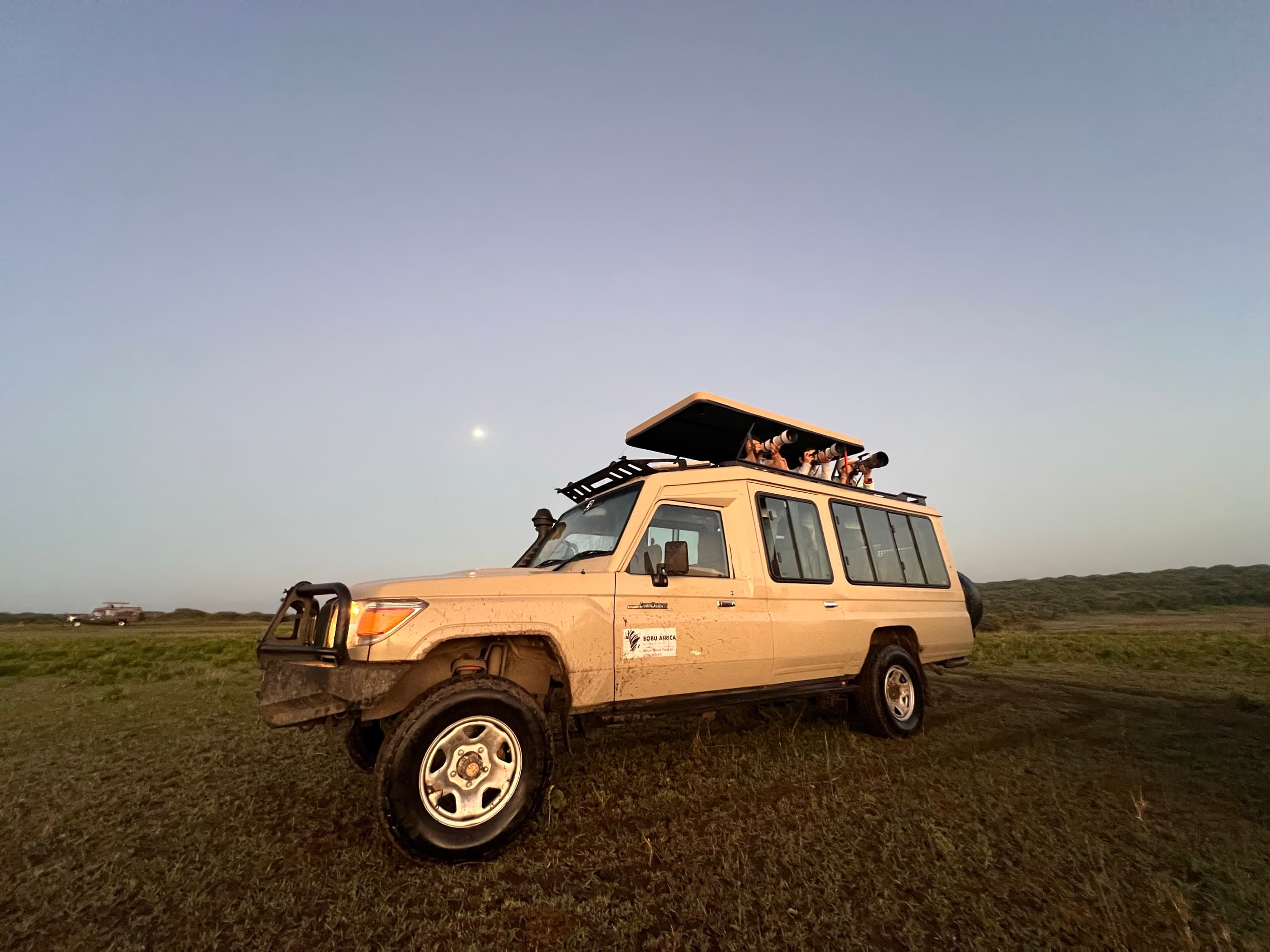
We use fully enclosed vehicles with a pop-up roof. Enclosed means the cabin stays quiet, the temperature is manageable, and long drives between locations are not exhausting before the photography begins.
Inside certain national parks, we can swap to an open-sided park vehicle where the regulations require it or where the viewing access is better. The primary vehicle stays based outside the park.
Bean bags are on board for every outing — on the roof hatch, on the window sill, wherever the lens needs support. Charging ports inside the cabin, so batteries are topped up between drives.
The Seat Positions
Front passenger seat: lowest angle in the vehicle. Underused. Best for low, wide subjects when the scene has depth.
Row directly behind the driver: the most popular position. Slightly elevated angle on the passenger side, easy communication with the guide and driver.
Last row: avoid if you can. The roof strut partially blocks one side of the pop-up hatch. If there are four of you, the last-row photographer gets the full section, but the geometry is harder.
We rotate every morning. Over a five-night trip, you will sit in every seat.
Two Vehicles Maximum
We cap photography groups at two vehicles. That is the maximum.
More than two and you are managing a convoy. Animals respond to noise and to the presence of multiple vehicles. Two vehicles, quiet and coordinated, are close to invisible. Three or more are a distraction.
If a group is large enough to need three vehicles, it is too large for a photography-focused trip.
Three Rules
Every photographer on every trip follows three rules. They are not complicated.
No shouting. Inside the vehicle or outside it. Sound carries further than you think, and a shout at the moment an animal is about to do something will end that moment.
No feeding animals. Not at a lodge, not from a vehicle, not ever. Animals that associate vehicles with food are dangerous animals.
Follow the guide and driver on all decisions about vehicle position and timing. They know this ground. If they say we are moving, we move. If they say we wait, we wait.
The photographs that come from a well-run vehicle are different from the photographs that come from a chaotic one. These rules are why.
The vehicle is a platform. Its only job is to put you in the right position without disturbing the scene.
Everything about how we set it up — the seat count, the rotation, the vehicle cap, the three rules — is in service of that. If you sit in the front seat tomorrow morning and do not know what to do with the low angle, point it at something wide and wait.
— Nature
East Africa