Field Note
Want to Photograph a Cheetah Hunt in Africa? Stay Five Days.
The instinct is to cover more ground. The answer is the opposite.
By Nature Zi — wildlife photographer based in Nairobi, Kenya, with 16 years of field experience across East Africa, including the Maasai Mara and Serengeti.
Most people planning a trip to photograph a cheetah hunt think the strategy is the same as any wildlife safari: cover more ground, visit more parks, and let the numbers work in your favour.
I have been photographing wildlife in East Africa for 16 years.
The answer is the opposite.
Find one place. Stay there. At least five days.
The Months Worth Travelling For
I go in March, May, June, or November. All of them are off-peak. That is exactly why.
In peak season, a single cheetah can attract eight or more vehicles. You may have the animal in frame and still have no useful angle, no room to move, and other vehicles cutting the line of sight at the worst possible moment.
In the shoulder months, the vehicles are fewer. Camps are quieter. Rates are lower. After rain, the grass stays green and the light is often extraordinary.
April I do not go. The long rains make tracks difficult and the persistent cloud cover makes photography hard.
Where to Go: Short Grass, Open Sight Lines, One Gate
My destination is the main Maasai Mara National Reserve, specifically the area accessible from the Talek gate. That stretch of short-grass plains is what makes the difference.
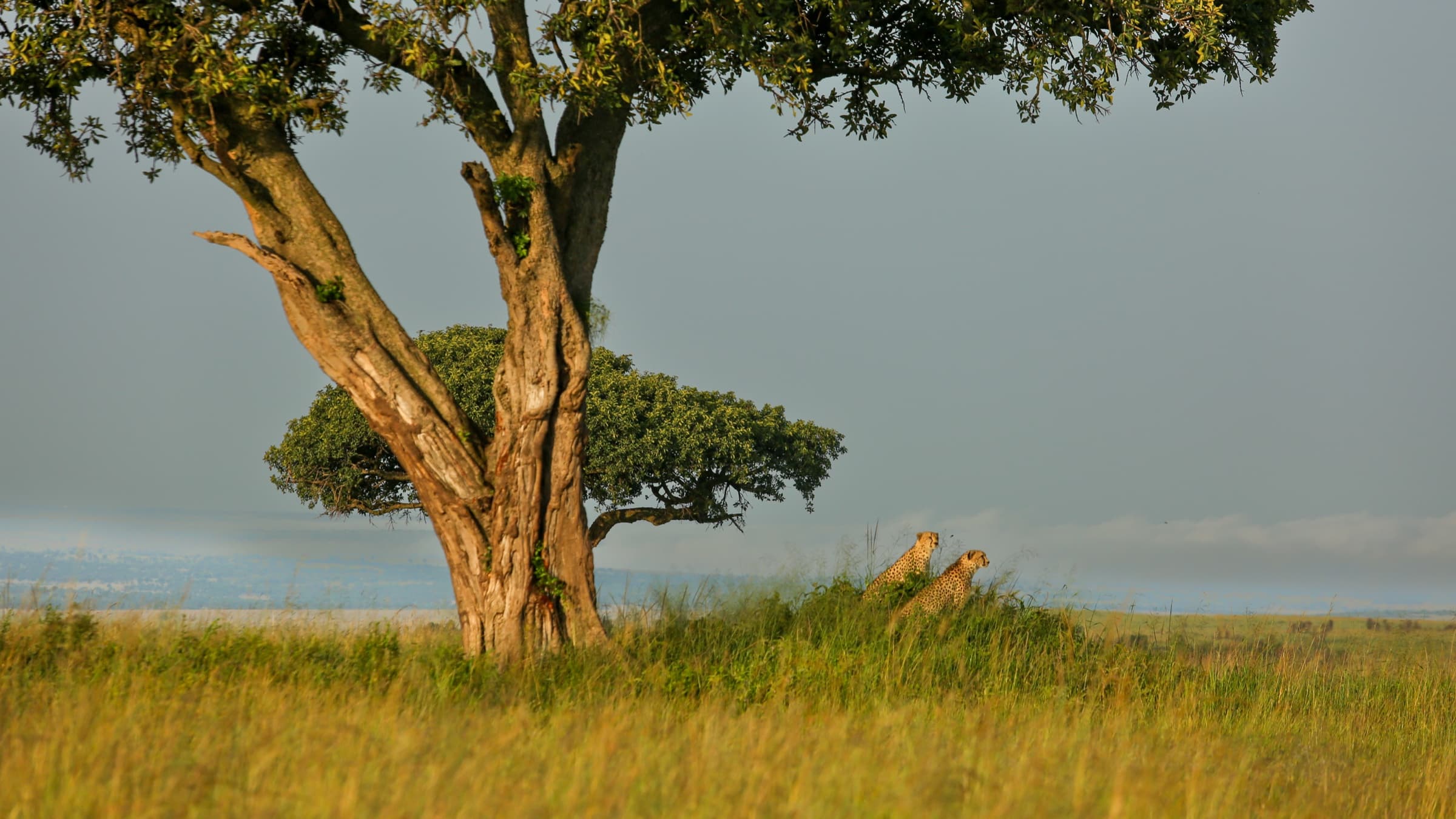
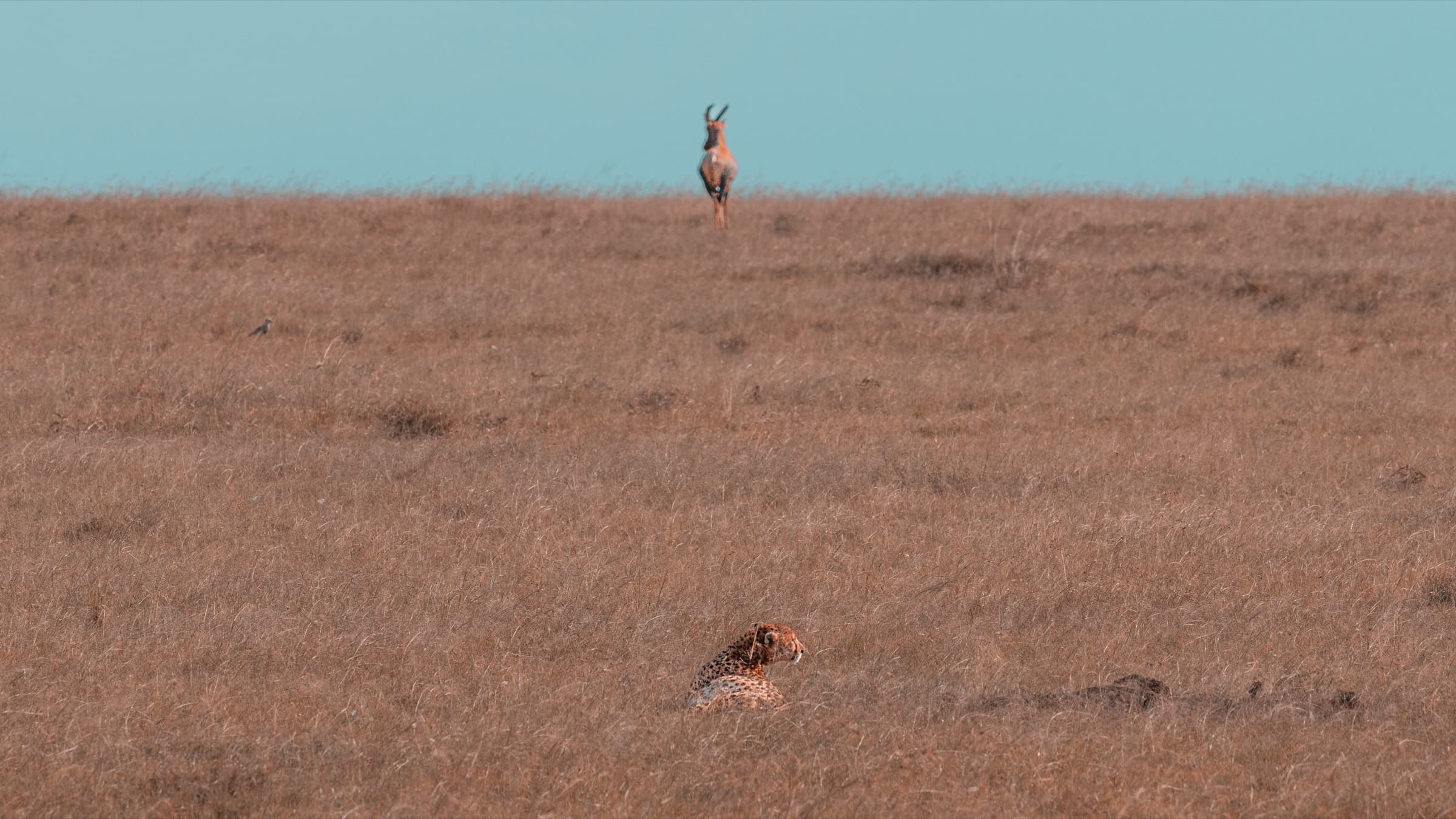
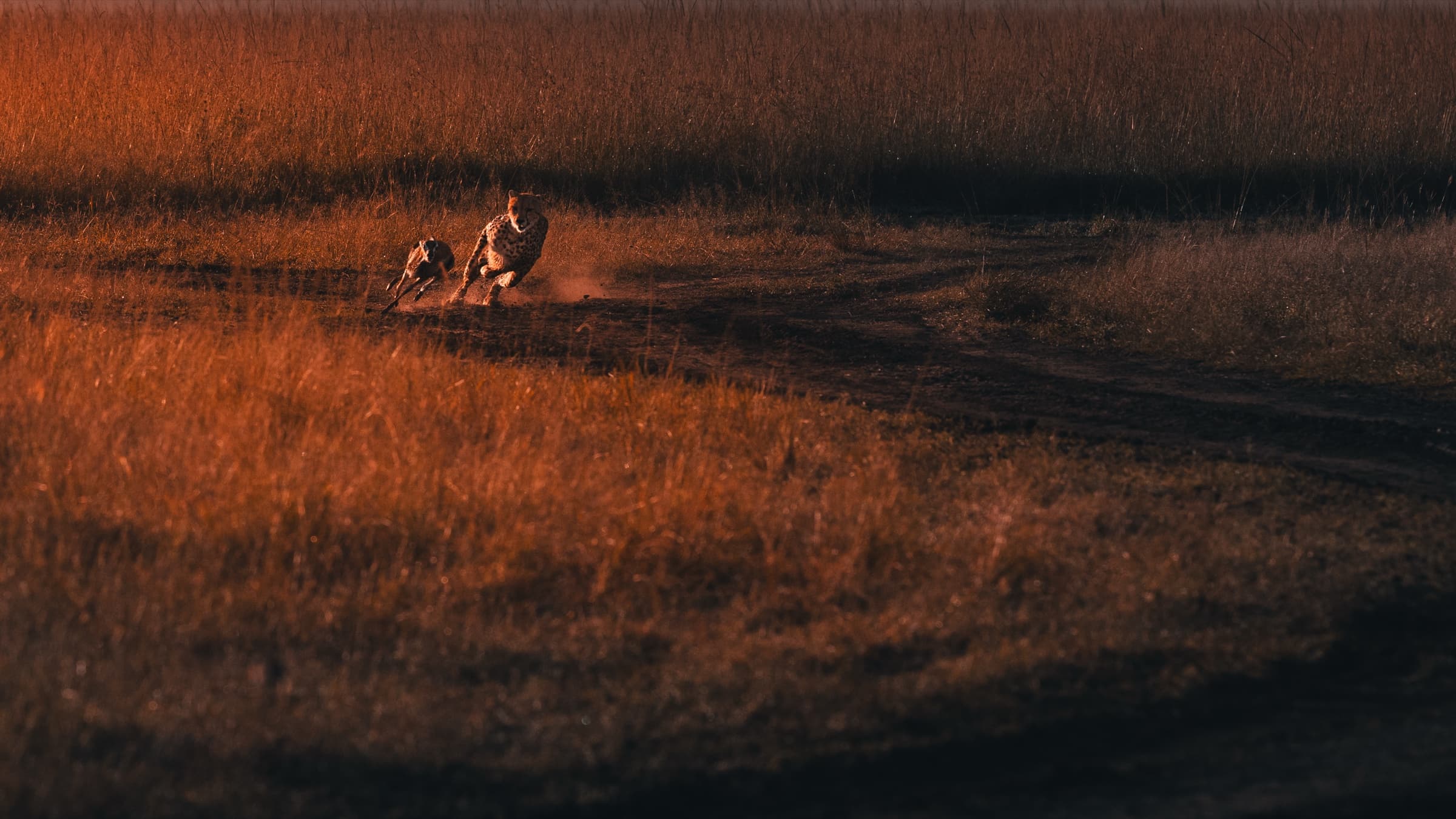
Short grass means you can watch the whole story. You can see the cheetah scanning from a termite mound. You can see the moment it locks onto a gazelle, compress its body lower, and begin using the shallow rolls in the land to close the distance. You can see the acceleration — and the outcome.
In taller grass, too much is hidden. You catch fragments: a blur of movement, a cloud of dust, and then it is over.
Short-grass plains give you the whole sentence.
Three Days, Four Hunts
One group I led spent three days following Nashipae's three daughters — a coalition of adult cheetah sisters working the Mara plains.
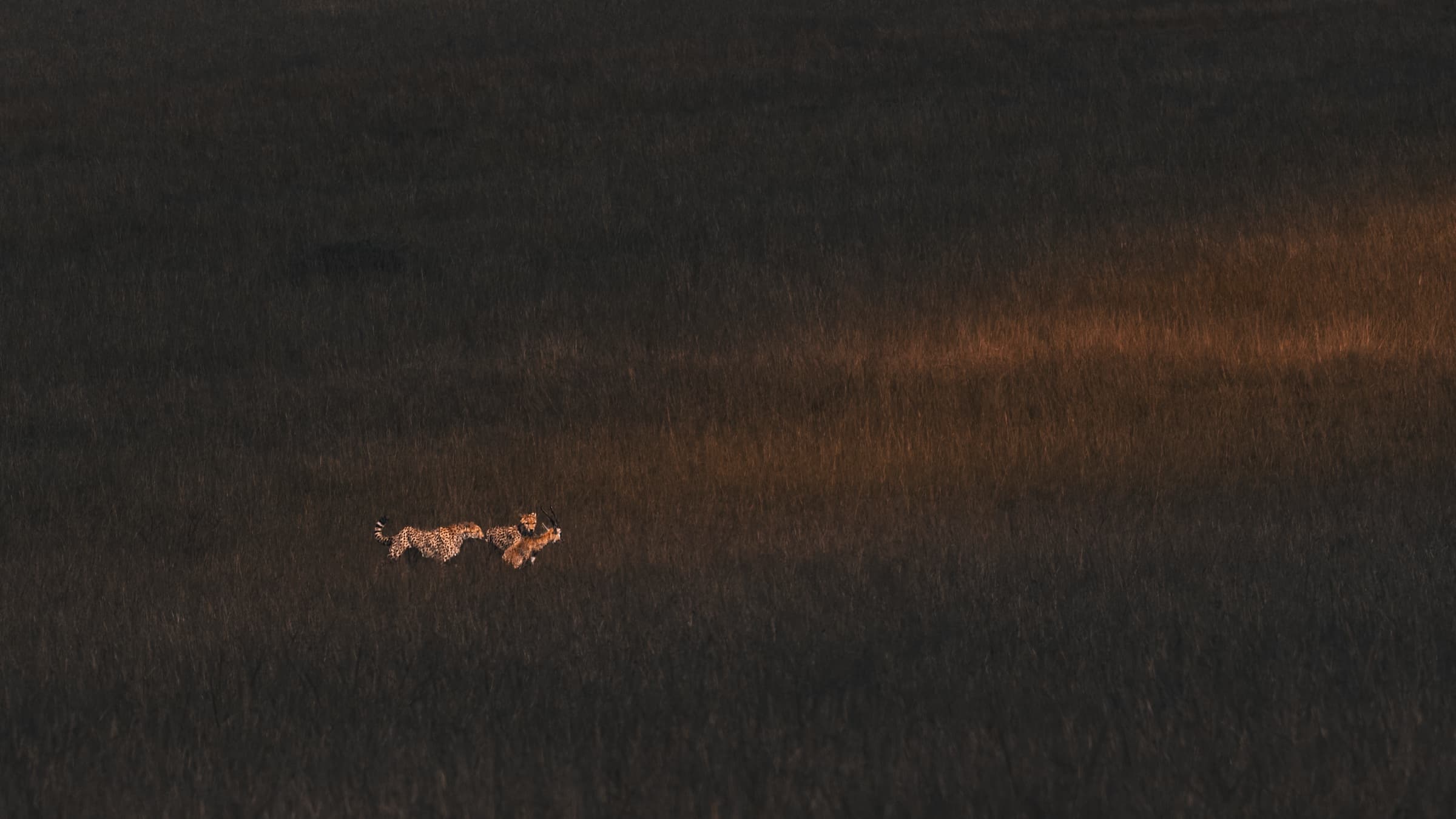
In those three days, we recorded four hunts: two successful, two that ended with the prey escaping.
The two misses were not wasted frames. A cheetah at full extension, one second behind a fleeing Thomson's gazelle, with the dust rising and the horizon empty — that is one of the most physically extraordinary things you can photograph. A near-miss is not a disappointment.
The One Read That Tells You Most: The Belly
When I arrive on a cheetah, the first thing I look at is not the face. It is the abdomen.
A full belly — round, dropping below the ribcage — means the animal fed recently. The chances of an immediate hunt are lower.
A lean, tucked flank means the animal has a reason to hunt. I stay.
Mothers with cubs are often the most productive subjects. A single Thomson's gazelle does not feed a cheetah family for long. A mother with young cubs hunts nearly every day.
I once found a cheetah, read the belly, and watched her sprint twenty minutes later.
The Long Lens Problem You Cannot Fix on Safari
Here is a problem I see repeatedly with first-time safari photographers.
A cheetah breaks into a sprint. The photographer raises a 500mm or 600mm lens, tries to find the animal in the viewfinder — and sees only blurred grass. By the time the subject is in frame, the hunt is already over.
A long telephoto in fast wildlife situations has to be second nature before you arrive. You should be able to raise it, find the subject and hold focus without thinking.
The way to practice is not sophisticated: take your lens to a park and track dogs. Track birds. Track cyclists through a treeline. Repeat until your hands and eyes do the work without your attention.
The Maasai Mara is not where you learn this. It is where you use what you already know.
The Settings That Matter Before the Sprint
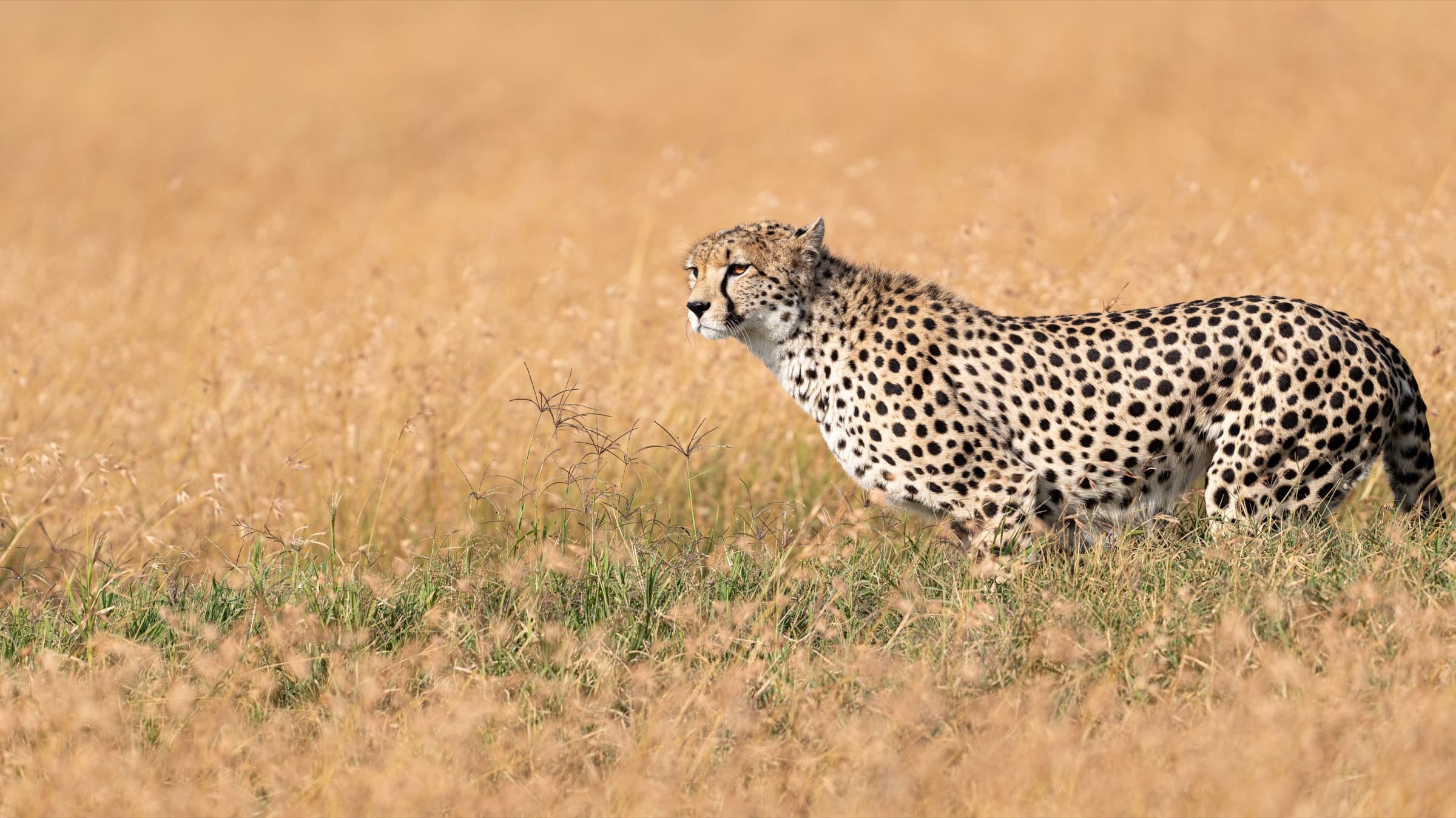
I set my exposure while the cheetah is still stalking. Not when it runs.
For a clean freeze of the chase I want a shutter speed of at least 1/2500 second — often faster in strong light. Continuous burst mode throughout.
One focus decision is less obvious: when the hunt begins, I point the autofocus at the prey, not the cheetah.
A fleeing gazelle moves erratically and the cheetah responds to every turn. If your focus is locked to the cheetah, a sudden direction change can make you lose both animals in the same moment. Tracking the prey keeps the relationship between predator and prey in the frame.
What a Day Actually Looks Like
We go out early. The grass is cold and the light is low. Cheetahs are often moving at first light.
We return to camp at midday. Cheetahs rest through the hottest hours. So do I.
We go out again in the afternoon and stay until the light fails.
Three to four hours in the morning, three to four in the afternoon. A day that looks unhurried is a day with eight hours in the field. Five days is forty hours.
A group that moves between three parks in five days has none of that.
Patience Over Coverage
Photographing a cheetah hunt is not about how much ground you cover.
It is about how long you are willing to stay.
The vehicles that were there on the third day when Nashipae's daughters made their last run — they had been there on day one as well.
That is the whole strategy.
— Nature Zi
Maasai Mara, Kenya