Nature in Wild · Signature Field Photography Journey
The Missing Frames
You've seen Africa.
Now photograph what you missed.
A field-driven journey across Kenya and Tanzania, created for photographers returning to Africa in search of the images they still have not made.
Black Leopard·Ground-Level Rhino·Super Tuskers·Flamingos·Great Migration·Big Cats
Explore the JourneyThe idea
You already have the photographs.
Lions at sunrise. Elephants crossing the plains. Wildebeest at the Mara River.
Your archive may already hold thousands of photographs from Africa.
And yet, there are still a few frames you think about.
The black leopard you never found.
The rhino you only photographed from a vehicle.
The great tusker you never met at eye level.
The river crossing that never happened.
The Missing Frames was built around those photographs.
How the journey works
We are not here to collect species.
ACCESS
Get where the photograph becomes possible. Laikipia conservancy land. The floor of Solio. The Mara River bank in the Northern Serengeti.
FIELDCRAFT
How we photograph matters. Eye level. Position. Reading behaviour before it happens. Knowing when to hold still.
TIME
Stay when everyone else moves on. Days with the same family. Hours on the same river bank. The patience that makes a crossing possible.
Act I — Find the Unseen
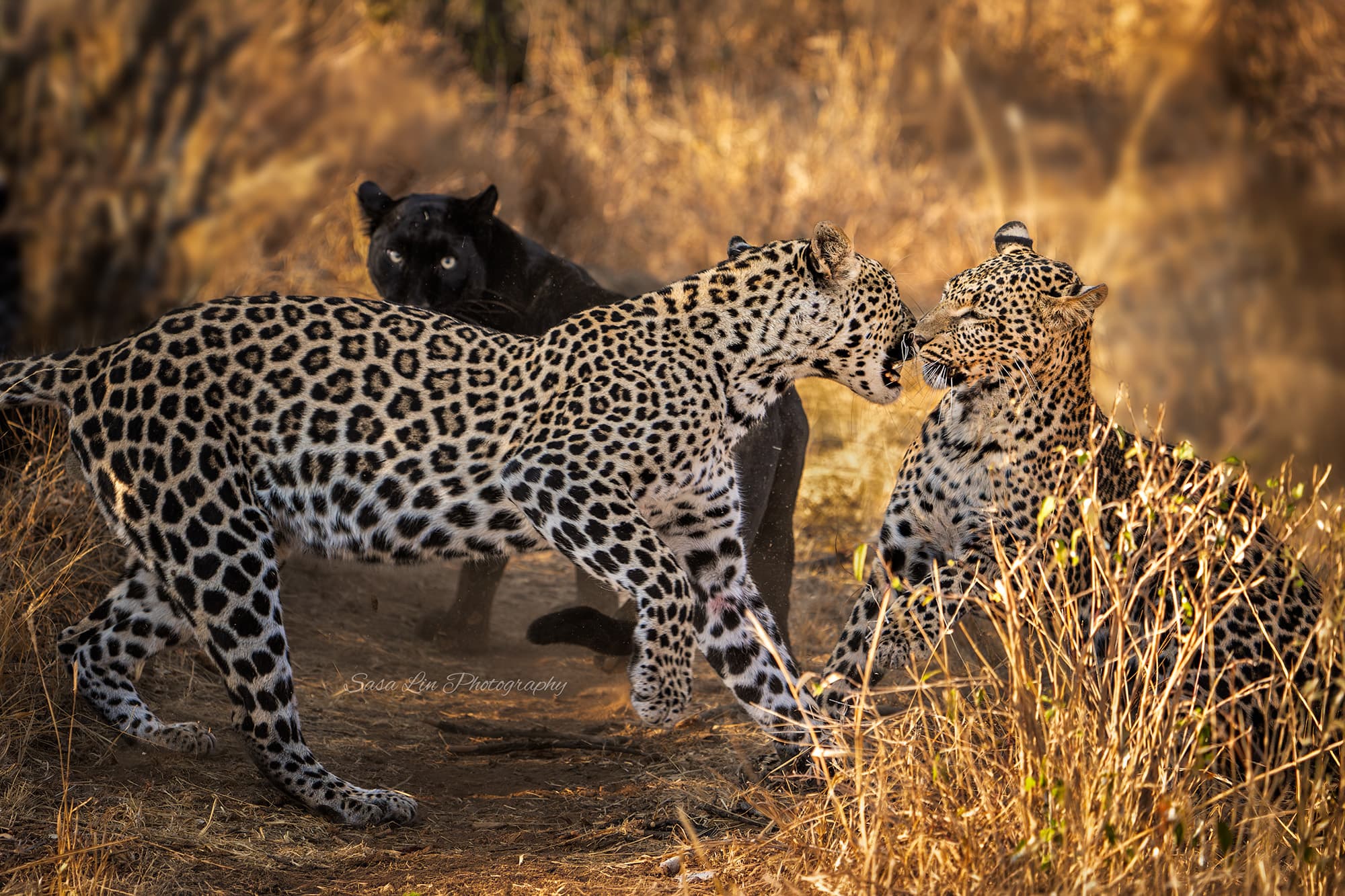
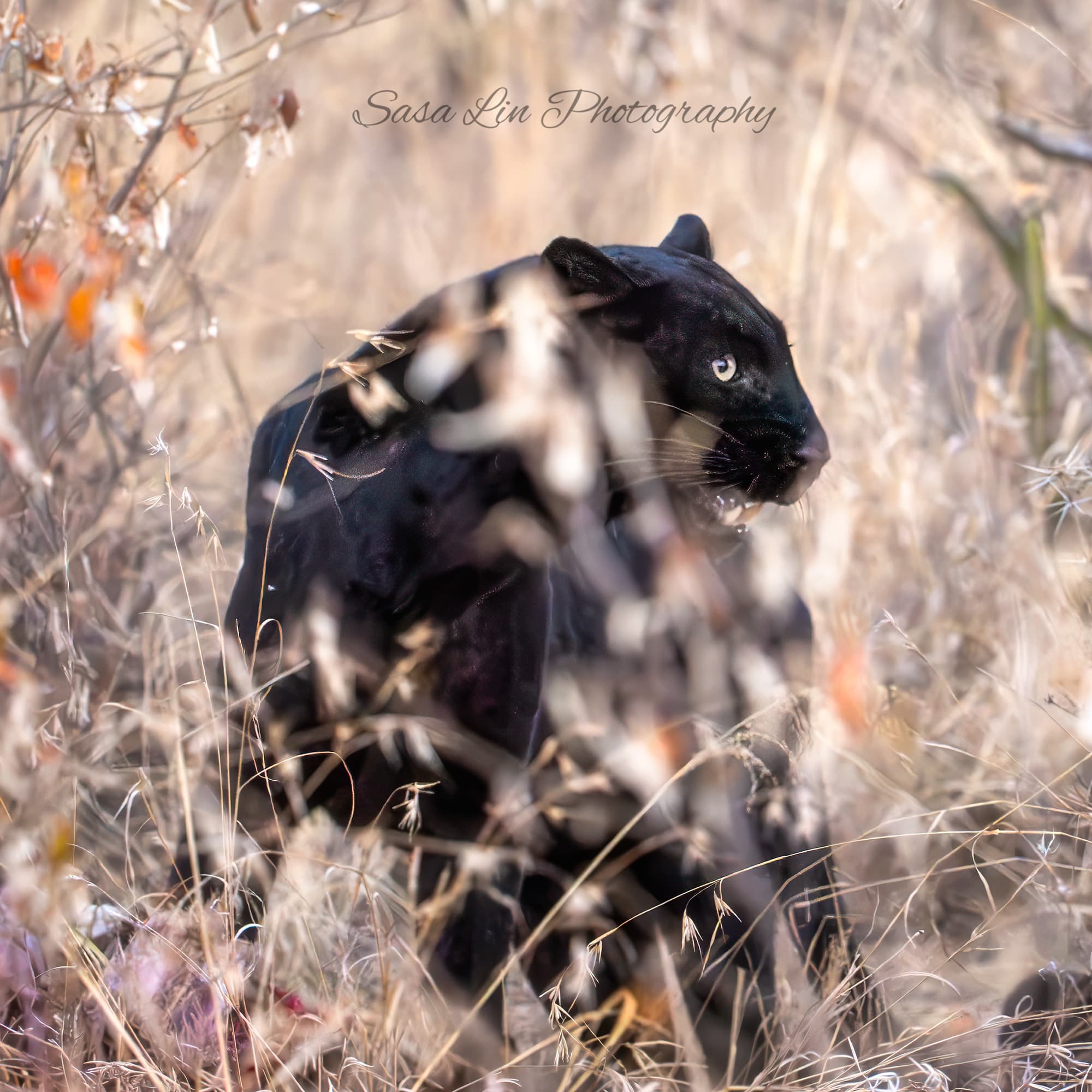
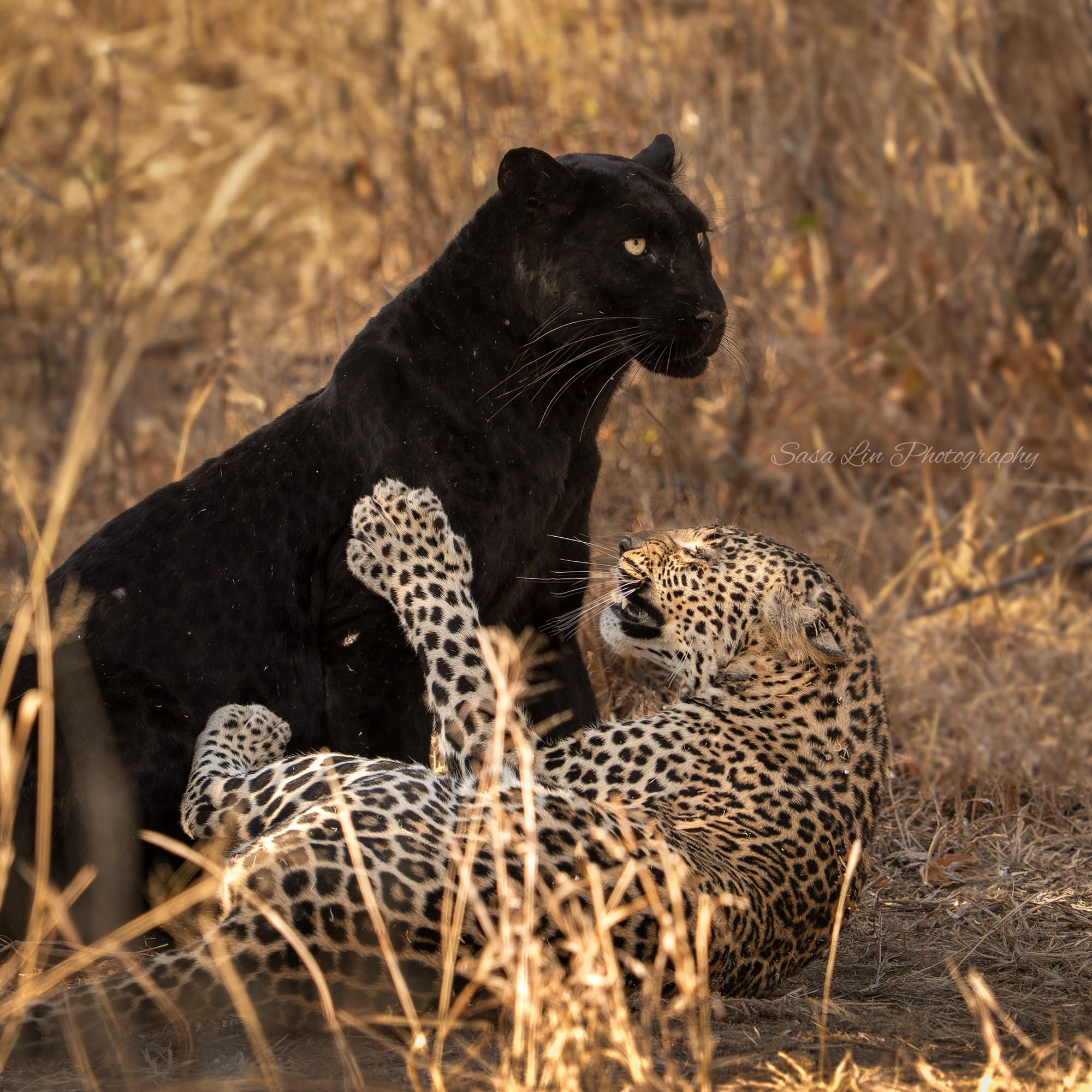
The black leopard.
Laikipia, Kenya
Some photographs begin long before the shutter is pressed.
They begin with tracks, local knowledge, repeated searches and the willingness to return to the same landscape again.
The Laikipia Plateau has produced documented records of melanistic leopard — an animal that exists at the edge of what wildlife photography considers attainable.
Low light · Environmental portrait · Movement · Individual identity
A black leopard sighting is not guaranteed. The search is part of the photograph.
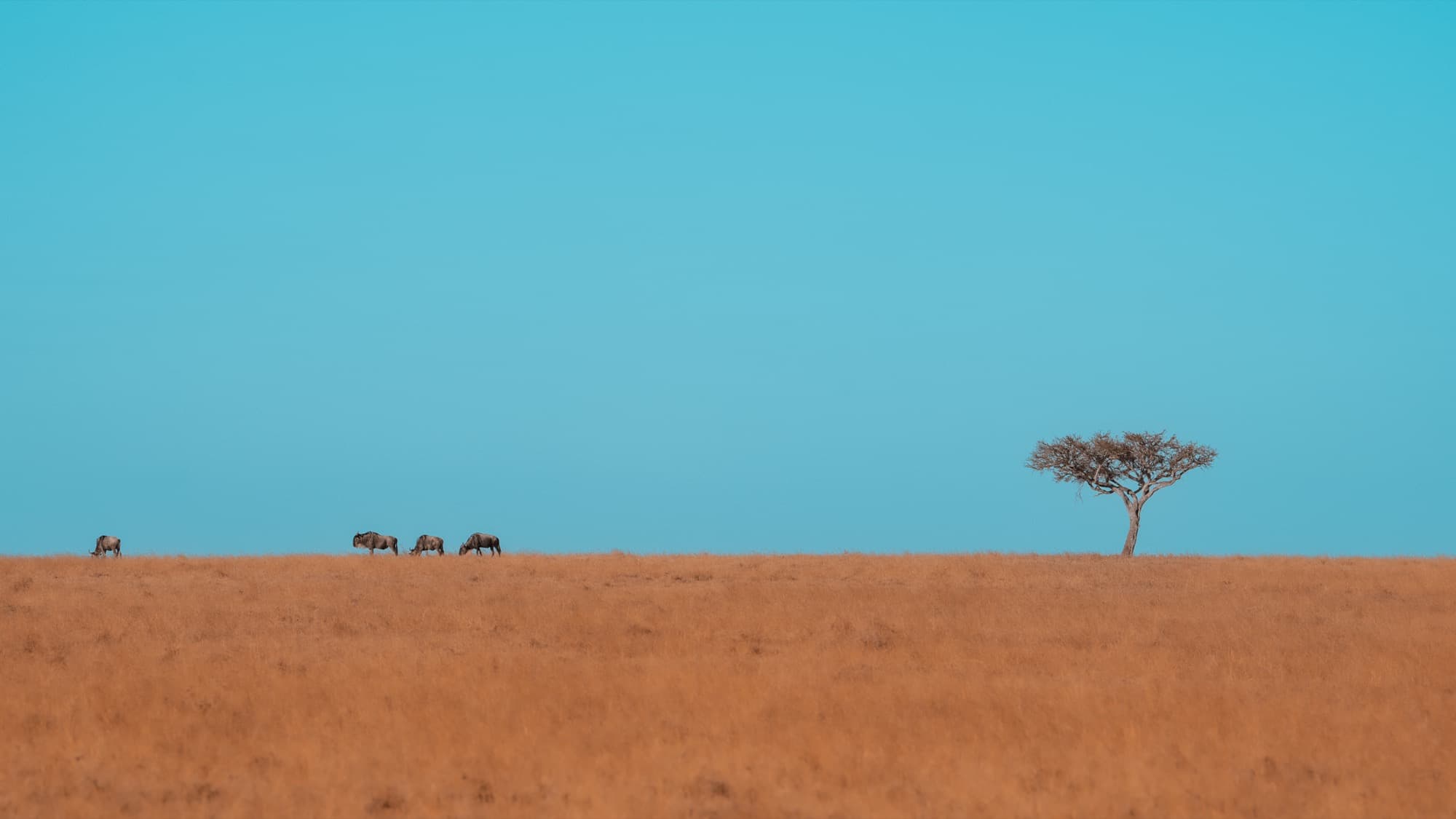
Act II — Get on the Ground
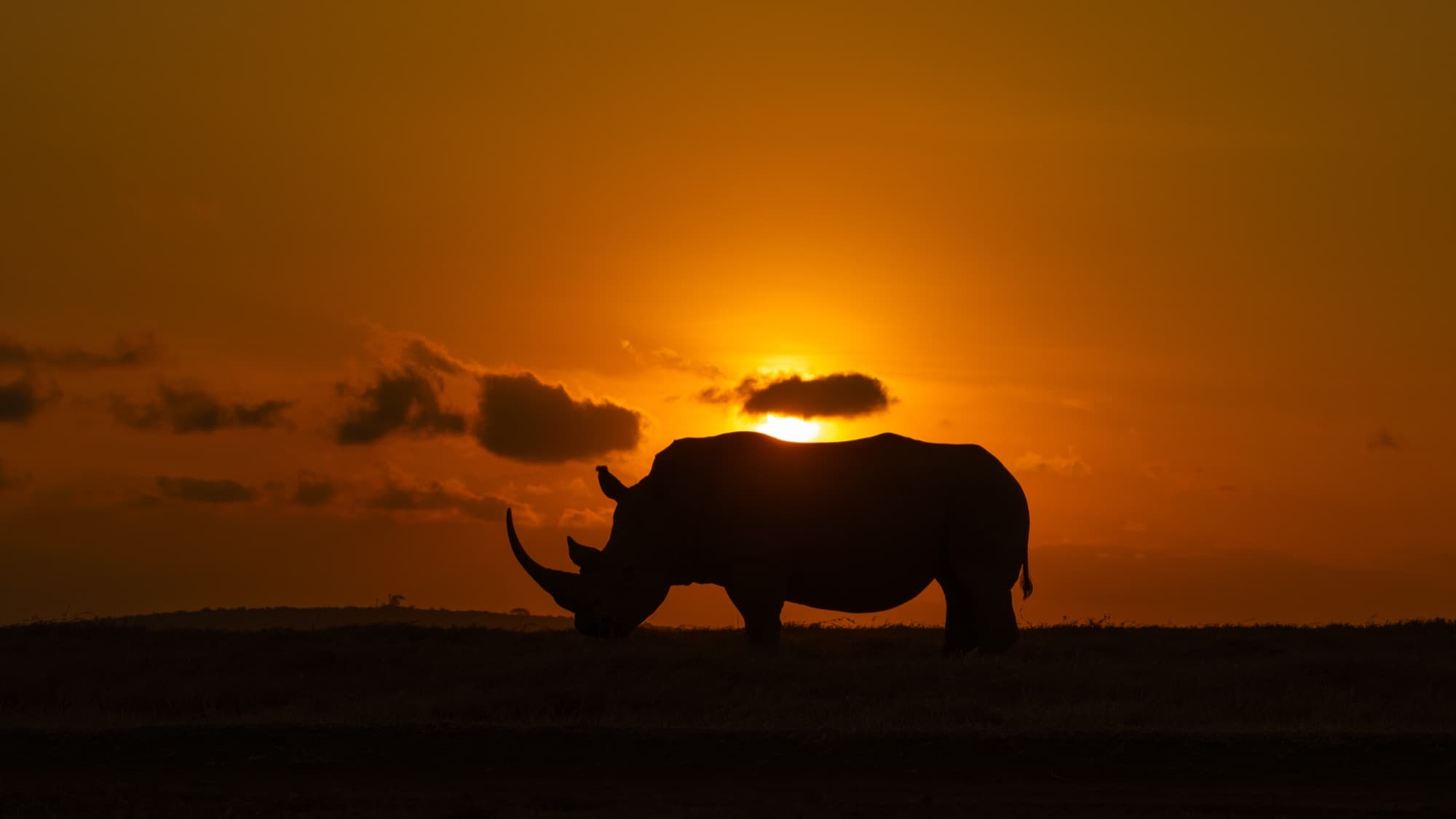
You've photographed rhinos before.
But have you photographed one from here?
Rhino · Solio, Kenya
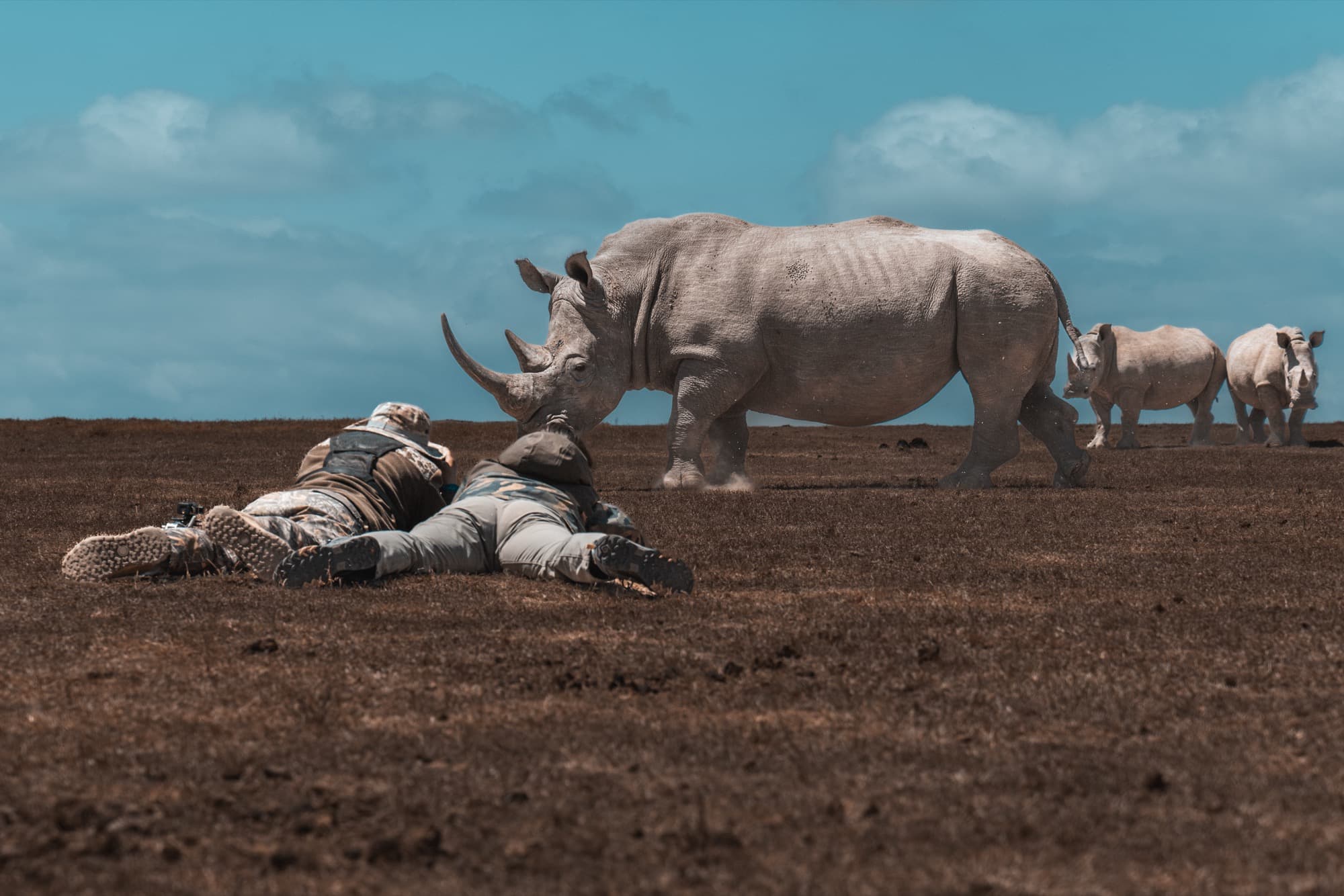
We photograph from the ground. A camera inches above the earth — the animal and the sky at the same level as the lens.
Ground-level photography is only undertaken where permitted and under professional ranger guidance.
The position
The frame
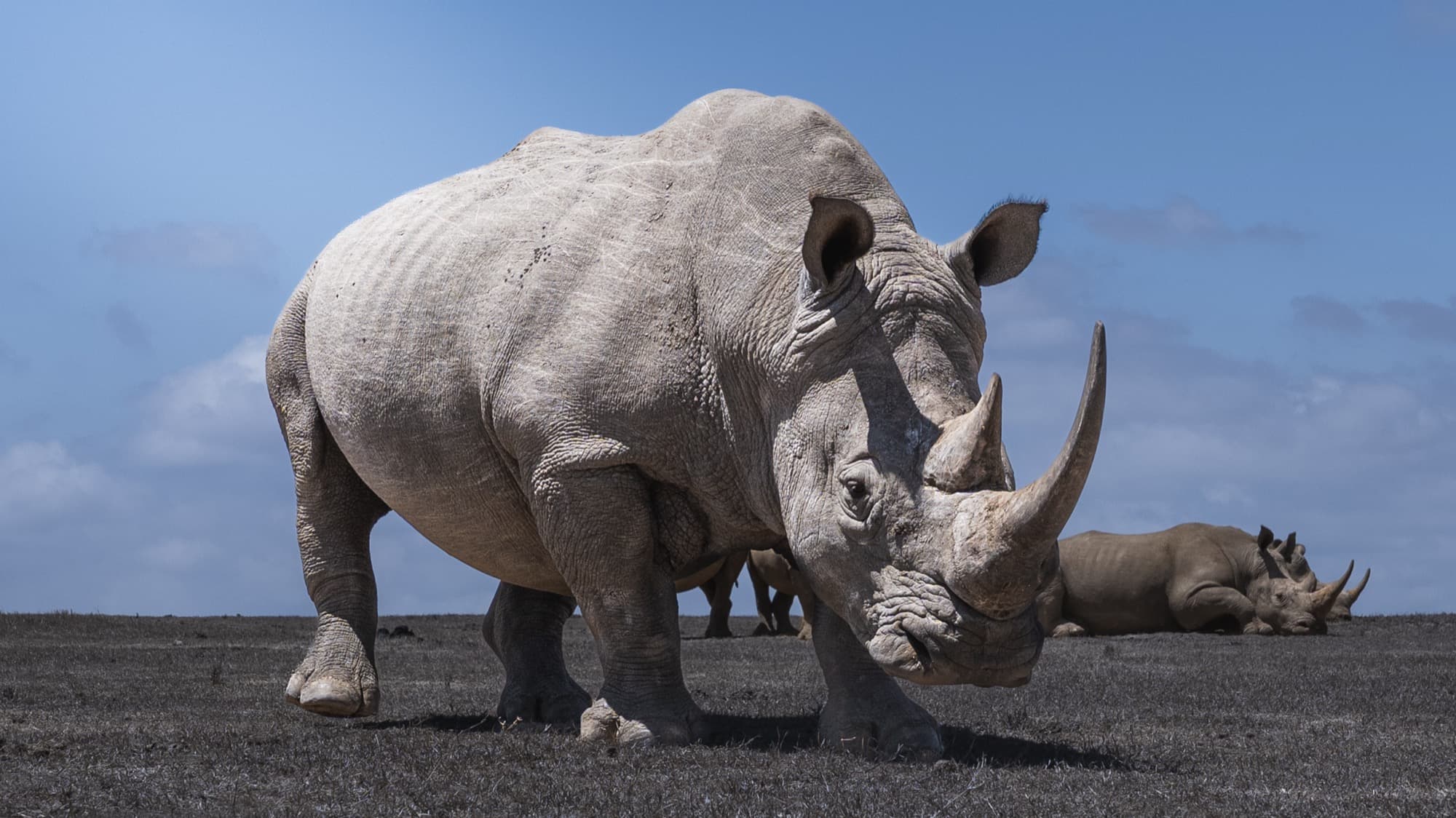
Eye level changes the photograph.
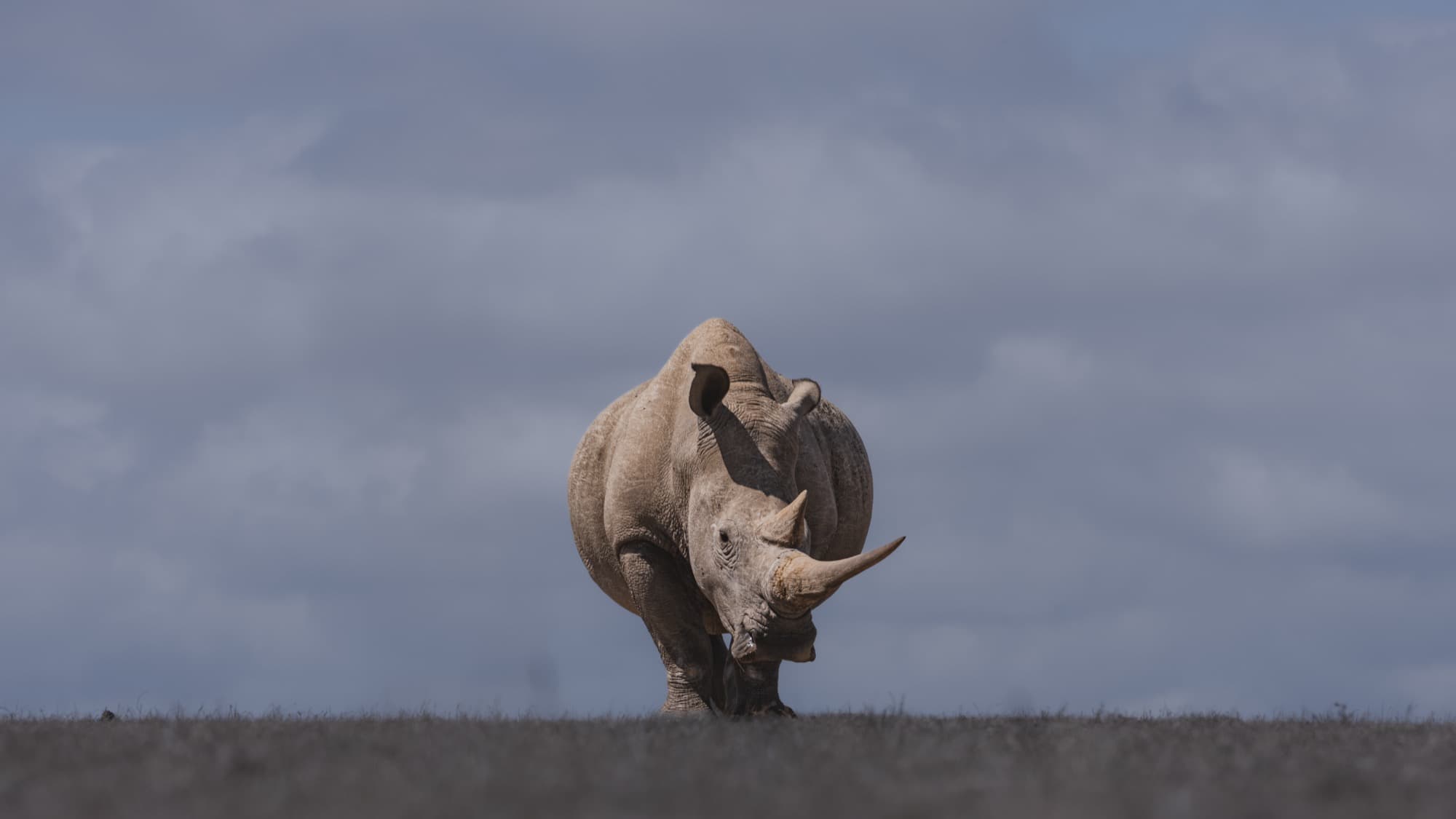
Getting low is not only about getting closer.
It changes scale, space and the relationship between the animal and its world.
Act III — Stand Before Giants
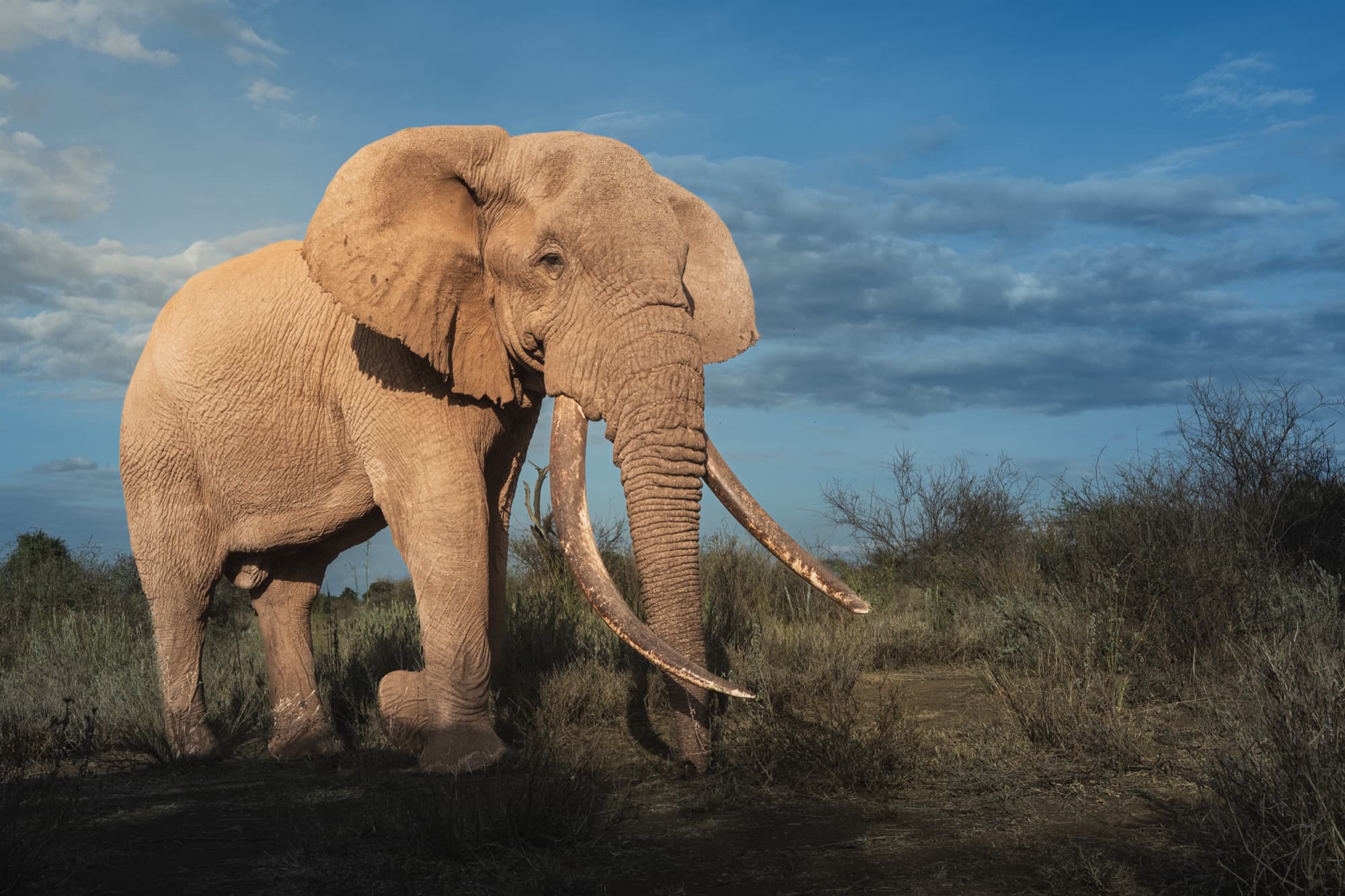
A great tusker does not need a long lens to feel enormous.
Amboseli, Kenya
Sometimes the photograph begins by putting the long lens down.
The Amboseli ecosystem is one of the most studied elephant landscapes on the continent. Super tuskers — bulls whose tusks are heavy enough to reach the ground — are still documented here, their lives known individually for decades.
Get low. Go wide. Let the giant fill the sky.
We stayed in the vehicle. He came to us.
At that distance, scale becomes something you feel.
This act does not imply that photographers leave the vehicle or work at close range during every elephant encounter. Field safety and local permissions control all wildlife proximity on the day.
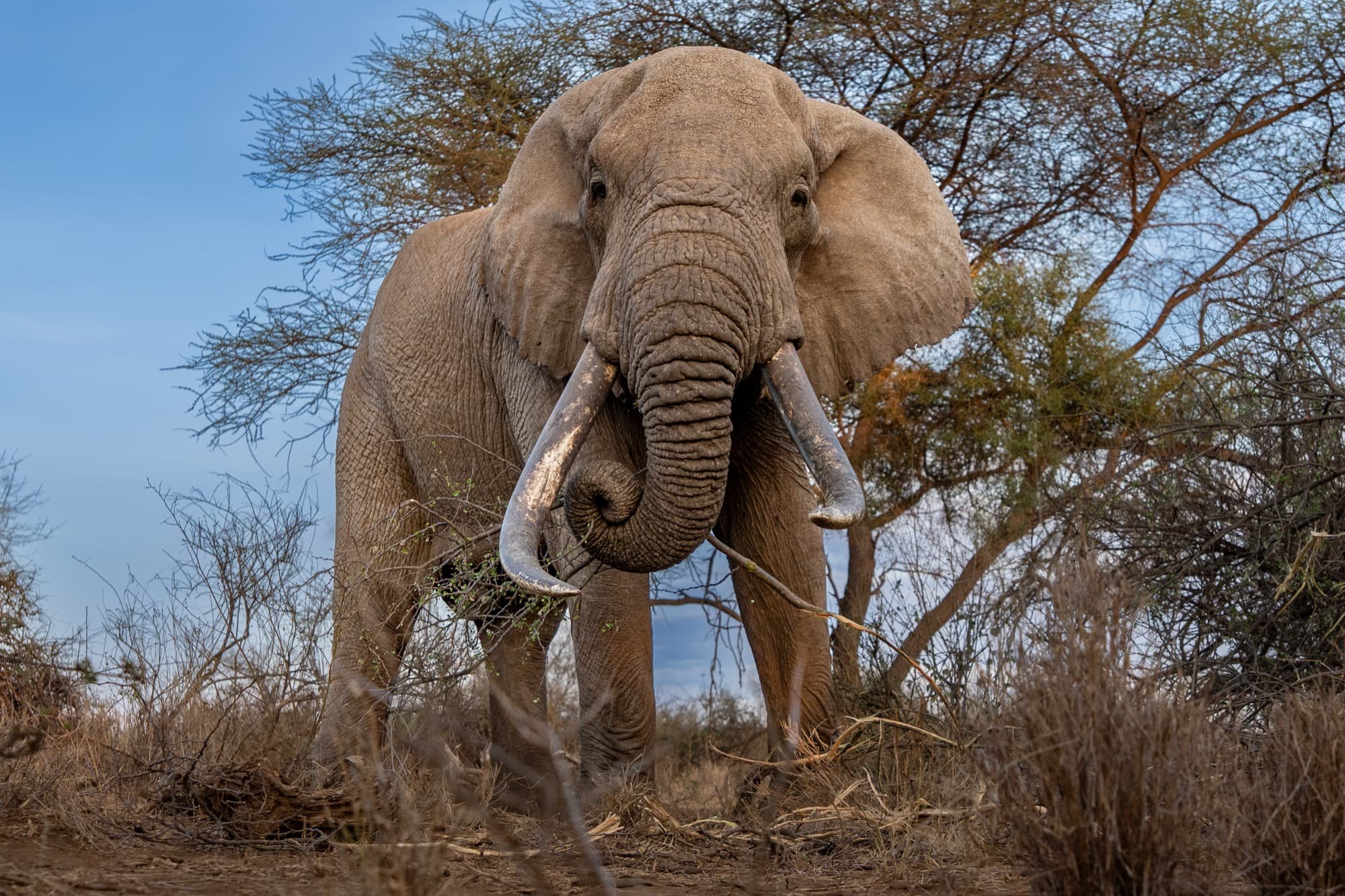
These photographs are from Nature in Wild's encounter with Tee-Jay — a documented Amboseli super tusker with a known family history and a verified first-hand record. Read the Wild Lives record →
Act IV — Photograph Colour
Not every wildlife photograph is about getting closer.
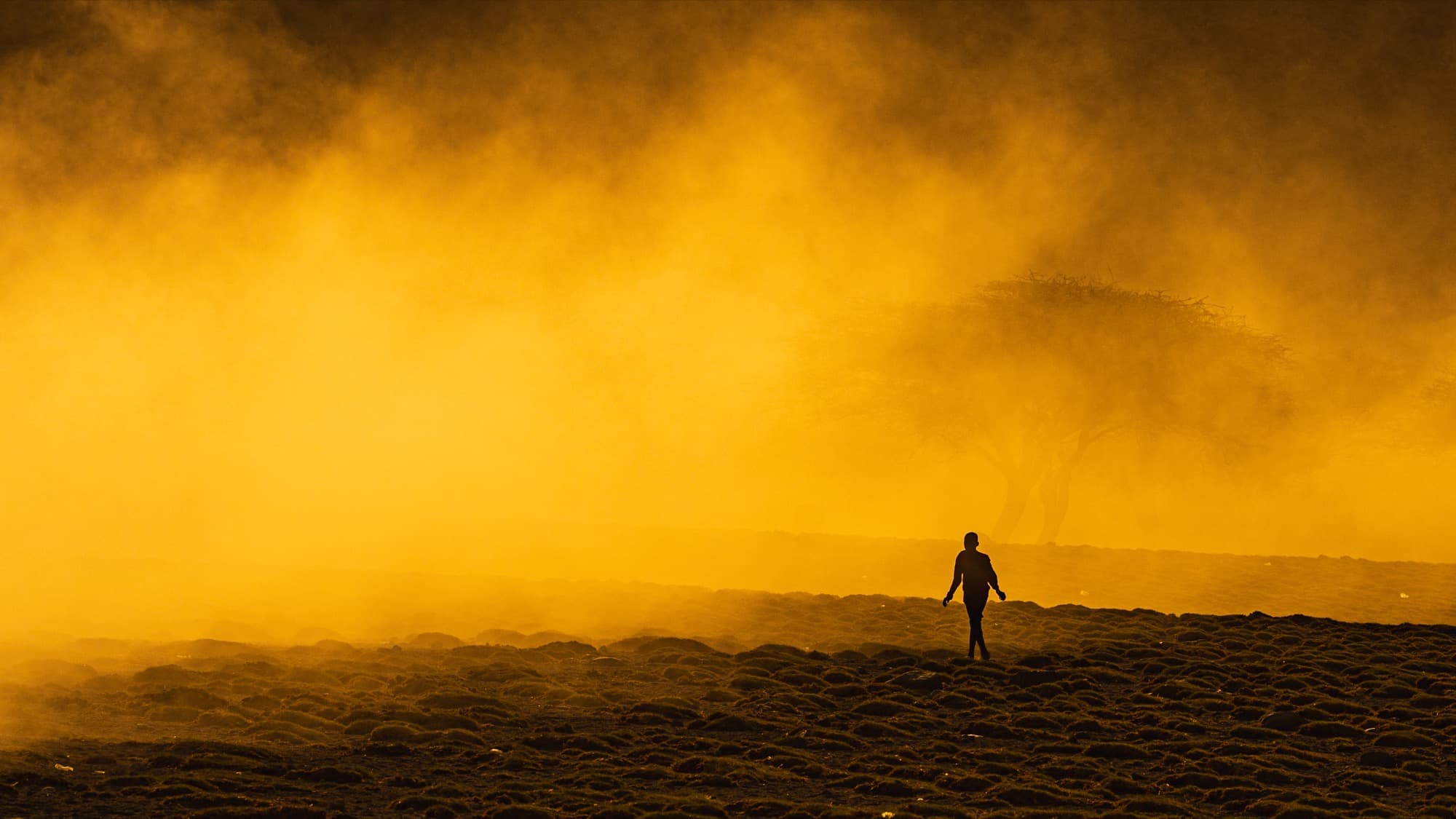
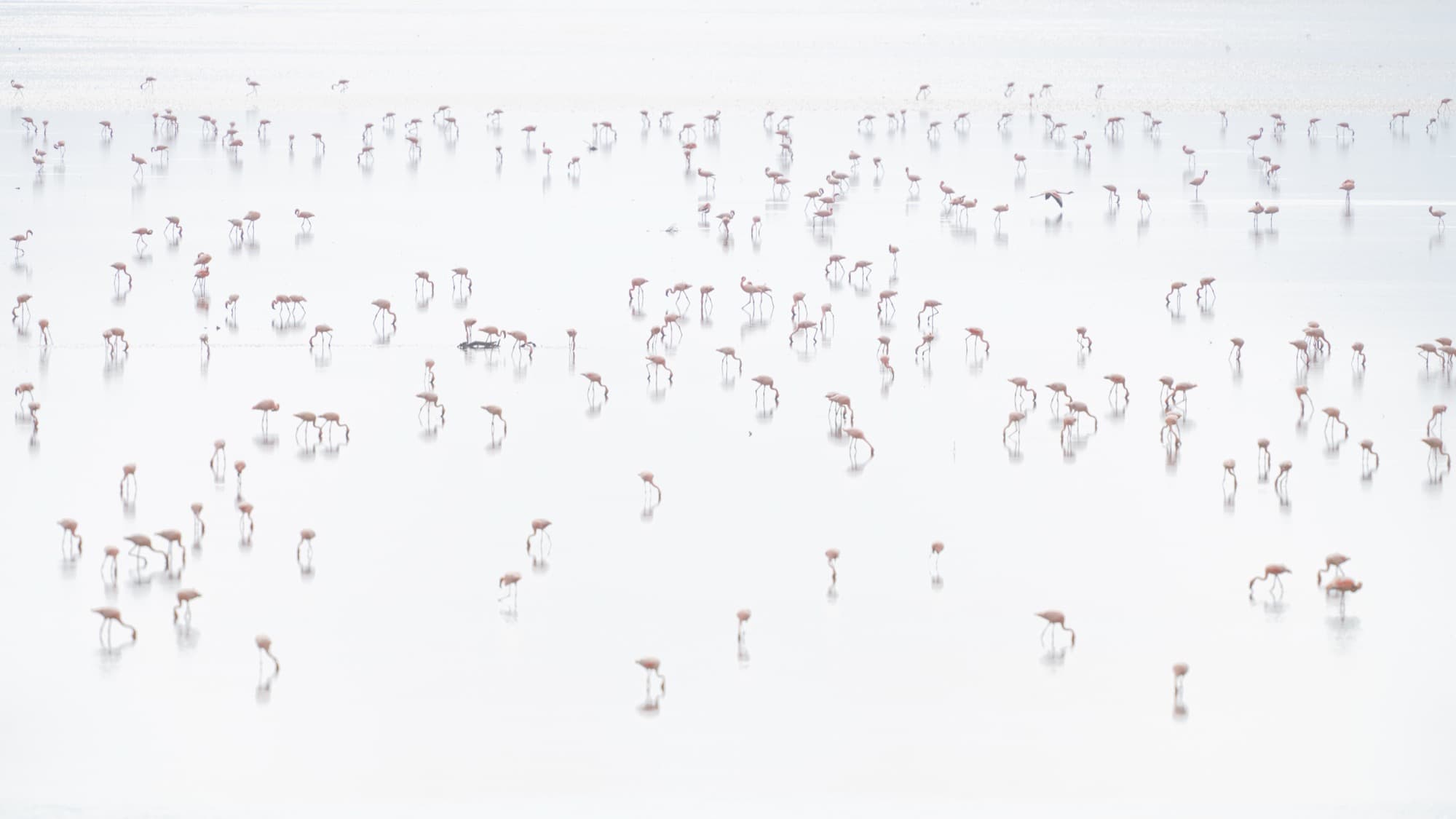
Lake Natron, Tanzania
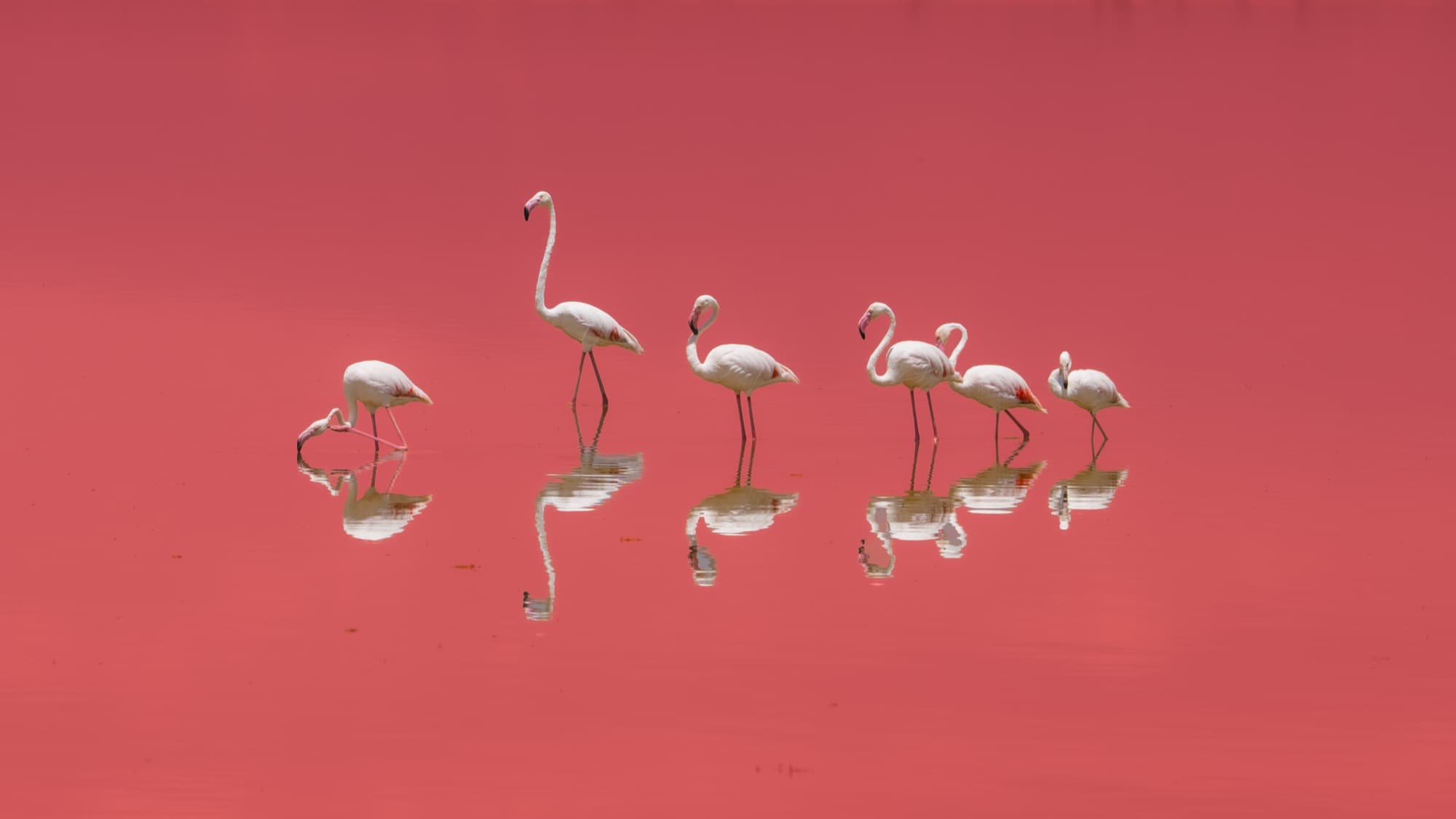
At Lake Natron, the subject becomes colour, repetition, reflection and movement.
An alkaline soda lake in the East African Rift Valley, Natron supports the largest flamingo concentrations in East Africa. The surface turns a deep crimson-red in the right conditions. Nothing else in the region looks like it.
Pattern · Flight · Reflection · Negative space · Scale
Act V — Wait for the Moment
You may have come for this photograph before.
Northern Serengeti, Tanzania
And gone home without it.
WAIT.
The Great Migration cannot be scheduled. The river crossing is not a guarantee — it is a possibility, and it is the right possibility to be near during the weeks the herds are in the north.
We cannot promise the crossing.
We can give it time.
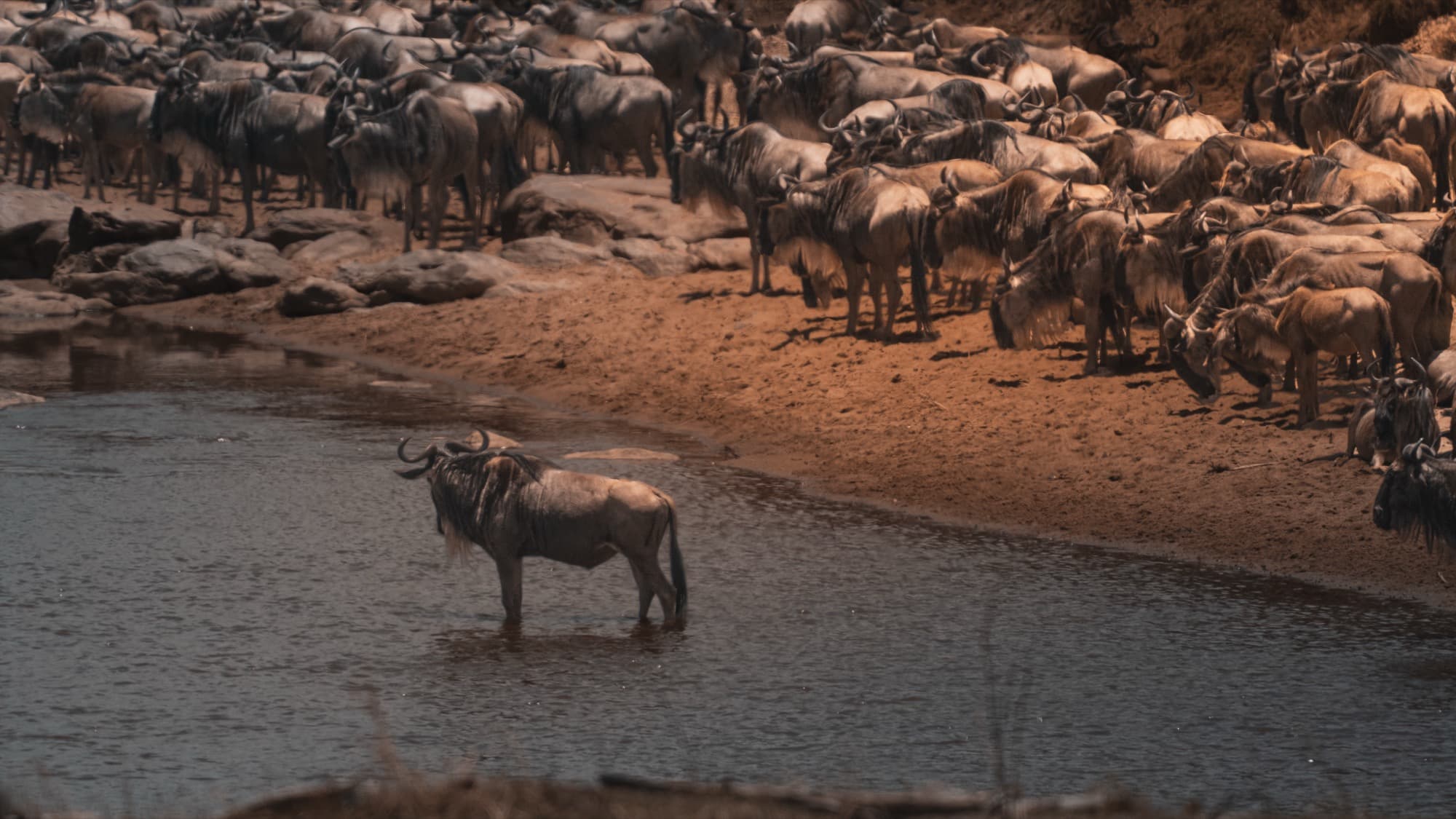
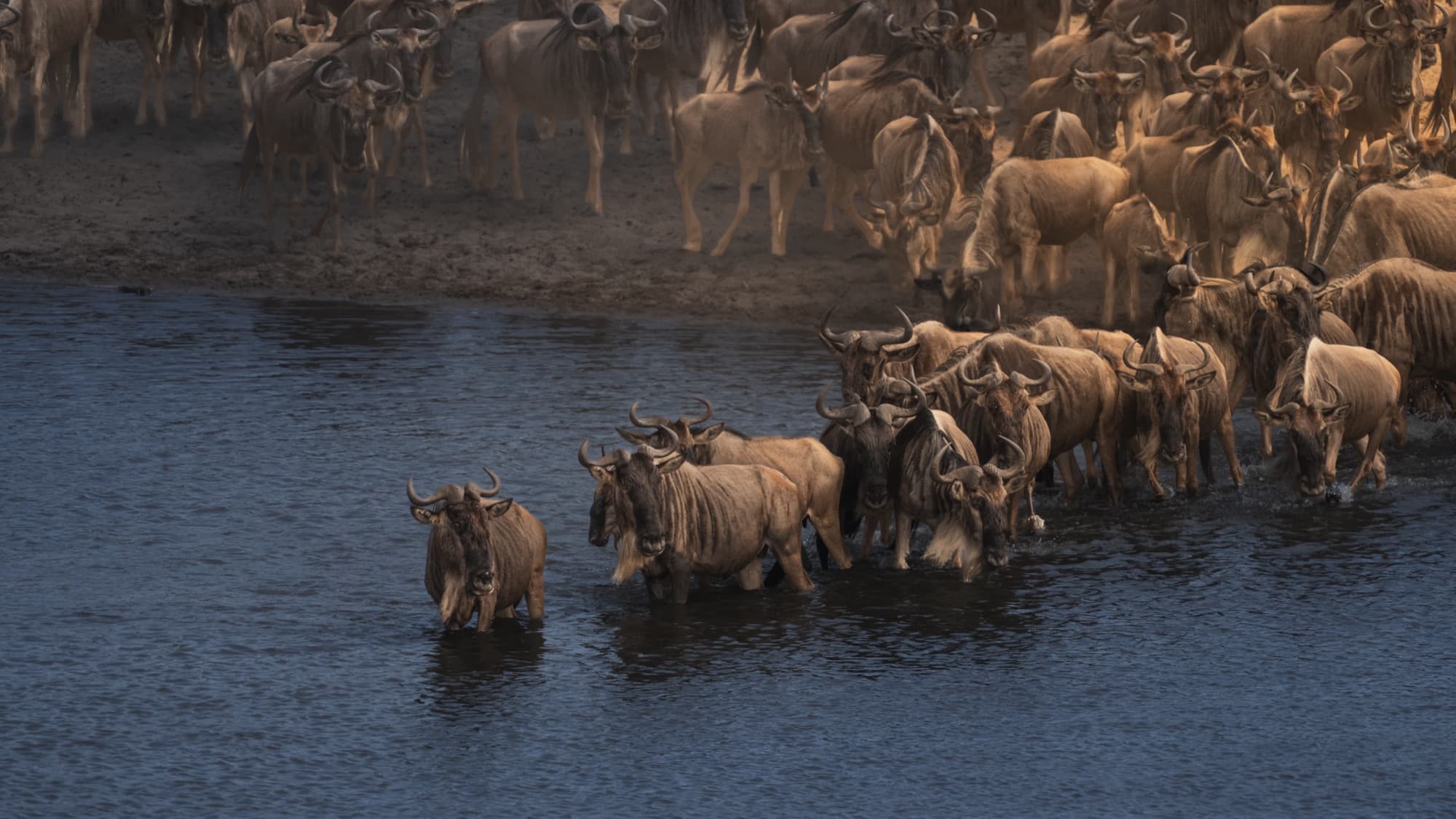
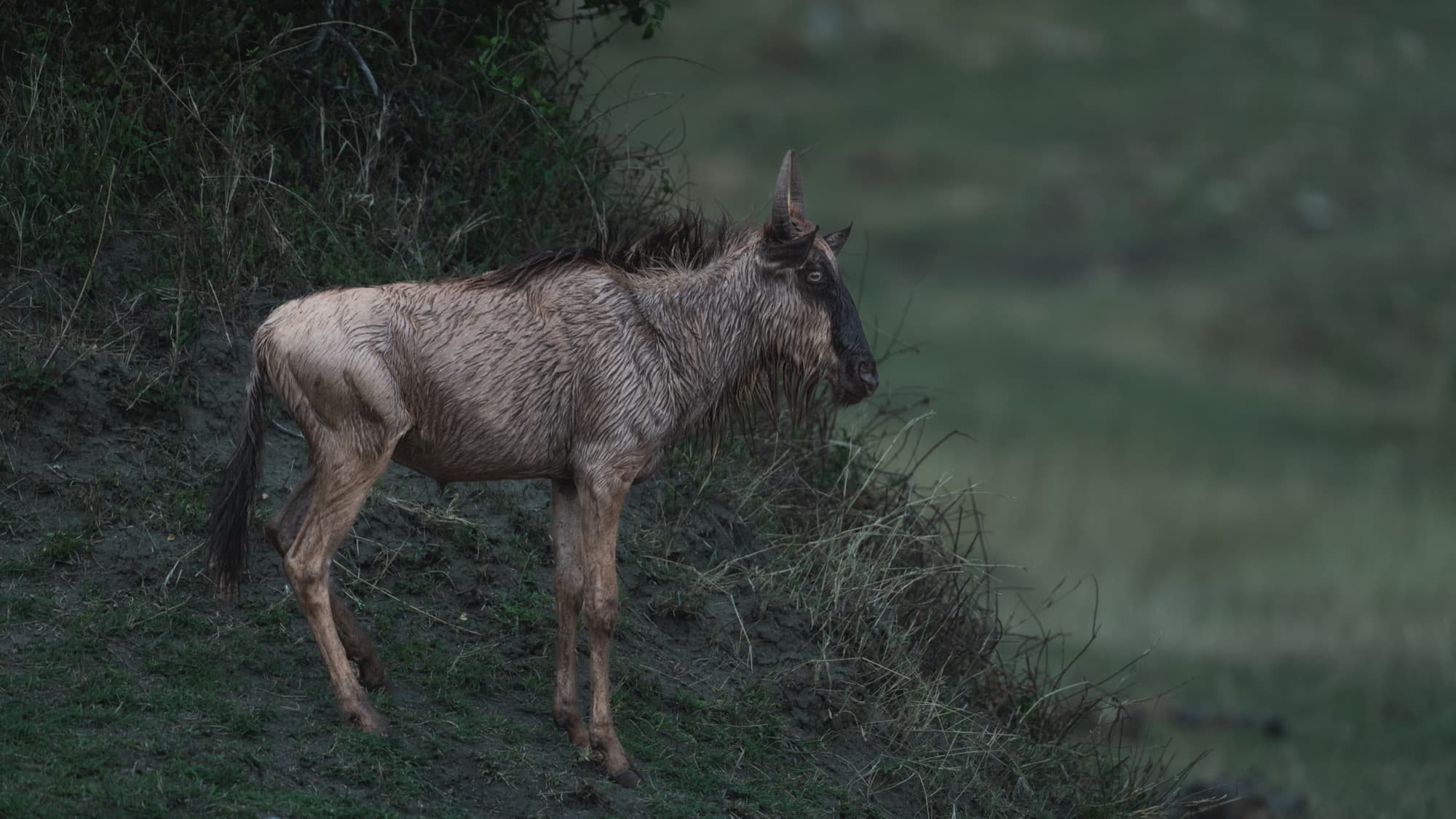
River crossings are not guaranteed and are not scheduled. What determines when a crossing happens is entirely the wildebeest.
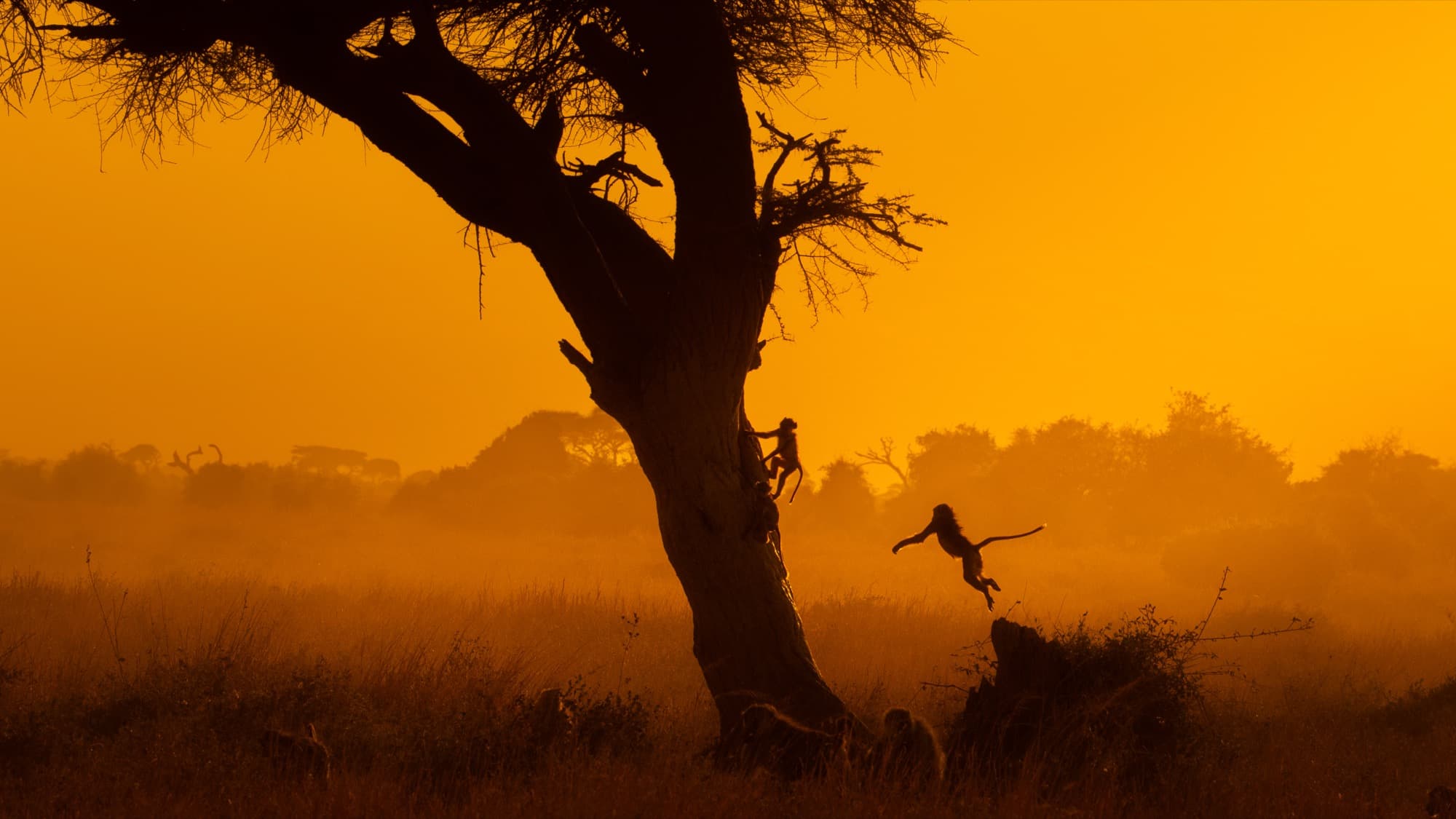
Act VI — Stay with the Story
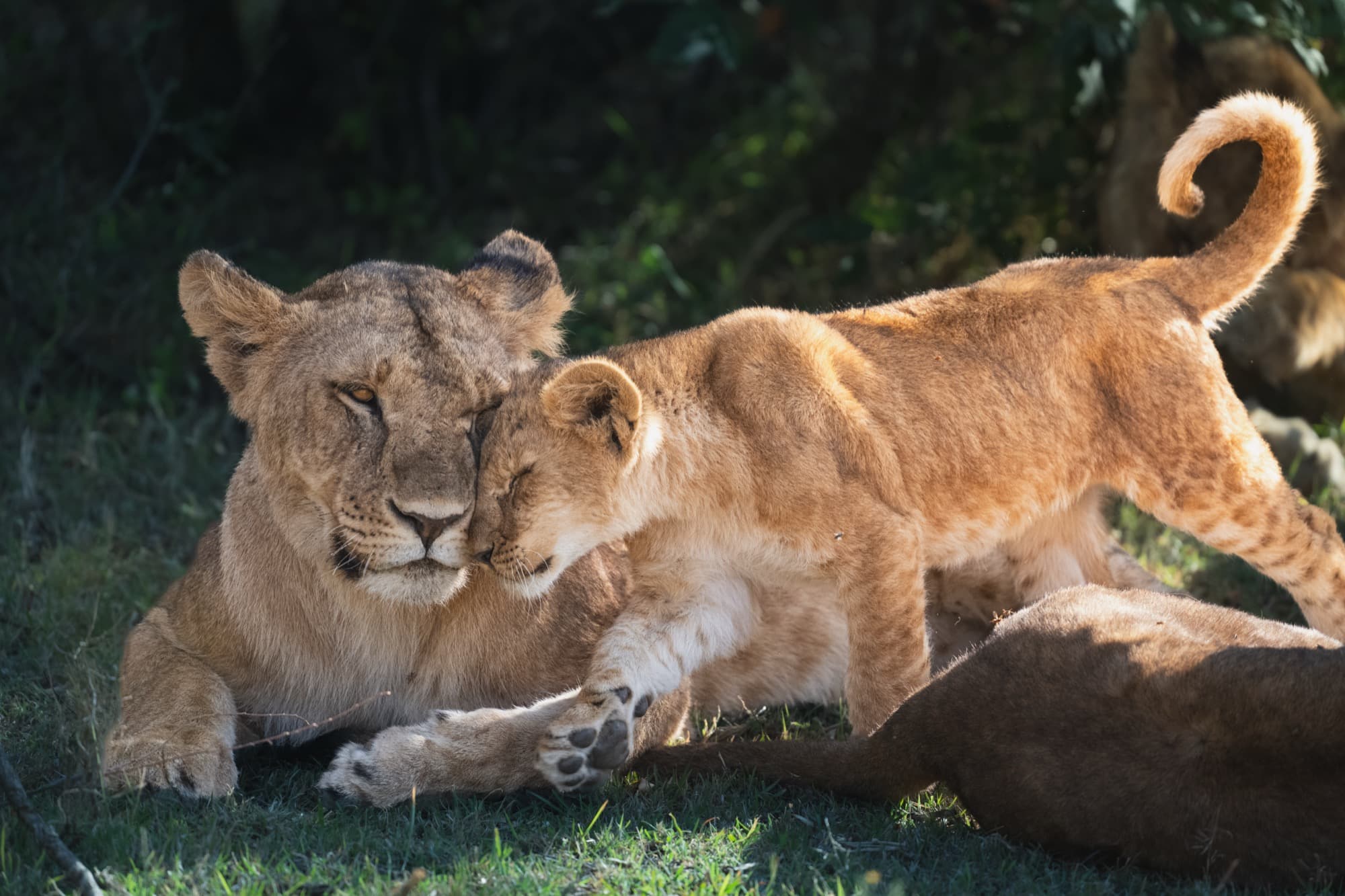
Stop collecting species.
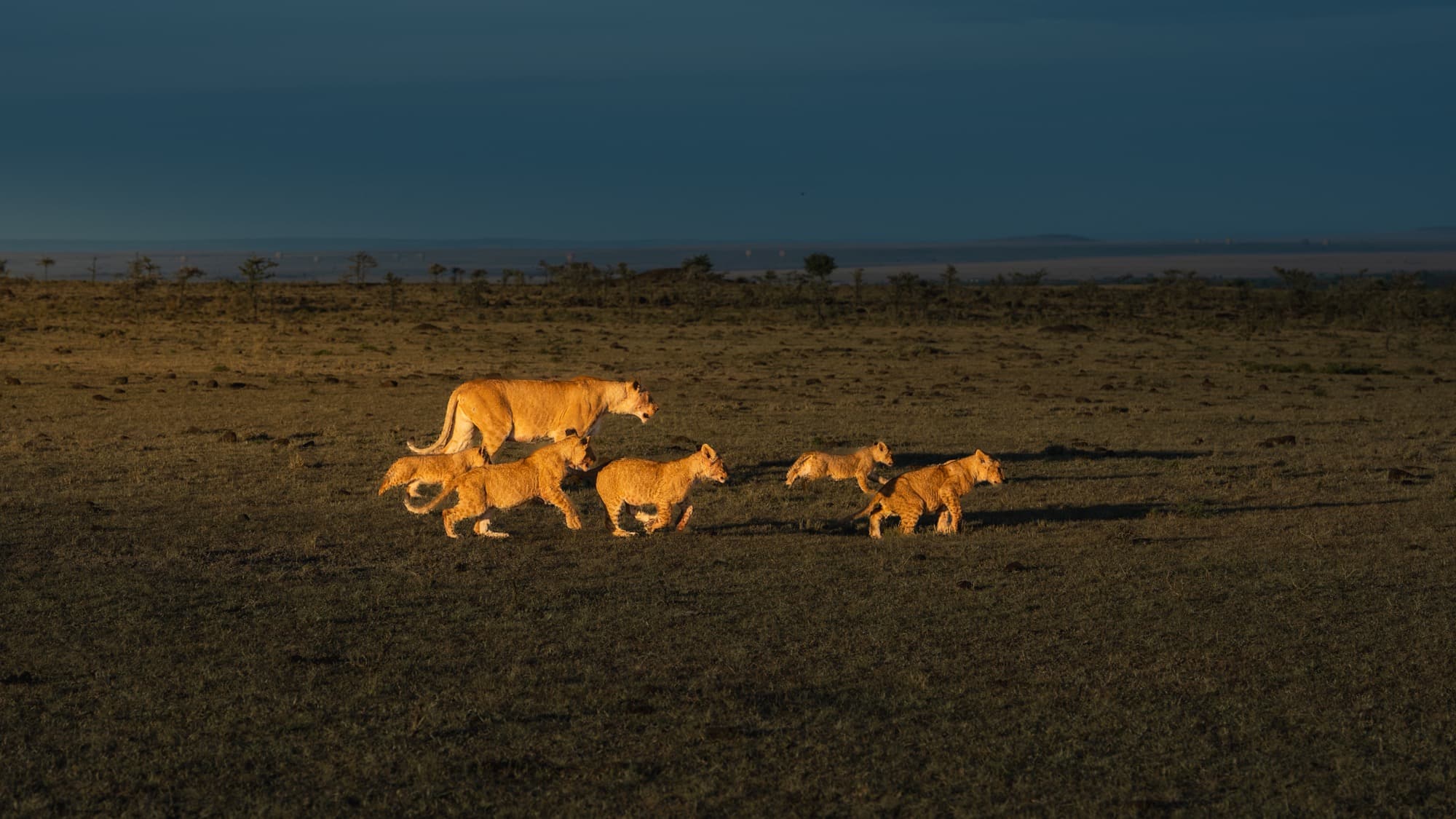
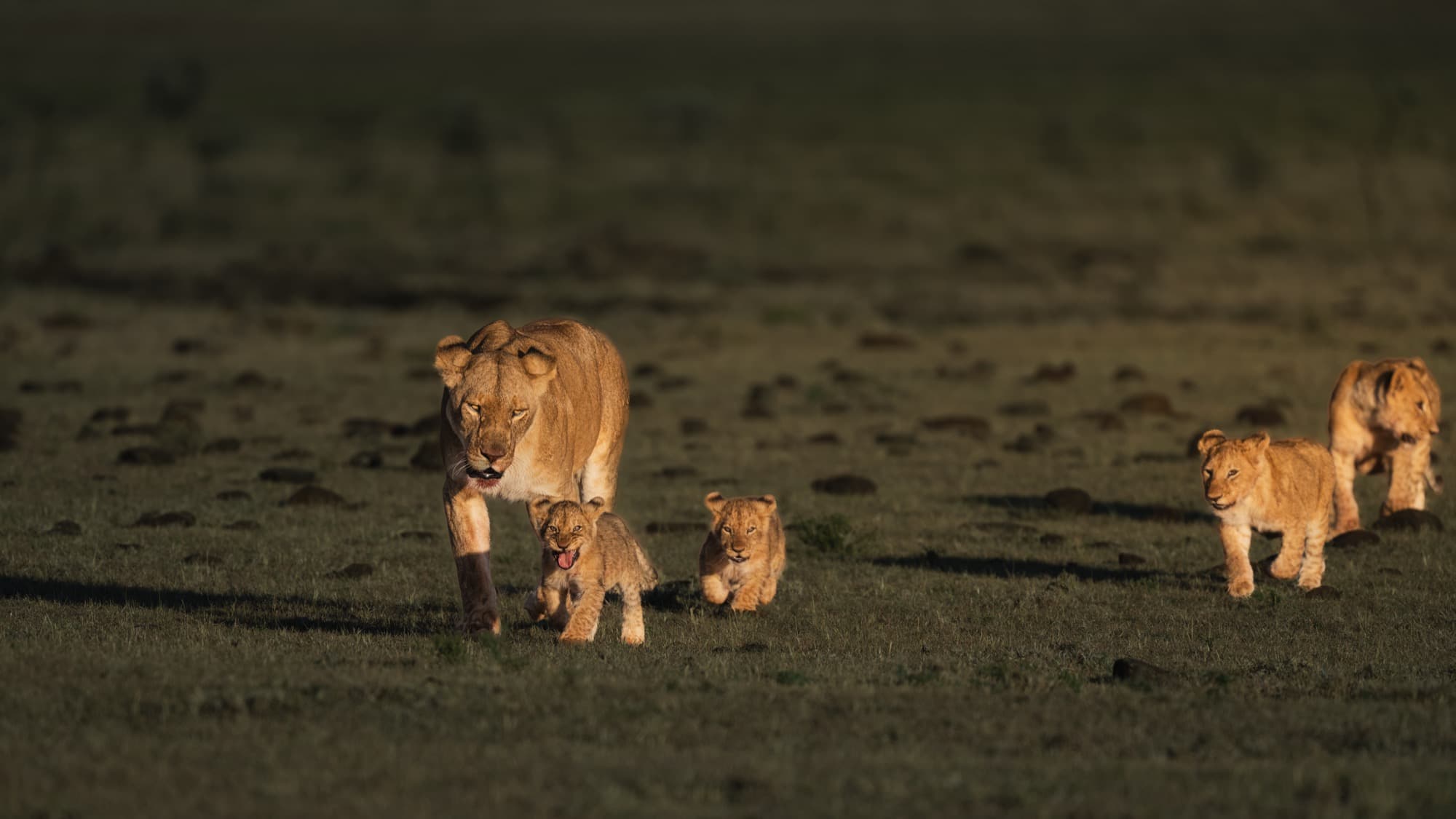
Naboisho Conservancy, Kenya
Start following lives.
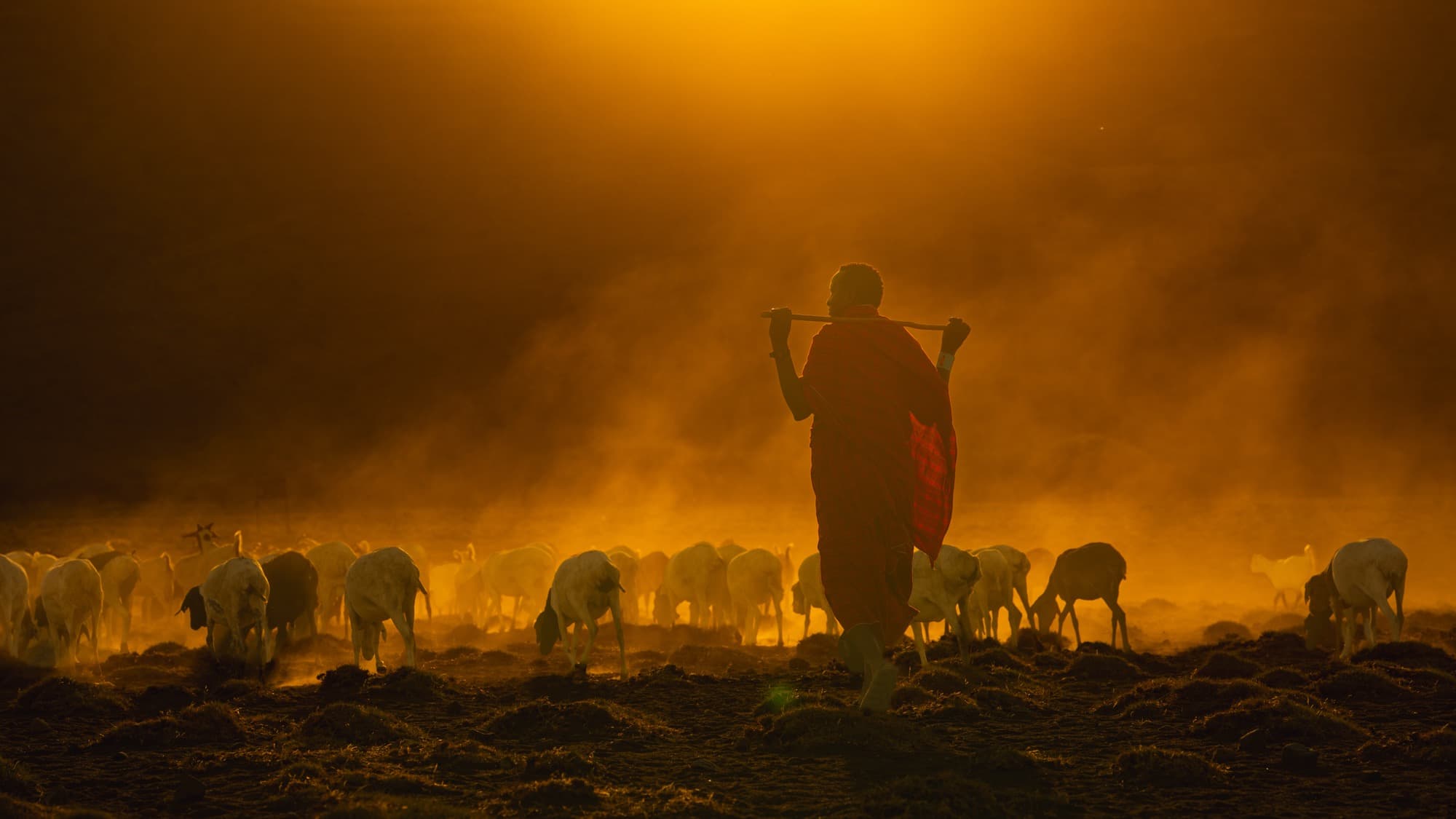
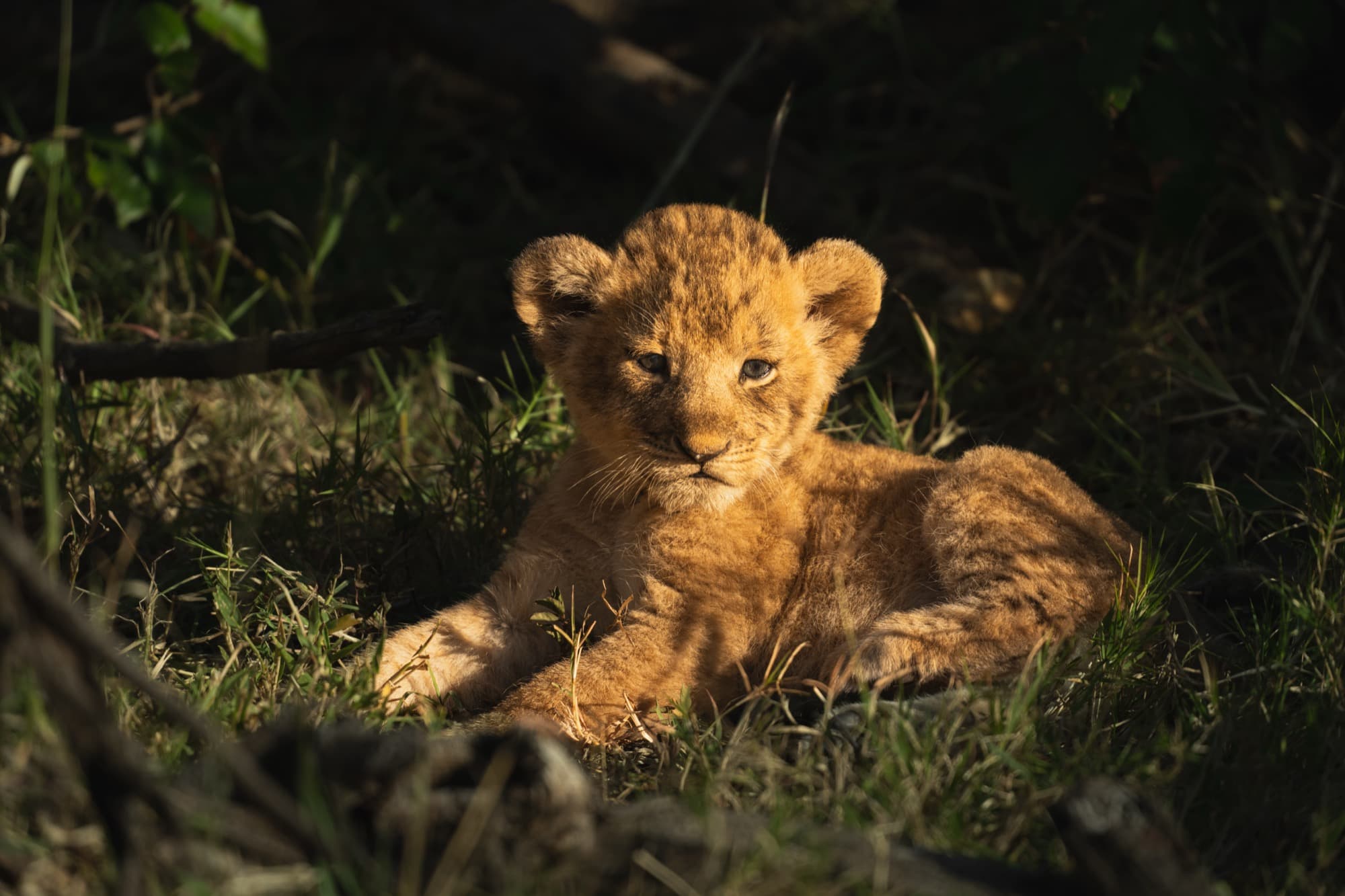
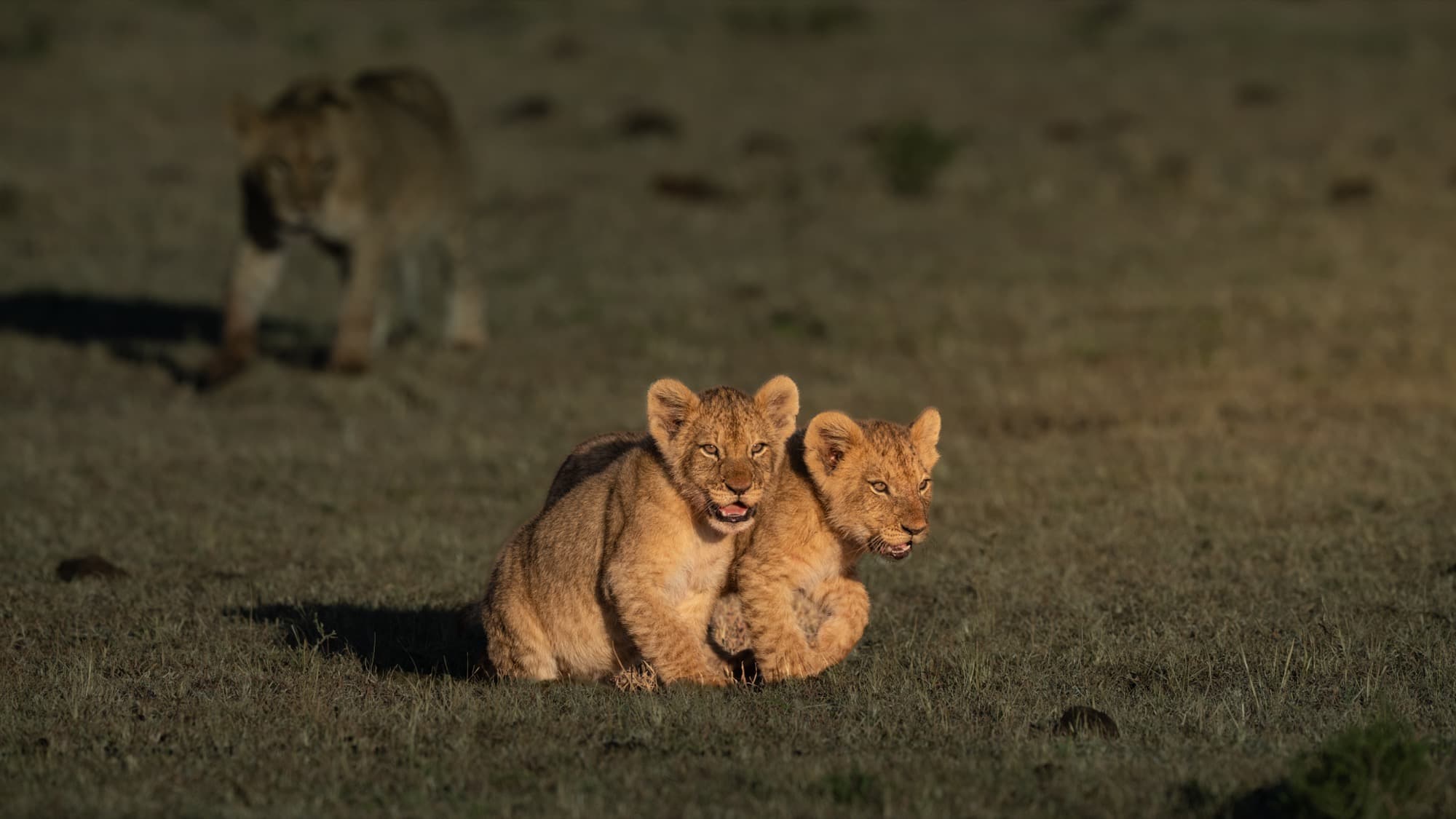
Naboisho Conservancy operates with lower vehicle numbers than the main Mara reserve. What this means, in practice, is time — days with the same family, mornings without other vehicles, the space to build a sequence instead of a single image.
This chapter is about behaviour, family, relationships and time.
Individual identities are not assigned to these lions. What is documented is what the camera actually saw.
In the field
Photography is physical.
Dust on your clothes. Hours of waiting. A camera resting inches above the ground.
Sometimes a long lens. Sometimes a wide angle. Sometimes no photograph at all.
And then, for a few seconds, everything comes together.
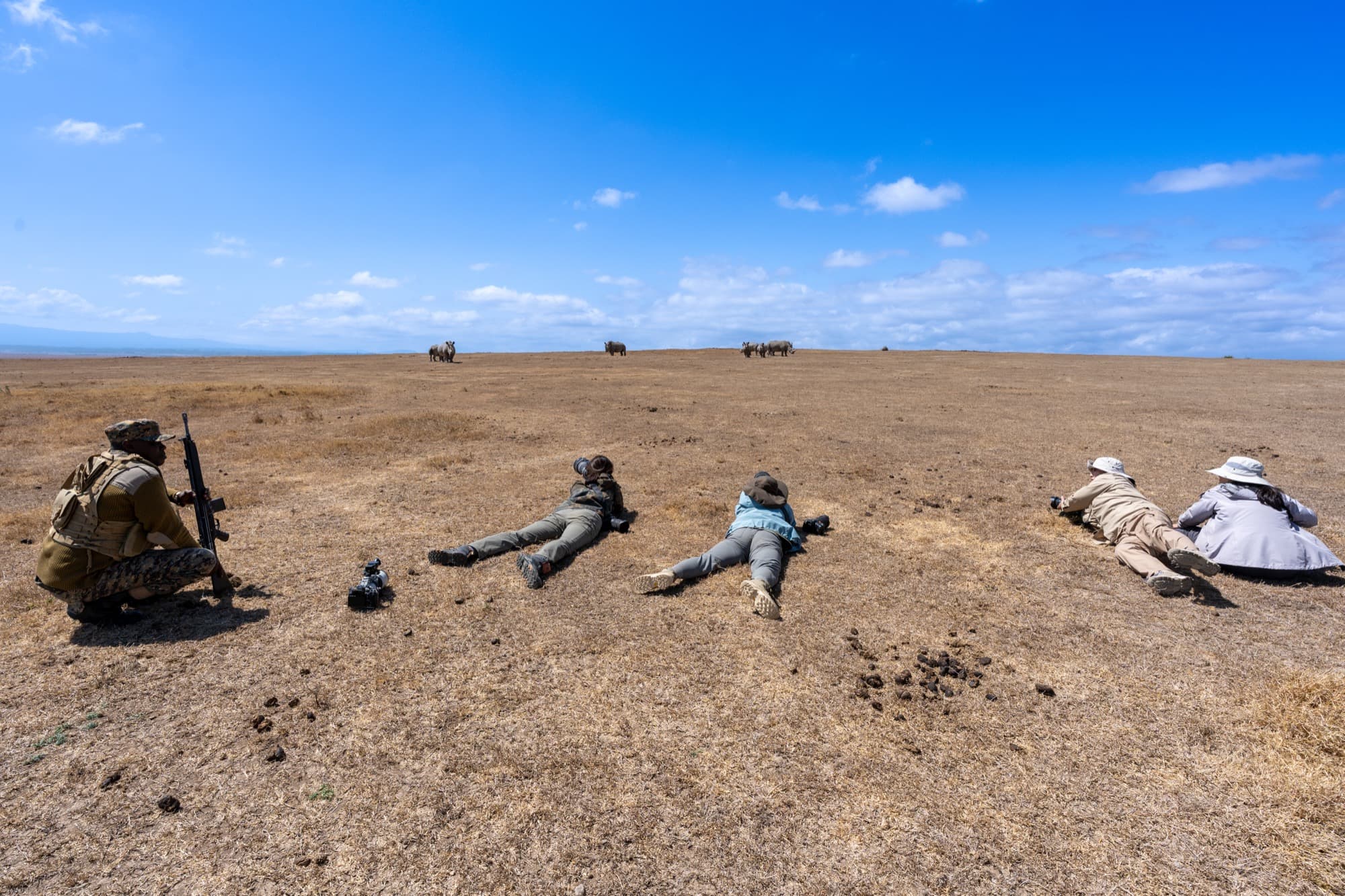
The fieldwork shown here — ground-level photography — occurs under the direct supervision of KWS rangers and qualified guides, according to wildlife behaviour and conditions on the day. The point is fieldcraft, patience and photographic position. Not reckless proximity.
The route
Kenya and Tanzania, weighted toward field time.
- Nairobi1 night
- Laikipia2 nights
- Solio2 nights
- Amboseli2 nights
- Lake Natron2 nights
- Northern Serengeti3 nights
- Naboisho3 nights
- Return to Nairobi
Itinerary
How the journey moves.
Day 1
Nairobi
Days 2–3
Laikipia
Days 4–5
Solio
Days 6–7
Amboseli
Days 8–9
Lake Natron
Days 10–12
Northern Serengeti
Days 13–15
Naboisho Conservancy
Day 16
Departure from Nairobi
Daily timings, camps and logistics are confirmed per departure. Exact days are working estimates; the photographic opportunities, not the schedule, determine the shape of each day.
Working in the field
We create the conditions.
Wildlife decides the moment.
Photographic vehicles are set up for working — not for sightseeing that allows cameras. Space to move, positioned for light, with time to wait for what happens rather than moving on when it does not.
Lens strategy changes by act. Wide-angle work at Amboseli — letting an elephant fill a frame without compression. Long telephoto at the river bank and in the Naboisho grassland. Ground-level positioning at Solio changes the optic entirely.
- Reading behaviour before it happens
- Low-angle and ground-level technique
- Wide-angle vs telephoto thinking
- Building a sequence, not collecting shots
- Waiting — and knowing when to hold position
- Field safety and wildlife unpredictability
Black leopard sightings are not guaranteed.
River crossings are not guaranteed.
Kilimanjaro visibility is not guaranteed.
Hunting behaviour is not guaranteed.
Who this journey is for
This journey may be for you if —
You have photographed Africa before.
You already have the classic frames.
You care more about one exceptional encounter than ten species in a day.
You are willing to wait.
You are willing to get dusty.
You understand that wildlife owes us nothing.
You want to photograph differently — not simply photograph more.
You are coming back for the frames you still carry in your head.
In the field with Nature Zi
Photographer to photographer.
I built this journey from photographs I once wanted to make myself.
The Missing Frames is not a list of destinations. It is a set of working conditions — the access, the fieldcraft and the time that certain photographs require.
In the field, I work alongside you rather than directing you. Reading what the wildlife may do before it happens. Knowing when to hold position and when to move. Helping you build a sequence that tells something, rather than a collection of frames that only record that you were there.
The missing frame
What frame are you still missing?
Tell us what you have already photographed — and what you are still hoping to make.
We use that to understand whether this journey is the right one for you.